

27, July 2019
UK: Boris Johnson’s Critical Next Three months Diary 0
Boris Johnson has finally realized his dream of residing at No. 10 Downing Street. As a child he aspired to be “world king”; now he has at least the opportunity to save the embattled kingdom in his own country.
Johnson’s ascent to the premiership coincides with arguably the most challenging political time for the UK since the Second World War.
With just over three months to go before Britain exits the European Union (EU), Johnson has to reach a speedy deal with the Europeans or risk the country crashing out of the union without a formal agreement.
To compound his problems, Johnson has to contend with a tense situation in the Persian Gulf largely brought about by foreign secretary Jeremy Hunt’s decision to inflame tensions with Iran.
With the clock ticking fast to the end of October, here are the key dates for Britain’s new prime minister in the weeks and months ahead:
August 01: Brecon and Radnorshire by-election. This is a key test for Johnson and his inner circle. With a working parliamentary majority of only 2 seats, the Tories can ill-afford to lose this seat in Wales. Johnson’s headache is exacerbated by the fact that the Tories’ rivals, notably the Greens and the Welsh nationalist Plaid Cymru, have agreed to withdraw from the race and back the Liberal Democrats, who are currently at the top of the polls.
August 24: G7 Meeting. The G7 leaders are set to meet in Biarritz in south-west France. This is a test for Johnson to properly balance his relationship with US President Donald Trump and European leaders. If he distances himself from key European leaders, notably Emmanuel Macron of France and Germany’s Angela Merkel, then the public and the markets will interpret it as a further sign of an imminent no-deal Brexit.
September 03: End of parliamentary recess. The House of Commons reconvenes after the summer break. Johnson is likely to face a hostile parliamentary environment if by this point he has failed to reach an accommodation with the EU leaders on an orderly Brexit.
September 29: Conservative party conference. Johnson is like to view the conference as a big opportunity to energise his support base in the Tory machine and to prepare them psychologically for the next general election, which some analysts think could come as early as next spring.
October 17-18: European Union summit. This is likely to be the last time Britain is formally invited to participate in high-level EU business. In view of Johnson’s bombastic personality, he is likely to use this occasion to set out a grand vision for his country’s future outside the EU.
October 31: Brexit deadline. Johnson has pledged to leave the EU by this point, even without a deal. A no-deal Brexit, which looks increasingly likely, will prove the litmus test of the Johnson premiership. If Britain crashes out of the EU without a deal, then Johnson will face massive challenges, including a possible general election in the spring of 2020 and a Scottish independence referendum in 2021.
Culled from Presstv




















27, July 2019
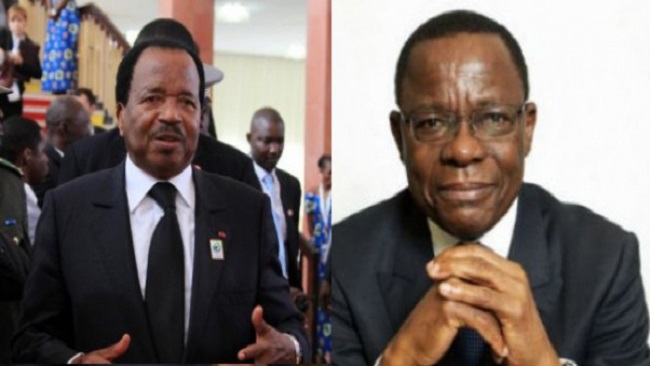
Money and Southern Cameroons Crisis: Former aides to US Senator Cruz working for Biya 0
Two former aides to Sen. Ted Cruz (R-Texas) have signed on to represent Cameroon’s government in Washington despite recent allegations of serious human rights abuses by the government. David Polyansky, Cruz’s former chief of staff; Catherine Frazier, another former Cruz aide; and Jimmy Soni, a former Huffington Post managing editor who later worked for former Missouri Gov. Eric Greitens, will advise Cameroon’s government on public relations. They’ll promote a “positive and favorable image” of Cameroon’s government through digital ads and “by placing targeted op eds in conservative-oriented outlets in order to foster a robust and growing partnership narrative into the future,” according to a contract filed with the Justice Department.
Cameroon has found itself saddled with a less-than-positive-and-favorable image in recent months. The Trump administration has stopped providing as much military aid to Cameroon’s government because of what Gen. Thomas Waldhauser, the head of United States Africa Command, described in congressional testimony in February as the “alleged atrocities” it had committed. Mausi Segun, Human Rights Watch’s executive director for Africa, wrote last month that Cameroon’s government had responded to separatist threats by “burning hundreds of homes, killing civilians, and detaining and torturing alleged separatists in a gendarme-run prison in the capital, Yaoundé.”
There’s a long history, of course, of Washington lobbyists and public relations hands representing governments accused of committing atrocities, dating back to Paul Manafort’s work for Ferdinand Marcos, the infamous Filipino dictator. Polyansky, Frazier and Soni are representing Cameroon through Clout Public Affairs, a division of Axiom Strategies, a consulting firm run by Jeff Roe, who managed Cruz’s presidential campaign. Cameroon also retains Squire Patton Boggs to lobby on its behalf.
Asked about the Cameroonian government’s human rights record, Clout defended its work. “Clout is pleased to be working with Cameroon to highlight the strong and developing relationship between our two countries,” the firm said in a statement. The firm noted that Cameroon had “been a longtime partner to U.S. military operations in Africa, and serves as a key ally in the United States’ effort to combat the radical Islamist group Boko Haram, which has for far too long victimized and ravaged innocent civilians in the region.” The contract is worth $55,000 a month.
Source: Politico.com