
5, December 2018
Southern Cameroons War: IG says humanitarian crisis to deteriorate in 2019 0
The Southern Cameroons Interim Government has warned Ambazonians in the Diaspora that the humanitarian crisis in the country, already the worst in Africa, will deteriorate as 2019 approaches, more than a year after the French Cameroun President-Dictator, launched an intense military campaign of helicopter strikes and ground attacks which are still ongoing.
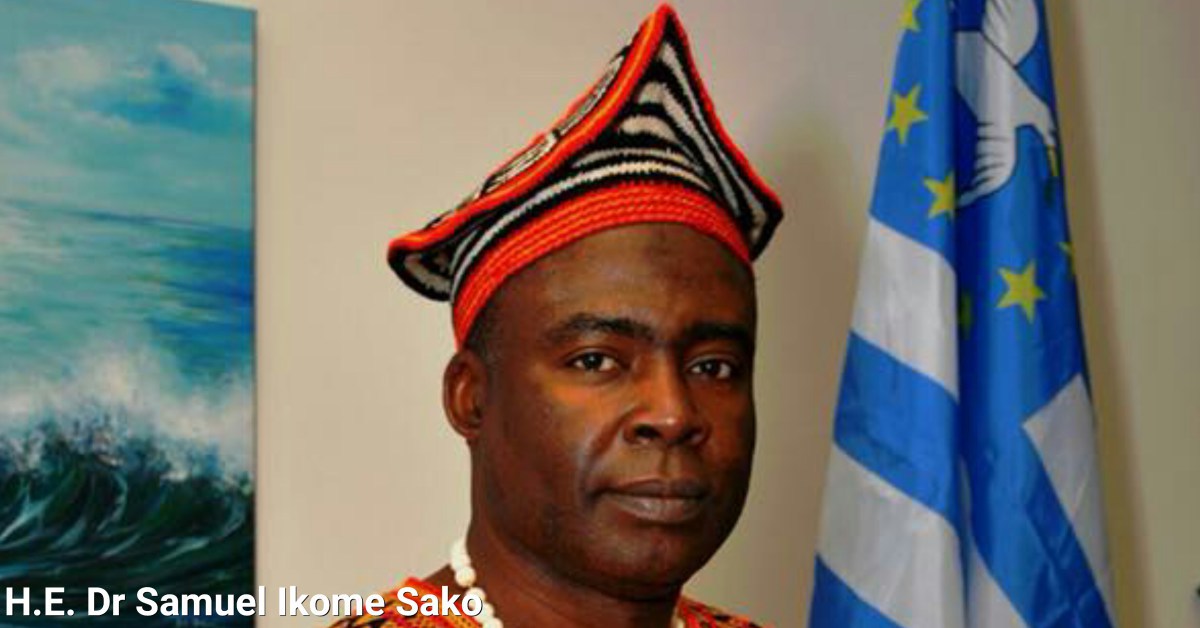
Acting President Samuel Sako Ikome told Cameroon Intelligence Report that the food and medical assistance provided to Southern Cameroons refugees both in French Cameroun and in the Federal Republic of Nigeria by international organizations including the UN has been insignificant. The Ambazonian leader wondered aloud why the UN was maintaining a kind of silence of the lamb as regards to the genocide going on in Southern Cameroons particularly the massacres that took place in Nkambe and Bali.
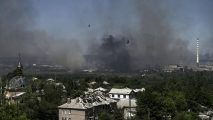
French Cameroun troops deployed to Southern Cameroons to crush the Ambazonia revolution and to reinstall Francophone dominance in the territory have killed hundreds of innocent Southern Cameroons civilians. The aggression initially consisted of a scotch the earth policy, was later coupled with numerous curfews and destruction of towns and villages by Cameroon government forces.
In his ill-disguised attempts at deceiving the international community, President-Dictator Paul Biya recently signed a decree creating a National Disarmament, Demobilization and Reintegration Committee (NDDRC) for organizing, supervising and managing the disarmament, demobilization and reintegration of ex-fighters of Boko Haram and armed groups in Southern Cameroons willing to respond favourably to his so-called peace appeal by laying down their arms. The 85 year old also appointed a French Cameroun surrogate, former governor Fai Yengo Francis to head the commission.
In response, Ambazonia Self-Defence and Restoration Forces Council (ASC/RF), the command and control system prosecuting the war against French Cameroun rejected the so-called disarmament committee. Since the onset of the President Biya imposed war, the Ambazonian Restoration Forces with support from the Southern Cameroons Diaspora, has been defending the Southern Cameroons nation against the brutal aggression.
The war is estimated to have left some 4000 Southern Cameroonians dead and more than 437,000 caught in the crossfire. Hundreds of Ambazonians have fled their homes, according to UN data; many now trapped in the bush are now facing starvation.
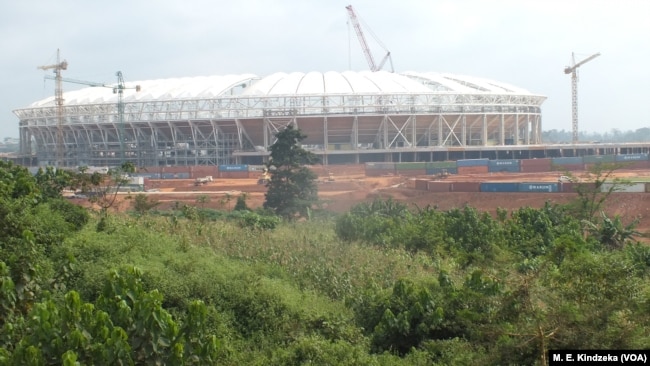
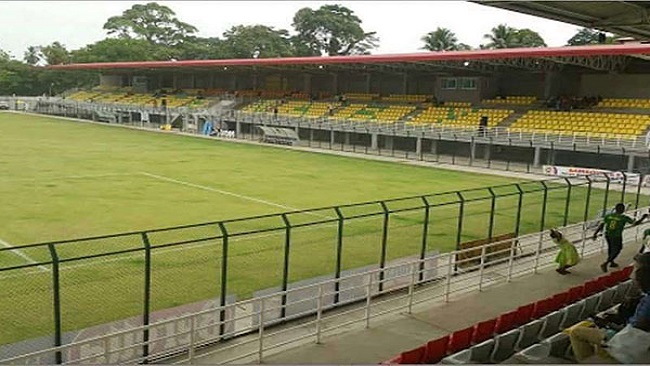
More than a year into the war, Biya and French Cameroun have achieved neither of its objectives. Yaoundé wrongfully thought at the start of the invasion that the war would take no more than a couple of weeks. The situation has worsened in French Cameroun in recent days due to a broad economic collapse following a CAF decision to strip the Biya regime of the right to stage the 2019 African Nations Cup finals. CAF confirmed the unanimous decision after a meeting of its executive committee in Accra, Ghana.
In its recent report on Cameroon’s public expenditure management, the World Bank revealed that the institutional mechanisms to implement the program-budget approach launched in 2013 is still far from achieving expected results.
According to the report, since 2013, the Parliament has approved each year a program-centered 3-year budget for all departments. Each department develops its own programs (about 3) and sets objectives and indicators (two to three per program). However, World Bank said, most indicators are not suitable or operational.
Elsewhere in his comments to Cameroon Intelligence Report, Acting President Sako Ikome said the Interim Government was in an urgent need of financial donations to help the resistance and suffering Southern Cameroonians in 2019.
By Soter Tarh Agbaw-Ebai






















5, December 2018
Germany looks beyond Merkel as party elects successor 0
A knife-edge vote Friday will determine Angela Merkel’s successor as head of her party after 18 years at the helm, with the German chancellor’s own political fate and legacy on the line. Merkel, the European Union’s most powerful leader, stunned observers in October with the announcement following a state election setback that she would not stand again as chairwoman of her centre-right Christian Democrats (CDU).
After years of turmoil within the party and the electorate over her disputed decision to keep the border open to more than one million asylum seekers, Merkel has said she will leave politics when her term ends in 2021.
Whether she can hold on to power until then will depend in large part on who the CDU elects to replace her at a party conference in Hamburg, with a Merkel loyalist and a longtime nemesis running neck-and-neck. “Sooner or later, whoever becomes the leader of Germany’s biggest party will probably become chancellor,” political scientist Eckhard Jesse of the University of Chemnitz told AFP.
Widely seen as Merkel’s anointed crown princess is Annegret Kramp-Karrenbauer, 56. Known as AKK for short, she is the CDU’s centrist general secretary and former premier of tiny Saarland state. While polls indicate that she is also the favoured choice among German voters and the CDU’s rank-and-file, there are indications she has failed to electrify the 1,001 delegates who will cast ballots in the race against her charismatic main rival, Friedrich Merz.
Merz, 63, a hard-charging corporate lawyer, lost a power struggle to Merkel in 2002 and insiders say he has never forgiven her. He is also viewed as embodying the party’s desire for change in both style and substance after 13 years with Merkel in the chancellery, despite her enduring popularity.
The wild card in the race is Jens Spahn, a 38-year-old openly gay minister in Merkel’s cabinet who long railed against her refugee policy.
Analysts say that a win for either Merz or Spahn would likely bring a swift end to Merkel’s chancellorship, possibly triggering new elections next year.
– ‘Slap in the face’ –
How the delegates will vote is anyone’s guess, with most keeping their cards close to their vests. Nearly all hold political office or party posts. One-third are women.
After more than a decade in the private sector, Merz says his conservative credentials and business savvy make him best placed to win back disaffected voters. But he touched a nerve when he said the CDU, in his absence, had accepted the rise of the far-right Alternative for Germany (AfD) party during the refugee crisis “shrugging its shoulders”.
“I get icy chills down my spine when I see people running around in this country doing the Hitler salute,” he told one regional conference. Kramp-Karrenbauer, who has criticised some aspects of Merkel’s border policy, shot back that Merz’s accusation was a “slap in the face” for the party’s foot soldiers.
“Pretending you could just say or decide something and then the fight against the AfD would be won is naive,” she told the weekly Frankfurter Allgemeine Sonntagszeitung.
– ‘Like matricide’ –
The CDU remains Germany’s biggest party. But the 33 percent it scored in the September 2017 general election has sunk to around 28 percent in opinion polls as the party suffered losses in a string of regional votes.
While still seen as Europe’s go-to leader on crises from Brexit to Ukraine, Merkel has watched her standing diminish at the top of a loveless “grand coalition” with the Social Democrats (SPD).
They are faring even worse in the polls, as internal divisions over its former chancellor Gerhard Schroeder’s sweeping labour market reforms continue to fester. CDU stalwarts expect a Merkel nostalgia-fest in Hamburg as the faithful bid a gradual goodbye to the woman who won them four national elections.
But newsweekly Der Spiegel noted that the leadership struggle needed to produce some sort of consensus on Merkel’s legacy if the party wants to avoid the fate of the SPD. “Without a critical reckoning with her era, the CDU will be stuck in an interminable therapy session,” it said. “The CDU has to allow it, even if it seems to many like matricide.”
AFP