3, November 2023
Top Francophone army generals to soon be punished for their crimes 0
The exiled leader of the Ambazonia Interim Government has denounced the ongoing military campaign against Southern Cameroons villages and the loss of lives of civilians, stating that many of the Francophone army generals and their Anglophone acolytes will soon pay for their crimes.
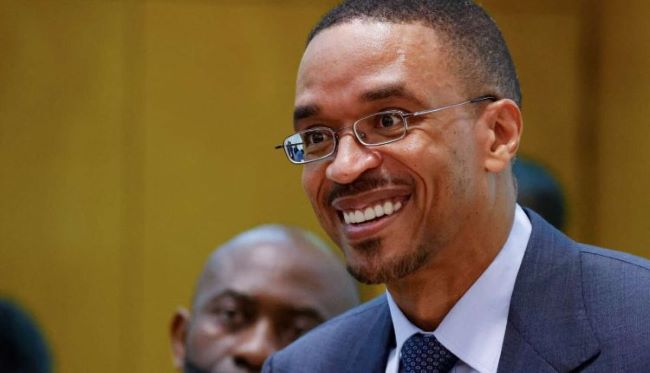
On a Wednesday post on social media, Vice President Dabney Yerima said the French Cameroun genocidal machine is actively at work in the rural settlements in Southern Cameroons.
“French Cameroun war criminals and their known Anglophone advocates will soon kneel before the exemplary willpower and resilience of the Ambazonian nation; and will be punished for their crimes,” Yerima pointed out.
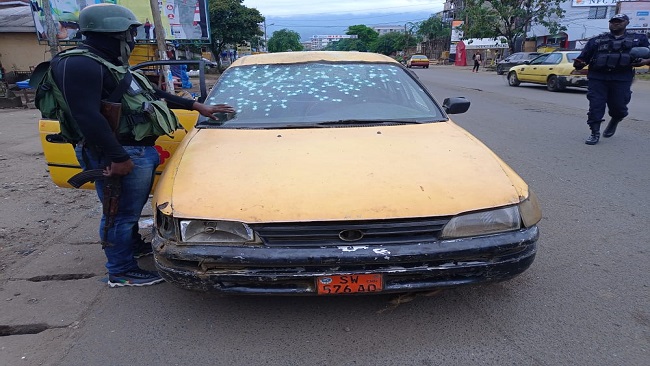
As of this week, at least 34 Southern Cameroonians have been killed by Francophone army soldiers among them women and children.
The exiled leader also stated that Anglophone journalists covering the war in Southern Cameroons are facing particularly high risks. Many have been killed and some have fled the country.
Dabney Yerima said due to the massive deployment of Francophone soldiers and raids on newspaper offices, journalists such as Nelly Epupa, Toto Roland Motuba and Ewang Miriam Metchane are now refugees in Europe and the US.
“The main challenge for journalists covering the Cameroon government military campaign in Southern Cameroons is their own safety” Yerima furthered.
“Journalists in Southern Cameroons have paid and continue to pay unprecedented tolls and face exponential threats,” Vice President Dabney Yerima concluded.
By Chi Prudence Asong











6, November 2023
Mamfe: 20 killed in Egbekaw village attack 0
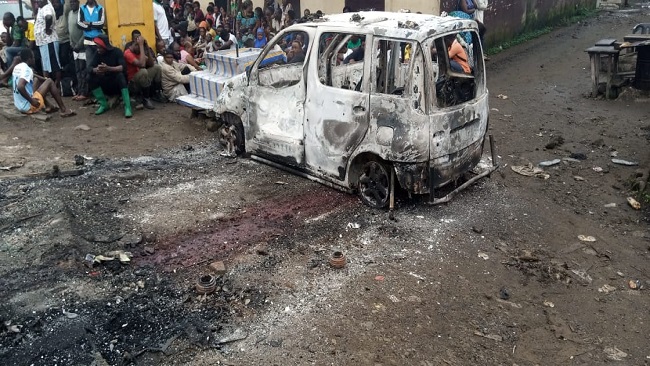
Separatist rebels killed around 20 people, including women and children, on Monday in Egbekaw a village in Mamfe the chief town in Manyu.
The overnight attack occurred in Egbekaw village, the scene of deadly clashes between rebels and government forces for seven years.
“The attack left around 20 dead, men, women and children, and 10 seriously injured people are in hospital,” a senior regional administrative official said on condition of anonymity.
A security forces official and an official from a governmental body also confirmed the attack and provisional toll.
Cameroon’s primarily English-speaking Northwest and Southwest regions have been gripped by conflict since separatists declared independence in 2017.
It followed decades of grievances over perceived discrimination by the francophone majority.
President Paul Biya, 90, who has ruled the central African nation with an iron fist for 41 years to the day, has resisted calls for wider autonomy and responded with a crackdown.
The conflict has claimed more than 6,000 lives and forced more than a million people to flee their homes, according to the International Crisis Group.
Both the separatists and government forces have been accused of atrocities in the fighting.
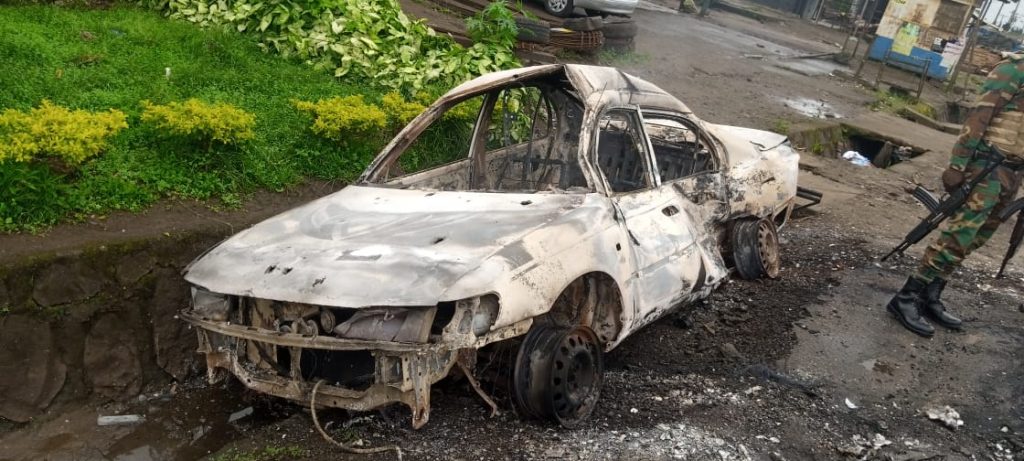
Rebels “attacked the civilian populations of Egbekaw and the provisional toll is 23 dead and around 15 houses burnt,” a local gendarmerie officer told AFP by telephone, also speaking on condition of anonymity.
An official from the country’s human rights commission confirmed the attack and spoke of 15 dead. “But this figure can evolve,” the source told AFP.
There had been no claim of responsibility over the attack on Egbekaw.
“It happened at 4:00 am. Armed young people came and fired on sleeping residents in their houses and set a whole block of houses on fire,” a resident told AFP by telephone requesting not to be identified out of security concerns.
“Twenty-three people have already been removed from the debris, some of whom are not even recognisable because of the fire.”
He said there was reason to believe it was connected to the November 6 anniversary of Biya assuming power as president in 1982.
A meeting of the ruling Cameroon People’s Democratic Movement (RDPC) was planned in the area, he added.
Armed groups are regularly accused of abducting, killing or injuring civilians whom they accuse of “collaborating” with Cameroonian authorities.
Security forces are also often accused by international NGOs and the United Nations of killings and torture against civilians suspected of sympathising with the rebels.
Last month, rebels “summarily executed” two villagers in public in the Northwest region whom they accused of collaborating with the army.
In July, Amnesty International reported that security forces, separatist rebels and ethnic militiamen had committed “atrocities” in the Northwest Region, including executions, torture and rape.
By Alain Tabot-Tanyi