26, August 2026
Cameroon’s cocoa export revenue plunges 63% as shipments and prices fall 0
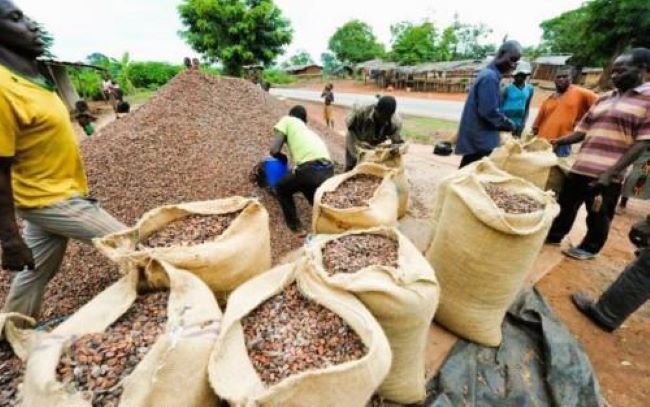
Cameroon’s cocoa export earnings fell 63% during the 2025-26 season, hit by a sharp decline in both shipments and international prices, a reversal that could cost cocoa its newly acquired position as the country’s largest export product.
Cameroon exported 125,469 tons of raw cocoa beans during the season that officially ended July 15, 2026, according to data released by the National Cocoa and Coffee Board, or ONCC, at the launch of the 2026-27 season. That was 66,543 tons, or 34.7%, below the 192,012 tons shipped a year earlier.
The value of those exports at the port of Douala dropped even more sharply, to CFA400.9 billion from CFA1.07 trillion in the previous season, a decline of CFA673 billion.
The ONCC did not provide a specific explanation for the steep fall in export volumes, which came alongside a decline of more than 15% in locally processed beans. Its figures, however, point to lower marketed production and a sharp increase in end-of-season inventories.
Marketed cocoa production fell 19.9% to 247,914 tons in 2025-26 from 309,518 tons the previous season, reducing the volume of beans available for purchase.
Meanwhile, closing stocks nearly tripled to 40,446 tons from 13,946 tons. That means the volume of beans remaining in inventory increased by 26,500 tons between the two seasons.
Europe Takes More Than 84% of Exports
Telcar Cocoa regained its position as Cameroon’s largest cocoa exporter, shipping 40,631 tons, or 32.4% of the season’s total.
The company, led by Kate Fotso, had lost the top spot in 2024-25 following the end of its partnership with U.S. commodities trader Cargill. Telcar exported 30,497 tons that season, giving it a 15.7% market share.
Ofi Cam ranked second in 2025-26 after exporting 24,394 tons, or 19.4% of the total. SBET, the previous season’s market leader, slipped to third place with 23,223 tons, representing 18.5%.
Together, the three companies accounted for 70.3% of Cameroon’s cocoa bean exports.
Europe remained by far the largest destination, led by the Netherlands. ONCC data show the continent received 84.6% of Cameroon’s exports. Asia accounted for 14%, while the Americas and Africa each received about 1%.
Lower Prices Deepen the Revenue Hit
The 63% collapse in export revenue reflects not only fewer shipments but also a steep decline in cocoa prices between the two seasons.
According to the ONCC, FOB prices at the port of Douala ranged from CFA3,808 to CFA7,536 per kilogram during the 2024-25 season. In 2025-26, the range dropped to CFA1,520-CFA3,110 per kilogram.
That represents a decline of roughly 58% to 60% between the two seasons.
The combination of lower production, fewer exports and weaker prices could have broader implications for Cameroon’s external trade.
Cocoa overtook crude oil as the country’s largest export product in 2025 after benefiting from the earlier surge in global prices. According to the National Institute of Statistics, cocoa beans generated 26.3% of Cameroon’s export revenue that year, compared with 22.9% for crude oil.
With cocoa export earnings down 63% in the latest season, maintaining that lead in 2026 could prove difficult. The downturn therefore represents more than a weak cocoa season: it could reshape the composition of Cameroon’s export earnings just one year after cocoa displaced oil at the top.
Source: Business in Cameroon






















27, August 2026
Biya regime’s takeover of General Bank deepens concerns over state’s growing role 0
Cameroon’s takeover of Société Générale Cameroun, now renamed General Bank of Cameroon (GBC), has become part of a broader concern over the state’s growing footprint in the banking industry, with the African Development Bank warning that repeated public recapitalizations and acquisitions are creating additional fiscal and governance risks.
In its 2026 Country Report on Cameroon, the AfDB describes the expansion of state involvement in banking as a “major source of concern” and cites the acquisition completed on May 12, 2026, as the latest example of the trend.
The warning, however, does not amount to a finding that GBC itself is financially weak. The report is not an audit of the acquired bank. Its concern is broader: the accumulation of government stakes in banks, the governance risks associated with those holdings and the growing interdependence between public finances and bank balance sheets.
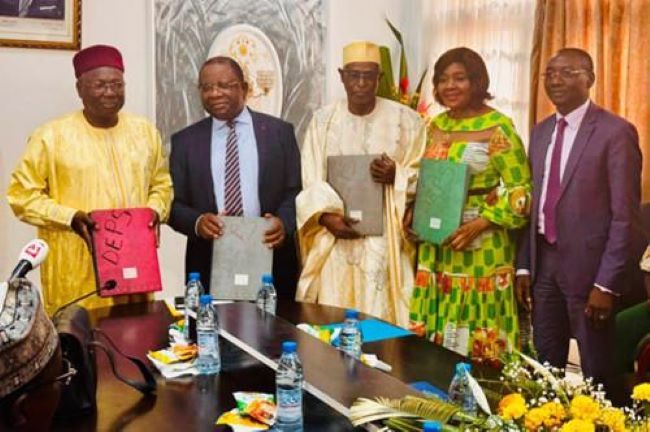
The government acquired the 58.08% stake previously held by Société Générale Group. Since the state already owned 25.60% of the subsidiary, the transaction was expected to raise its interest to 83.68%, based on the terms announced when the sale agreement was signed in July 2025.
The government has presented the takeover as a move to strengthen financial sovereignty and ensure stability. When the transaction closed, the Finance Ministry said measures had been taken to ensure continuity of banking services and the security of deposits.
The IMF has raised similar concerns
The AfDB’s warning follows concerns previously raised by the International Monetary Fund.
In its 2026 consultation report, completed on March 9, the IMF said growing government ownership of banks was increasing fiscal, operational and governance risks. It counted eight institutions in which the state held a majority interest.
The IMF recommended clear rules for the management and supervision of state-owned banks, along with restructuring or resolution plans for troubled institutions. It also recommended that the government divest its holdings where feasible. The Fund’s executive board similarly urged caution over the expansion of the state’s footprint in the banking system.
The issue extends beyond GBC’s ownership.
Cameroonian banks’ holdings of government securities increased from 9.5% of their assets at the end of 2015 to 32% in June 2025. According to the IMF, several banks held more than half of their assets in claims on governments within the Central African Economic and Monetary Community, or CEMAC.
That concentration strengthens the link between banks’ financial health and governments’ fiscal positions. It can also reduce the resources available to finance businesses and households.
The AfDB also noted that public debt service absorbed 23.8% of Cameroon’s budget in 2025, up from 9.8% in 2013.
Banking indicators are still improving
The increase in these risks does not mean Cameroon’s banking system is experiencing a broad deterioration.
At the end of November 2025, the combined balance sheets of the country’s 18 operating banks had grown 9.3% to CFA13.593 trillion. Customer deposits rose 8.4% to CFA8.865 trillion, while lending increased 17% to CFA6.924 trillion.
Sixteen of the 18 banks were fully compliant with prudential requirements. The gross nonperforming loan ratio also declined to 12.9% in 2025 from 14.3% in 2024.
The AfDB’s concerns therefore center less on an immediate deterioration across the banking industry than on sovereign-risk concentration and the governance of institutions controlled by the government.
In discussions with the IMF, Cameroonian authorities described state interventions in banks as temporary measures designed to restructure troubled institutions, restore their profitability and eventually reduce government ownership.
However, public sources reviewed through Aug. 25, 2026, provide no specific timetable for the government to reduce its stake in GBC or bring additional shareholders into the bank.
The issue raised by the AfDB therefore extends beyond the original rationale for the acquisition. Attention now shifts to how GBC will be governed, how transparent its exposure to the public sector will be and under what conditions the government could eventually share or relinquish control.
Source: Business in Cameroon