
2, July 2019
African Development Bank President Meets Cameroon Minister For Loan Arrangement 0
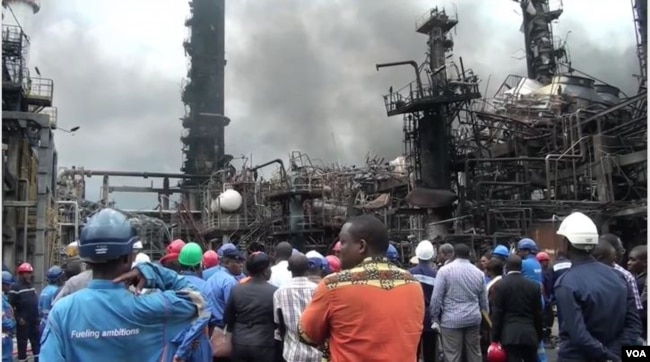
The Cameroon minister of plan, Louis Paul Motaze, has met with the African Development Bank Group’s President and discussions focused on the possibility of the continent’s leading development finance institution extending a loan from its soft arm window for the rebuilding of the country’s oil refinery that went up in flames last month.
The AfDB is capable of granting Cameroon up to USD 1 billion as an emergency loan given the country’s mounting economic and financial woes.
The cash-strapped Yaounde government is looking for resources as the Southern Cameroons crisis has robbed it of its ATMs.
CDC, PAMOL and SONARA have all gone under and this has left the government with very few avenues to raise revenue.
It is becoming clear that the country is running out of foreign currency and civil servant will soon be facing salary challenges.
Our reporter, Kingsley Betek, is on the ground to provide details of the meeting between the AfDB president and the Cameroon government official.

















7, July 2019
Cameroon fines main local telecom companies 0
The local mobile telecom companies Orange and MTN in Cameroon have been fined over $160 million for failing to pay taxes on games and gambling services.
The Central African country corruption board announced on Wednesday.
A probe into the sector led to fines totaling $283 million, and found other companies including Camtel and Viettel were also in violation of regulations.
The amount paid by each company was not clear and the companies were not immediately available for comment.
In the report the Telecommunications Regulatory Agency said MTN and Orange were also accused of not paying taxes on their money transfer system, known as Mobile Money.
The report is another blow for MTN, which is already contesting a $3.9 billion fine in Nigeria for failing to disconnect users with unregistered SIM cards.
Unregistered SIM cards can be used for criminal activity – a growing concern in Nigeria facing the threat of militant Islamist group Boko Haram.
MTN successfully lobbied to get the fine reduced from $5.2 billion in December.
Source: AFP