
9, October 2024
Cameroon bonds drop as investors weigh political stability risk over Biya health 0
Cameroonian dollar bonds dropped for a third consecutive day as speculation about the health of the nation’s president raised concerns about a potential succession battle.
The country’s debt ranked among the worst performers Wednesday in an index tracking frontier and emerging market sovereign bonds. President Paul Biya has been absent from public view since early September, though the government said the 91-year-old leader was healthy.
Source: Bloomberg



















9, October 2024
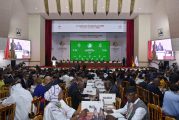
African Development Bank: Marie-Laure Akin-Olugbade named Senior Vice President 0
The African Development Bank Group (AfDB) has appointed Marie-Laure Akin-Olugbade, née Ndongo-Seh, as its new Senior Vice President, effective retroactively from October 4, 2024. A Cameroonian by origin, she previously served as the Acting Vice President for Regional Development, Integration, and Service Delivery at the AfDB since 2022.
During her tenure, Akin-Olugbade played a key role in promoting regional economic integration, mobilizing resources, and developing innovative financial solutions. She managed a $9 billion portfolio for West Africa and provided leadership in challenging environments like the Sahel region. Her efforts involved working closely with governments and the private sector to drive development.
“Marie Laure is a highly experienced, committed, and effective manager of teams, who brings extensive knowledge of the African Development Bank, its rules, processes and systems, and a well-proven capacity to deliver on bank-wide operations while ensuring team cohesion,” said AfDB President Akinwumi Adesina. He expressed confidence that her leadership would bring renewed energy to the bank’s management team.
With 32 years of experience in capital markets, asset management, and debt policy, Akin-Olugbade is known for her results-driven approach. In her new role, she emphasized her commitment to increasing the bank’s impact across its member countries. “I am deeply honored by the trust and confidence that President Adesina has placed in me. I look forward to working closely with the president, senior leadership team, our Boards of Directors and staff to enhance the Bank’s impact and effectiveness in delivering programs that benefit our regional member countries,” she said.
Akin-Olugbade holds a master’s degree in applied economics from Paris-Dauphine University and a higher diploma in management from Panthéon-Sorbonne University. She joined the AfDB in 1991 and has held several key roles, including Country Office Manager for Ghana in 2010, where she managed a $1 billion portfolio.
She replaces South African Bajabulile Swazi Tshabalala, who stepped down to run for AfDB presidency in 2025.
Source: Business in Cameroon