7, April 2023
Russia’s Invasion of Ukraine and Cost-of-Living Crisis Dim Growth Prospects in Emerging Europe and Central Asia 0
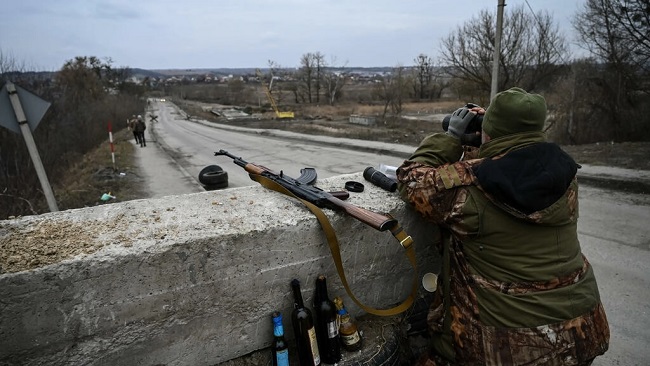
Economic activity in the Europe and Central Asia region is likely to remain subdued this year due to the ongoing fallout from Russia’s invasion of Ukraine, persistent high inflation and tighter financial conditions, says the World Bank’s Economic Update for the region, released today.
Regional output is now expected to grow by 1.4% in 2023, substantially better than the previously anticipated 0.1%. The positive, though deeply depressed, economic activity in 2023 reflects a softer contraction of Russia’s economy and an improvement in Ukraine’s outlook. Regional growth is expected to increase to an average 2.7% over 2024-25 as inflation eases, domestic demand recovers, and the external environment improves.
A sharp rise in consumer prices, particularly for food and energy, resulted in median annual inflation spiking to 15.9% by late 2022 in the emerging markets and developing economies (EMDEs) of Europe and Central Asia, the highest in more than 20 years, and the highest among all developing regions of the world. Inflation averaged less than 4% in Europe and Central Asia EMDEs before it began rising in 2021.
The outlook remains highly uncertain. Growth in 2023 may be weaker if the war caused by Russia’s invasion of Ukraine escalates further, food and energy prices continue to increase, interest rate hikes accelerate globally or in the region, or there is a sudden reversal of capital flows to the region. There could be spillovers to growth from the current banking developments in some advanced economies.
Ukraine’s economy is projected to grow by 0.5% this year, following a staggering contraction of 29.2% in 2022, the year of Russia’s invasion of the country. While the economic toll suffered by Ukraine as a result of the invasion is enormous, the reopening of Ukraine’s Black Sea ports and resumption of grain trade, as well as substantial donor support, are helping support economic activity this year. According to recent World Bank estimates, the cost of reconstruction and recovery in Ukraine has now grown to $411 billion, which is more than 2 times the size of Ukraine’s pre-war economy in 2021.
Türkiye experienced two devastating earthquakes on February 6, 2023, which have resulted in direct damages of about $34.2 billion, or 4% percent of the country’s 2021 GDP, according to World Bank estimates. Actual costs to meet the full range of recovery and reconstruction needs could be double the direct damages. Incorporating the impact of the recent earthquakes, growth is projected at 3.2% in 2023, rising to an average of 4.2% over 2024-25, underpinned by government support to households and investment amid ongoing reconstruction efforts.
Against the background of slow growth and high inflation, the report includes a special focus chapter on the cost-of-living crisis, which examines the impact of high inflation on the standards of living of people in the region.
“Inflation erodes the real incomes of people – and high inflation affects the poorest much more than the richest segments of the population,” said Ivailo Izvorski, World Bank Chief Economist for Europe and Central Asia region. “To better protect vulnerable groups and promote economic growth, policies should take into account the varying impacts of inflation across different income levels and use more precise indicators to measure the actual cost of high prices on the poorest.”
Governments across the region responded to the cost-of-living crisis with social assistance and subsidies, the latter involving moratoriums on energy price increases, reduced public transport fees, and caps on electricity and natural gas prices for households and businesses.
The report’s analysis, however, reveals the unequal burden of the cost-of-living crisis. It finds that inflation was 2 percentage points higher for the poorest 10% of the population compared to the wealthiest 10%. This difference exceeded 5 percentage points in some countries in the region, including Moldova, Montenegro, and North Macedonia.
Policies that do not account for the different inflation rates faced by households are likely to provide inadequate support to vulnerable groups and may end up being both inefficient and less effective, the report notes. It recommends going beyond the standard consumer price index (CPI) to measure inflation in order to capture more precisely the actual cost of living of the poorest. This is essential for designing better growth and poverty alleviation policies.














18, April 2023
Afriland remains the biggest credit contributor to Cameroon as of January 31, 2023 0
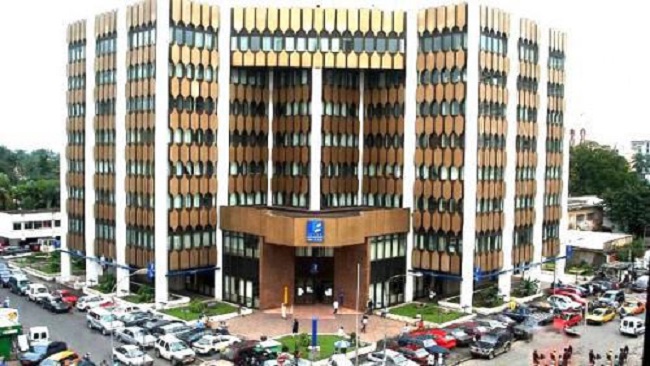
The outstanding amount of credit granted by Afriland First Bank to the Cameroonian economy was estimated at CFA1, 037 billion as of January 31, 2023, official banking market data revealed. Compared to the same period the previous year, this bank controlled by Cameroonian billionaire Paul Kammogne Fokam achieved an increase of 12%, thus confirming its position as the largest credit contributor to the economy.
Better still, the financial institution, which claims more than fifty branches across the country, was the first and only one to have exceeded CFA1,000 billion in credit outstanding over the period. It now controls 21.7% of Cameroon’s credit market. The others that make up the top 5 largest credit contributors are Société Générale (CFA721 billion), SCB (CFA476.7 billion), Bicec (CFA460 billion), and CBC (CFA381 billion). Together with Afriland, they control more than 64.5% of the market share.
A look into Afriland’s portfolio over the period under review shows that the bank was more into short- and medium-term loans, which accounted for a big 80.6% of its outstanding amount. This means that it mainly granted consumer loans, equipment loans, and cash flow loans for businesses. Long-term credits, which are used for large investments, only accounted for CFA12.138 billion of its portfolio, although they were up 41% YoY. In this segment, Afriland came far behind CBC (CFA47.8 billion) and Standard Chartered Bank (CFA31.693 billion). Moreover, more than three-quarters of its loan portfolio over the period went to private companies and individuals. Loans to these two categories of clients grew by 13% YoY to CFA632.2 billion and 34.3% YoY to CFA254.5 billion respectively.
However, the dark side of granting so much credit to the economy is the exposure to the risk of not getting the money back. The number of bad debts in Afriland’s portfolio was estimated at CFA133.8 billion over the period, compared with CFA121.9 billion 12 months earlier. To cover these receivables, the institution had to use its equity to make provisions of CFA99.8 billion.
Source: Business in Cameroon