
29, April 2026
Middle East war to spark biggest energy price surge in 4 years 0
Energy prices are projected to surge by 24% this year to their highest level since Russia’s invasion of Ukraine in 2022, as the war in the Middle East sends a severe shock through global commodity markets, according to the World Bank Group’s latest Commodity Markets Outlook. Overall commodity prices are forecast to rise 16% in 2026, driven by soaring energy and fertilizer prices and record-high prices for several key metals.
The shock will have serious implications for job creation and development, the analysis indicates.
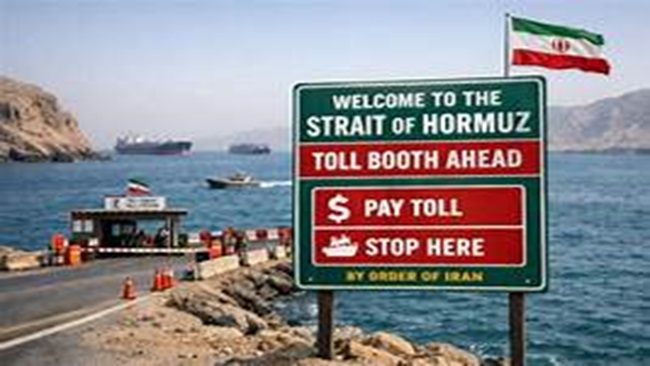
Attacks on energy infrastructure and shipping disruptions in the Strait of Hormuz, which handles about 35% of global seaborne crude oil trade, have triggered the largest oil supply shock on record, with an initial reduction in global oil supply of about 10 million barrels per day. Even after moderating from their recent peak, Brent oil prices remained more than 50% higher in mid-April than they were at the start of the year. Brent oil is forecast to average $86 a barrel in 2026, up sharply from $69 a barrel in 2025. These forecasts assume that the most acute disruptions end in May and that shipping through the Strait of Hormuz gradually returns to pre-war levels by late 2026.
“The war is hitting the global economy in cumulative waves: first through higher energy prices, then higher food prices, and finally, higher inflation, which will push up interest rates and make debt even more expensive,” said Indermit Gill, the World Bank Group’s Chief Economist and Senior Vice President for Development Economics. “The poorest people, who spend the highest share of their income on food and fuels, will be hit the hardest, as will developing economies already struggling under heavy debt burdens. All of this is a reminder of a stark truth: war is development in reverse.”
Fertilizer prices are projected to increase by 31% in 2026, driven by a 60% jump in urea prices. Fertilizer affordability will fall to its worst level since 2022, eroding farmers’ incomes and threatening future crop yields. If the conflict proves more prolonged, these pressures on food supply and affordability could push up to 45 million more people into acute food insecurity this year, according to the World Food Programme.
Prices for base metals, including aluminum, copper, and tin, are also expected to reach all-time highs, reflecting strong demand related to industries including data centers, electric vehicles, and renewable energy. Precious metals continue to break price and volatility records, with average prices forecast to increase 42% in 2026, as geopolitical uncertainty fuels demand for safe-haven assets.
Rising commodity prices caused by these shocks will increase inflation and dampen growth worldwide. In developing economies, inflation is now projected to average 5.1% in 2026 under the baseline assumptions—a full percentage point higher than was expected before the war and an increase from 4.7% last year. Growth in developing economies will also deteriorate as higher prices for essentials weigh on incomes and exports from the Middle East face sharp curbs. Developing economies are expected to grow by 3.6% in 2026, a downward revision of 0.4 percentage point since January. Economies directly impacted by conflict will be hardest hit, and 70% of commodity importers and more than 60% of commodity exporters worldwide could see weaker growth than was projected in January.
Commodity prices could rise even higher if hostilities escalate or supply disruptions from the war last longer than projected. Brent oil prices could average as high as $115 a barrel in 2026 in a scenario where critical oil and gas facilities suffer more damage and export volumes are slow to recover. This in turn would have ripple effects on prices for fertilizer and alternative energy sources such as biofuels. Under this scenario, inflation in developing economies could rise to 5.8% this year, a level exceeded only in 2022 over the past decade.
“The succession of shocks over the decade has sharply reduced the fiscal space available to respond to the current historic energy supply crisis,” said Ayhan Kose, the World Bank’s Deputy Chief Economist and Director of the Prospects Group. “Governments must resist the temptation of broad, untargeted fiscal support measures that could distort markets and erode fiscal buffers. Instead, they should focus on rapid, temporary support targeted to the most vulnerable households.”
The report’s special focus finds that oil-price volatility during periods of rising geopolitical risk is roughly twice as high as during calmer periods, with a geopolitically driven 1% decline in oil production pushing prices up by an average of 11.5%. Critically, these effects spill over into other key commodity markets, with an impact roughly 50% larger than under normal market conditions. According to the report, a 10% oil price increase triggered by a geopolitical supply shock leads to natural gas price increases peaking at about 7% and fertilizer price increases peaking at over 5%. These peaks typically occur about a year after the initial oil price shock, with adverse consequences for food security and poverty reduction.


















29, April 2026
Cameroon targets up to 800 billion CFA francs at November Investment Forum 0
Cameroon’s Investment Promotion Agency formally launched preparatory activities for the fifth edition of the Cameroon Investment Forum on April 28 in Yaoundé, setting a target of 500 billion to 800 billion CFA francs in investment commitments from the three-day event.
The forum, CIF 2026, is scheduled for November 18 to 20 at the Yaoundé Conference Centre. It arrives at a moment of accelerating economic realignment across the continent, with the African Continental Free Trade Area gaining momentum and regional value chains reshaping where capital flows, and Cameroon is explicitly positioning itself to capture a significant share of that investment traffic.
IPA Interim General Manager Boma Donatus presented the plans alongside Walid Farghal, Director General of the AIM Global Foundation, which is co-organising the forum under a Memorandum of Understanding signed in Abu Dhabi at the AIM Congress 2025.
Beyond the investment commitment goal, the forum aims to present 40 bankable projects, close or advance at least 15 deals currently in negotiation, produce sectoral roadmaps, and identify ten priority reforms to sharpen Cameroon’s competitiveness. Sectors in focus include agribusiness, energy, digital technology, logistics, infrastructure, and manufacturing.
A significant shift in this edition is the involvement of the AIM Global Foundation as co-organiser, a partnership the IPA says is designed to bring international rigour to an event previously organised primarily through domestic capacity.
“AIM can mobilise investors from almost every country where we cannot go ourselves. With a partner like this, we are certain that the appeal of our forum will be strengthened even further. AIM has expertise in developing several types of platforms that contribute to the signing of deals and strategic partnerships,” Boma Donatus said.
AIM Foundation operates across more than 180 countries, with a network of over 300,000 investors and institutions. Farghal, who travelled to Yaoundé to attend the launch and begin technical preparations with the IPA, was direct about what AIM brings to the table.
“Our focus is to develop deals for specific sectors especially infrastructure, logistics, new energy, manufacturing and agribusiness. We are working very closely with the IPA team to make sure that all features of the forum will be well positioned and promoted internationally to all AIM Global branches,” he said.
CIF 2026 is also being framed as a platform to promote ongoing government reforms, including the digitisation of administrative procedures and the modernisation of the investment framework, signalling to prospective investors that the operating environment is actively being improved.
The IPA has opened registration for all stakeholders, including businesses, investors, financial institutions, start-ups, project promoters, public administrations, and diaspora communities, at the forum’s website.
Source: Business in Cameroon