31, March 2026
CPDM Crime Syndicate: France flags payment delays as risk to investment climate 0
France has raised concerns with Cameroon over delayed payments to French companies working on public contracts, flagging the issue as a growing strain in economic ties between the two countries.
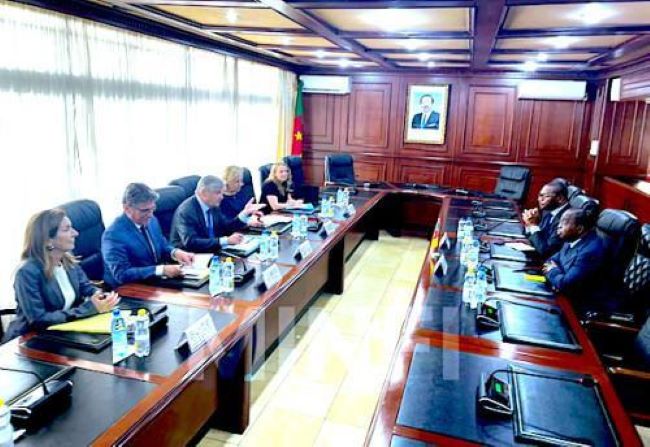
Following talks with Cameroon’s finance minister, Louis Paul Motaze, France’s minister delegate for foreign trade and attractiveness, Nicolas Forissier, identified the issue as a key obstacle to expanding business relations.
“There is an important issue that needs to be resolved if we want to bring in more companies or build new partnerships, and that is the fact that payments are sometimes delayed,” he said.
Behind the warning is a recurring problem: late settlement of government contracts. French authorities say these delays weigh on investor confidence and make the business environment harder to assess.
Cameroonian officials acknowledge the issue, particularly in the public works sector. A senior official at the Ministry of Public Works said the state owes tens of billions of CFA francs to a French company involved in urban and intercity road projects. Such arrears have fueled concern among companies operating in the country, even as investment needs remain high.
For Paris, the issue goes beyond unpaid bills.
Faster settlement of public debts is seen as a direct way to improve the business climate. “There are always reasons, I understand that perfectly, but anything that helps eliminate payment delays also improves the attractiveness of Cameroon’s economy,” Forissier said.
France is offering to deepen technical cooperation with Cameroon, particularly in public financial management and administrative processes, to help reduce payment timelines. “France is ready to provide its expertise to find solutions that improve the business climate and encourage more French companies to invest in Cameroon,” he added.
Paris has also pointed to broader concerns about the investment environment. Forissier cited “certain uncertainties” that may be holding back economic activity, including the need for greater predictability, transparency, and clarity in regulations.
He also highlighted issues related to regulatory stability, administrative processes, and corporate taxation, suggesting that improvements in these areas would help create a more stable and attractive environment for long-term investment.
France remains a major economic partner for Cameroon. According to Forissier, it is the country’s sixth-largest trading partner, with more than 200 French companies operating locally and employing over 20,000 people.
Trade between the two countries reached nearly CFA1,000 billion (about €1.5 billion) in 2023, according to French government data. That figure was down 9% from 2022 but up 57% compared with 2015.
Over the same period, French exports to Cameroon fell 11% to CFA376 billion, while imports from Cameroon declined 9% to CFA602 billion, leaving the trade balance in Cameroon’s favor.
For France, the priority is clear: maintain strong economic ties while securing progress on payment timelines, regulatory clarity, and administrative stability—conditions seen as essential to restoring investor confidence.
Source: Sbbc




















1, April 2026
Yaoundé: WTO Ministerial Conference ends without a breakthrough 0
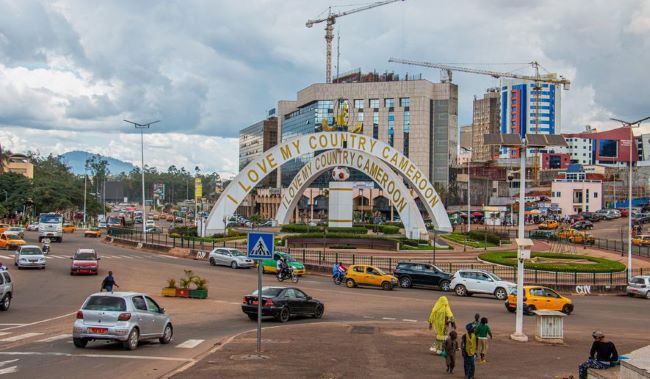
The World Trade Organization’s 14th Ministerial Conference (MC14) concluded in Yaounde with ministers adopting a set of decisions, while deferring several critical trade issues to further negotiations in Geneva, after four days of intensive talks involving nearly 2,000 officials and more than 90 ministers.
Chaired by Cameroon’s Minister of Trade Luc Magloire Mbarga Atangana, the conference secured agreements on integrating small economies into the global trading system and improving implementation of special and differential treatment provisions under sanitary and phytosanitary (SPS) and technical barriers to trade (TBT) agreements.
However, key negotiations on electronic commerce, fisheries subsidies and intellectual property-related moratoriums remained unresolved due to time constraints. Mbarga Atangana said ministers worked across multiple negotiation tracks to conclude as many issues as possible, describing the process as intensive and time-bound. He confirmed that discussions fell short on several outstanding files, including the WTO’s e-commerce work programme and the renewal of moratoriums on customs duties for electronic transmissions and non-violation complaints under the TRIPS Agreement.
The unresolved issues carry economic significance, particularly the expiring moratorium on customs duties on electronic transmissions, which underpins cross-border digital trade flows, and the TRIPS-related moratorium affecting intellectual property disputes. Both measures are set to expire at the end of March 2026, raising uncertainty for global digital commerce and innovation-driven sectors.
WTO Director-General Ngozi Okonjo-Iweala said members made progress on advancing a reform work programme and discussions on fisheries subsidies, while outlining a pathway to finalise outstanding agreements in Geneva.
“A lot was accomplished. We decided to work differently. I think we have a new WTO way of working to modernize the way we do business, so we can be more nimble, more responsive as we move forward,” Okonjo-Iweala stated.
Ministers agreed to continue negotiations on fisheries subsidies, with the objective of delivering recommendations at the 15th Ministerial Conference in line with commitments under the existing agreement. The talks are aimed at tightening disciplines on harmful subsidies that affect global fish stocks and maritime economies.
The conference also consolidated draft texts forming what has been termed a “Yaounde package”. The package comprises five draft instruments, which includes a proposed ministerial declaration on WTO reform, decisions on electronic commerce, TRIPS-related moratoriums, fisheries subsidies, and a package for least developed countries (LDCs). These texts are expected to form the basis for continued negotiations at the next WTO General Council meeting in Geneva.
“We are very close to a Yaounde package of agreements that would be important for members and the future of the organization. But we are not all the way there yet,” Okonjo-Iweala
The Ministerial Conference, the WTO’s highest decision-making body, is typically held every two years and serves as a platform for setting global trade rules. The Yaoundé meeting marked only the second time the conference has been hosted in Africa, placing regional trade priorities, including development and integration, at the centre of discussions.
Final decisions on the pending agreements, including those affecting digital trade and intellectual property frameworks, are now expected to be pursued in Geneva, where members will seek to convert draft texts into binding outcomes.
Source: Business in Cameroon