29, August 2024
Being Black in Germany has never been easy 0
It was a balmy summer night in 2020, shortly after the lifting of Germany’s first COVID-19 lockdown, and Omar Diallo and two friends from his home country of Guinea wanted to celebrate Eid al-Adha, the Muslim festival of sacrifice.
“We were enjoying life, playing music, walking through the city at night — we just wanted to be together again and have a good time,” Diallo, 22, told The Associated Press in Erfurt, in the eastern state of Thuringia.
He was not prepared for how the day would end. Suddenly Diallo and his friends were confronted by three black-clad white men.
“They were shouting: ‘What do you want here, f-——- foreigners, get out’!” Diallo remembered.
“First there were three, then five, seven — they were surrounding us from all sides. We couldn’t run away, and then they started chasing us,” he said.
At some point Diallo managed to call the police, and when the officers finally arrived, the attackers ran away. One of his friends was beaten up so badly that he had to be hospitalized.
“I simply tried to survive,” Diallo said. “I hadn’t done anything wrong. It all happened only because of my skin color.”
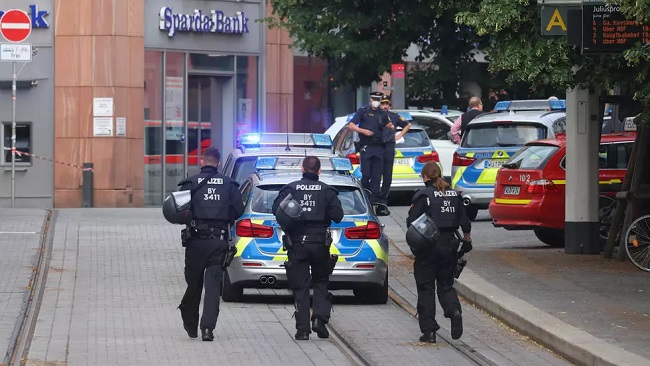
Being Black in Germany has always meant exposure to racism, from everyday humiliations to deadly attacks. In eastern Germany, the risk can be even greater.
After World War II, West Germany became a democratic, diverse society but in East Germany, which was run by a communist dictatorship until the end of 1989, residents barely had any contact with people of different ethnicities and were not allowed to travel freely abroad.
Experts say that specifically in Thuringia, radical far-right forces have created an environment that’s hostile toward minorities, including Black people.
Now, with the rise of the far-right Alternative for Germany, or AfD, Black Germans and African migrants like Diallo are growing increasingly concerned.
Thuringia, which has a population of 2.1 million,holds state elections on Sept. 1, and the fiercely anti-immigration AfD is leading the polls, on 30%.
In 2023, the NGO Ezra, which helps victims of far-right, racist and antisemitic violence, documented 85 racist attacks in Thuringia, down only slightly from 88 attacks in 2022, which Ezra described as “an all-time high of right-wing and racist violence” in the state.
“In recent years, an extreme right-wing movement has formed in Thuringia, which has contributed to a noticeable ideological radicalization of its followers. Politically, the Alternative for Germany party is the main beneficiary,” Ezra and a consortium of organizations tracking racism wrote in their annual report.
AfD’s Thuringia branch is particularly radical and was put under official surveillance by the domestic intelligence service four years ago as a “proven right-wing extremist” group.
“Authoritarian and populist forces, which are becoming very strong here now, harbor a great danger in Thuringia,” says Doreen Denstaedt, Thuringia’s minister for migration, justice and consumer protection.
Denstaedt, the daughter of a Black father from Tanzania and a white German mother, was born and grew up in Thuringia.
The 46-year-old member of the Green party said that growing up in Communist East Germany, she was “always the only Black child.” As a teenager, she was never allowed to go home on her own because of the risk of racist attacks, and she sometimes suffered racist slurs in her school.
“I actually experienced myself that people called me a foreigner, which really confused me at first, because I was born in Saalfeld” in Thuringia, Denstaedt said.
She fears that in the current political climate, racist narratives will become acceptable in the middle of society.
“My biggest concern is that people do not question (these prejudices), especially if they are not affected themselves,” she said.
It’s not exactly clear how many Black people live in Germany nowadays, as different ethnicities are not documented in official statistics, but estimates put the number of people of African descent at 1.27 million. More than 70% were born in Germany, according to Mediendienst Integration, which tracks migration issues in the country.
Germany’s history of racial discrimination begins long before the Nazis began excluding, deporting and ultimately murdering Black people in the 1930s and 1940s.
The German Empire held numerous colonies in Africa from 1884 until the end of World War I. These included territories in present-day Tanzania, Burundi, Rwanda, Namibia, Cameroon, Togo and Ghana.
The German government has only recently started dealing with the injustices committed during that period. In 2021, President Frank-Walter Steinmeier called on Germans to face the country’s cruel colonial past, and in 2023, he apologized for colonial-era killings in Tanzania over a century ago.
Daniel Egbe, a 58-year-old chemist from Cameroon who moved to Thuringia in 1994 to study, says he’s shocked how little Germans know about their colonial history. He says this ignorance may also factor into the unequal treatment of Black people.
“I’ve been teaching classes in school,” Egbe told the AP. “I tell them a bit about myself and especially the fact that Cameroon was a German colony. Many students don’t know anything about Africa or about the German past and it must be put on the map.”
Egbe, who took German citizenship in 2003, founded AMAH, an organization that helps university students and migrants from Africa when they experience discrimination in the city of Jena, in eastern Thuringia.
He’s worried about the rise of the AfD but has no intention of leaving.
“We won’t leave, we will do our part to change this society,” he said. “People are mostly afraid of what and who they don’t know. We have to change things through education.”
As for Diallo, the Guinean who was attacked in Erfurt four years ago, he also vowed to help improve the situation for Black people in Germany.
Even though the attack traumatized him, it also empowered him to fight for justice, he said. A year ago, he enrolled in university in Munich to study law, but he still visits Erfurt frequently, where he supports Youth without Borders, a network of young migrants.
“I don’t exactly know yet how I’m going to change Germany, but I know I will,” he said.
Culled from AP


















7, September 2024
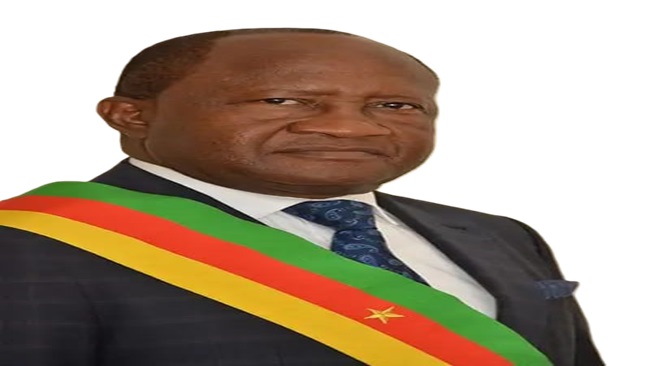
Cameroon Football: Why is Minister Narcisse Mouelle Kombi very desperate? 0
For a long time now, Cameroonians have been watching a very unsettling movie wherein the key actors are the country’s sports minister Narcisse Mouelle Kombi; the Indomitable Lions coach Marc Brys and the President of the football federation (FECAFOOT), Samuel Eto’o.
The movie has gone round the globe and many people are very unhappy with what is happening to Cameroon’s football. Many people around the world see Cameroon as a great footballing nation but this image seems to belong to the past.
The fighting has reduced Cameroon’s image abroad and many think that the country’s days as a football giant in Africa now belong to the past. But that past was characterized by corruption at the football federation.
Since taking charge of football affairs, the global icon, Samuel Eto’o has been shutting down all the loopholes which have helped many involved in Cameroon’s football management to become illicitly rich.
This decision has hurt many, especially the sports and physical education minister, Narcisse Mouelle Kombi, who holds that this is the time for him to feather his nest.
He has woven a team comprising journalists, influencers, former players who were enjoying benefits they did not deserve and other enemies of the FECAFOOT president for them to fight and send Samuel Eto’o out of the federation. Samuel Eto’o is bad news to Mouelle Kombi and his cronies.
Initially, Mouelle Kombi thought it was going to be an easy battle. He did not know that he had a tough cookie in front of him. As the fighting continues so do Mouelle Kombi and his friends in crime get deeper into desperation and poverty.
Mouelle Kombi has children abroad and many are studying in expensive universities and this bruising conflict with Samuel Eto’o, a man with a huge war chest, is destroying the Biya acolyte both financially and psychologically, especially as the calls for school fees are incessant and threatening.
It is not just the business of school fees that is keeping the 62-year-old Mouelle Kombi awake. A massive multi-apartment structure he has been erecting in Yaoundé has come to a screeching halt. Money from FECAFOOT has vanished with the arrival of Samuel Eto’o who does not admire corruption in any way, shape or form.
Professor Mouelle Kombi’s phone is permanently off the hook as his numerous girlfriends, many of whom are living in Europe and Canada, keep on calling to report that their rents are due. Mouelle Kombi is in trouble right up to his eyeballs.
Minister Kombi knows that without money, those girlfriends of his will be gone. Money is to women what honey is to bees. Mouelle Kombi does not want to lose them, but with Eto’o at the helm in FECAFOOT, it is clear that Mouelle Kombi will be financially emasculated. The fighting is costing him his reputation, health and peace of mind.
A source close to the learned professor who is also a practicing lawyer but who has also morphed into a practicing liar says that Mouelle Kombi is losing his mind.
Before boarding the flight to Garoua where the match against the Brave Warriors of Namibia has to be played, the learned professor could be heard screaming over the phone after a call came through. It was a lady in Paris who was mounting pressure on Mouelle Kombi for him to send money.
Her rents were due and from every indication, Mouelle Kombi is cash-strapped. Despite his attempts to explain to the lady that things would be fine, the lady kept on pressurizing him, cautioning that she could be homeless in the coming weeks if Mouelle Kombi did not send money. Mouelle Kombi is in trouble and he knows with an enemy like Eto’o, the future will only continue to be bleak.
The source added that the professor who was considered to be taciturn is today talking but unfortunately to himself. Eto’o’s poison has hit the minister where it hurts the most. To douse his pain, the professor now drinks and it was surprising that last week he lost control of himself and started asking Marc Brys for a cigarette.
The source furthered that some people are advising the minister to negotiate with Eto’o. The minister does not want to swallow his pride but if he does not change his mind, he will be pushed to the edge of a financial precipice.
By Soter Tarh Agbaw-Ebai