
10, August 2019
Final Days: Signs of Biya regime’s impending demise 0
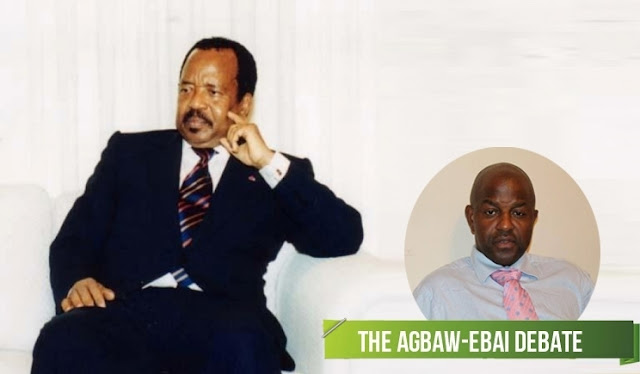
Is President Paul Biya’s regime on the verge of crumbling? Happenings over the past three months suggest it is. First are the obvious signs: the reemergence of Boko Haram attacks in the Far North region demanding immediate deployment of more troops, a long standing ally President Obiang Nguema of Equatorial Guinea now set to build a wall to prevent Cameroonians from entering his country, the Southern Cameroons war that has become more intractable, the security situation in the East region that is deteriorating at catastrophic rapidity and the curious fact that the man himself is suffering from cancer. But there are some equally intriguing bits of circumstantial evidence.
The first emerged recently, when Biya signed a decree informing Cameroonians that the Secretary General at the Presidency, Ferdinand Ngoh Ngoh will henceforth deputize for him. Many within the Francophone regime responded privately by stating that such a move has no constitutional backing. The arrest of former Defense Minister Edgar Alain Mebo Ngo’o had long signaled that Ferdinand Ngoh Ngoh was already in charge and the ailing Biya and his ruling Beti Ewondo clan were attempting to prevent a major break deep inside the government. And would Ferdinand Ngoh Ngoh have so crudely ridiculed Mebo Ngo’o—and, by extension, the Francophone dominated Beti Ewondo military, which has favoured the Biya regime if he did not realize the end was near?
Recently, the Biya government has been kicking international human rights groups and their representatives out of the country. The International Crisis Group was forced to leave as there was fear that the renowned body was helping the world to witness the impending collapse of the Biya regime.
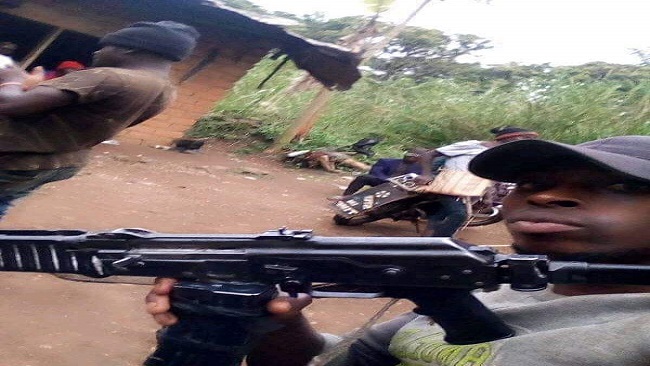
In August alone, the regime has invested hundreds of millions of FCFA (money that it does not even have) on a campaign to get Southern Cameroons parents to send their children back to school. The whole exercise seems to have failed. Few will fail to notice that the local population in Southern Cameroons now feels that the Ambazonia Restoration Forces have booted the French Cameroun army out of town. Every Southern Cameroonian now believes it is safe to come out against Biya.
Also, the West has placed the regime in some kind of economic sanctions. German Chancellor Dr Angela Merkel recently stopped all military cooperation with Yaoundé. The Americans took a more radical approach by not only ending a very lucrative military deal with Biya but also pulled out all US servicemen and women from the North region that were stationed there to help in combating the Nigerian Islamic sect Boko Haram.
For their part, the Swiss ordered President Biya to leave their country and they are now in support of regime change as a goal towards ending the numerous crises that have rocked the Cameroonian nation. The Dutch and the Belgians have all withdrawn financial aid to the Yaoundé regime. Our senior political correspondent in Paris, France noted that the French are hoping that the Biya regime will collapse as soon as possible.
Again, these events prove nothing definitive. They are, at most, signs, signals, tokens of shifts in the game of perceptions and the correlation of forces. For, if the signs do point to a real trend, and not just random coincidence, they might indicate that Biya’s regime will implode very soon.
Surely with Biya’s acolytes dying like flies name them: Martin Belinga Eboutou, Sadou Hayatou, General James Tataw and his allies shifting into neutral, neutrals relishing his downfall, and local foes moving into open opposition mean something. These shifts, along with divisions in the military, might be enough to convince Biya or those around him that the game is up, that there’s no way out, and that their best-case scenario is for Mister Paul Biya to resign.
By Soter Tarh Agbaw-Ebai
















11, August 2019
Southern Cameroonian aspiration for freedom is mightier than any army that stands in its way 0
For those who are familiar with the expression “wata na wata” you probably think of it as a historical Southern Cameroons grievance over events that unfolded some 57 years ago. That was the time when the French government facilitated the creation of the so-called Federal Republic of Cameroon and later transformed it into the United Republic of Cameroon.
The French Commissioner to French Cameroun, Roland Pre ousted Andre Marie Mbida as Prime Minister of French Cameroun and replaced him with a man the world came to know as President Ahmadou Ahidjo. Ahidjo was then accorded the task of assimilating British Southern Cameroons.
Some Southern Cameroonians fled towns like Mamfe and Nkambe upon hearing of the 1961 plebiscite results that John Ngu Foncha and the KNDP had won. Southern Cameroons political elites who called for a thorough interpretation of the plebiscite results were flushed out. Correspondingly, communities that tried to resist the reunification process were decimated.
There was a feeling of considerable slaughter of Southern Cameroonians during the Bamenda Preparatory Conference in 1961 and it has been hard for Southern Cameroons political commentators to explain why Dr Emmanuel Lifafe Endeley was absent in Bamenda. Endeley wrote a letter to the Bamenda Preparatory Conference which was never read but in that document, he noted that his feeling about the Plebiscite was more of a “massacre” than anything else.
When all was said and done, the Federal Republic of Cameroon was established after the Foumban Conference and on May 20th 1972, French Cameroun started the process of seizing and destroying everything that is Southern Cameroons. Since then, the people of Southern Cameroons lost everything including the name of the port city of Victoria that was changed to Limbe by French Cameroun political elites with the support of the disgraced Prime Minister Ephraim Inoni.
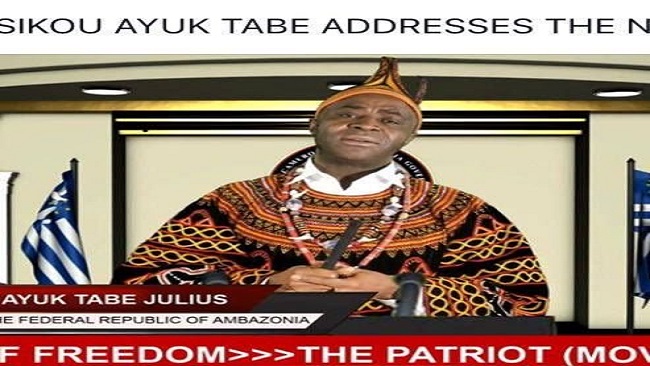
As the Biya Francophone government continues to celebrate its military superiority over Ambazonia Self-Defense Forces, Southern Cameroonians are weeping over the failure of leadership in the Interim Government caused by the abduction of President Sisiku Ayuk Tabe and his top aides in Abuja, Nigeria.
This is true as the French Cameroun army continues to destroy Ambazonia villages and killing hundreds of Southern Cameroons women and children. It is genocide for the explicit purpose of replacing the Southern Cameroons population with French Camerounians, ignoring the objections of major human rights organisations like Human Rights Watch and Amnesty International.
The French Cameroun army has successfully decimated as many as 200 Southern Cameroons villages and in some cases even ordered Ambazonians out of their ancestral homes so that the French Cameroun army and it civil administrators can take their place. These French Cameroun crimes against the people of Southern Cameroons have surpassed the scale of calamity carried out in Rwanda during the genocide. The international media has failed to convey Southern Cameroons’s tragedy accurately as a struggle against marginalisation, discrimination and exploitation.
To resolve this conflict, the Southern Cameroons leader, Sisiku Ayuk Tabe made an extraordinary gesture despite the enormity of the injustice imposed on him, his aides and the Ambazonian people for over 57 years. President Sisiku Ayuk Tabe requested for an all inclusive dialogue to be hosted in a foreign country and supervise by the United Nations.
President Paul Biya and his gang of French Cameroun political elites simply moved the goalposts. The French Cameroun army has continued to destroy Southern Cameroons towns and villages. To be sure, Biya’s killing machine has continued to operate under the pretence of a “Back to School” process now headed by a certain Barrister Agbor Balla.
French Cameroun government ministers who hail from Southern Cameroons including some Southern Cameroonians running fraudulent NGOs have moved us farther away from holding Yaoundé accountable for their crimes, supporting Beti Ewondo extremist hardliners for blood money, backing away from Southern Cameroons statehood, taking everything off the table and even replacing the use of the word “Federalism” with ‘Decentralization” to support French Cameroun army’s presence on Southern Cameroons territory.
So here we are, more than three years after the Southern Cameroons revolution started, Ambazonians are back at square one with some struggling on social media to defend a Pastor-Leader who wasted their hard earned money for his self-aggrandizement with a few pretending to host an Ambazonia Cultural Festival in London on the 17th of August at a time when much of the international community has resigned itself to tepid commentary instead of meaningful action against the Biya Francophone regime.
Biya and his French Cameroun military with support from the French government and French speaking African diplomats have barred Southern Cameroonians from every avenue towards dignity and freedom: No right to reside in a viable environment, no right to return to their original homes from Nigeria or from Europe and America, and live bullets awaits those who mount any effective protest, even when they’re unarmed and non-violent.
But no matter how bleak the reality looks today in Ground Zero and in the Southern Cameroons Interim Government with Sako Ikome and Chris Anu now appearing as fifth citizens (Fifth citizens were Europeans who cooperated with the Nazi when the German army invaded their respective countries), in terms of policy and on Ground Zero including the work of Vice President Dabney Yerima, there is a counter-reality we Ambazonians must recognise: Southern Cameroonian aspiration for freedom is mightier than any army that stands in its way. French Cameroun bullying and coercion over the past 3 years have not broken the spirit of the Southern Cameroons revolution, and another 57 years won’t either.
The Southern Cameroons resistance for justice, which envisions the kind of equality and prosperity that protects the future of all Ambazonians, will continue until we bring this 57 years long “wata na wata” battle to an end, once and for all.
By Soter Tarh Agbaw-Ebai