21, January 2020
Southern Cameroons Crisis: Senior government official bares his mind 0
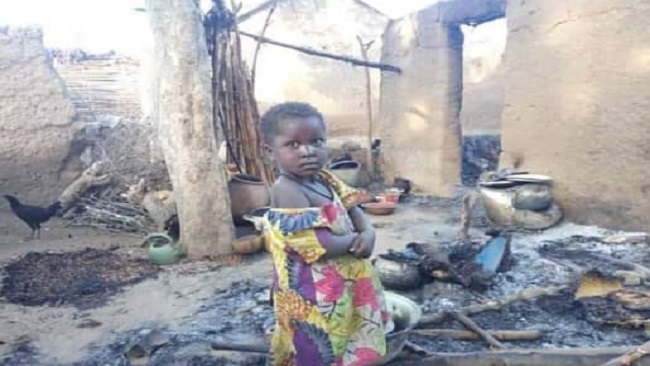
Radicalized by the government’s use of death squads and arsonists to intimidate Southern Cameroonian fighters, a senior government official on Monday, January 20, 2020, clearly expressed his frustration with the government’s strategy to end the rebellion in the two English-speaking regions of the country.
Speaking to the Cameroon Concord News Group Chairman, Soter Tarh Agbaw-Ebai, over the phone, the senior official who elected anonymity said he was really frustrated with the manner in which the Yaounde government had mismanaged the Southern Cameroons crisis which started as simple protests by teachers, lawyers and students.
He said his anger boiled over because of the speech delivered by the country’s president, Paul Biya, on December 31, 2019, wherein he promised more violence to Southern Cameroonians if the fighters did not down their weapons.
“I am still at a loss for words. After three good years, we still believe that only military violence and atrocities can help restore peace in the two English-speaking regions of the country,” he said.
“We cannot continue treading the same path and be hoping for different results. Let the government understand that it was its violence that caused things to spiral out of control,” he said, adding that “won’t it be wise for the president and his tribesmen who are committing these atrocities to embrace a different approach? Why are they destroying homes and killing the innocent when the fighters live in the jungles?”
“It is too disheartening to see a man many thought he wanted to become a priest conduct such a nasty war against his own people. What type of country is he bequeathing to the next generation? Today, the country is much divided and there are many Anglophones who hold that they are being killed by a Beti death squad set up by Joseph Beti Assomo, the country’s defense minister. Does this create room for national reconciliation and unity, or does it pit Anglophones against Betis?,” he questioned.
“Many Anglophones in Yaoundé are really upset with the war strategy adopted by the government and the bitterness generated by government atrocities will linger for a long time,” he pointed out.
“Only very few Anglophones in Yaoundé are in favour of what is happening in our two English-speaking regions. Many are angry, but cannot talk. Some like the puffy jaw former Prime Minister, Mafany Musonge, are indifferent to the people’s plight because they are enriching themselves as things deteriorate in the two regions of the country. The world is really surprised at such display of greed. How are these people living with themselves?” he quipped.
He also took aim at Anglophones, stressing that the unity that characterized the revolution in the early days could have brought the government to its knees if the Diaspora had not resorted to shooting itself in the foot.
“Those of us who really feel for our people, but cannot talk, were counting on the Diaspora for salvation. We saw the Southern Cameroonian Diaspora as a silent liberating force. The huge amounts that were being raised in the United States and Canada to finance the war effort gave us hope. But our hope was dashed when the leaders started fighting each other and vital resources were allegedly embezzled by some Interim Government officials,” the disappointed official said.
“Many of us were quietly happy when arms started getting to our fighters who before that could only lay their hands on machetes and hunting rifles,” he said.
“If Anglophones have to make more progress, the different factions must stop fighting each other. In moments like this, everybody should be your ally regardless of the individual goal. We know some factions are for independence, others for federalism, while others are gradually settling for autonomy within Cameroon, but regardless of the philosophy of each group, our goal should be to mount pressure on the French-supported government so that it should embrace the Canadian-supported Swiss initiative that is popular with many Western countries,” he stressed.
Once the government buckles under the pressure and decides to embrace the Swiss initiative, then each faction can use the opportunity to present its case. Fighting and killing other fighters only weakens the struggle and the government is watching gleefully as we shoot ourselves in the foot,” the official said.
“We cannot keep on slinging mud at each other. We are splitting our ranks and this is diminishing our capacity to achieve anything meaningful,” he pointed out.
“Mistakes will be made along the way, but instead of focusing on those mistakes, we should be focusing on the solutions and methods that can enable all the factions to work together,” he stressed.
“From every indication, the government is desperate. The crisis has robbed the government of vital revenue streams and this is hurting so badly. The current burning of homes is designed to force the fighters to down their weapons, but from every indication, things will not work the way the government has planned,” he said.
He added that “the burning of homes in villages is not playing in the government’s favor. The Diaspora should use this reckless approach by the government to close ranks. A strong diplomatic initiative should be launched by all the factions and a huge delegation sent to the UN and other organizations to ensure that the Southern Cameroons crisis is not pushed to the back burner,” he stressed.
“Suppress your egos and let unity prevail. As Anglophones, we can achieve a lot if we close ranks, rob ourselves of our egos and consider that the real enemy is the Yaoundé government that is killing our people just for complaining,” he underscored.
“The government is hurting. It is running out of cash. Its coffers are drying up. Those of us within are aware of the state of the country’s finances. If this crisis continues for two more years, the government will shut down many operations. Things are not looking up for this government that thought it could restore order in one week, but it has failed woefully” he said.
He urged Anglophones to contribute money to any faction of their choice, adding that the ultimate goal should the improvement our fate. We have gone through a lot as a minority and if the Diaspora does not bail us out, then we are stuck with a government whose secret agenda is to assimilate us at all cost.
He concluded that he could have loved to express his views openly, but said it would be like committing suicide.
“This government is devilish. It never hesitates to kill those who challenge it. If Wirba had stayed in Cameroon, he would have been history today. He was smart to have left,” he pointed out.
The burning of homes cannot be part of the special status the fake major national dialogue came up with, he said.
“This government cannot be trusted. We must fight to attain our goals. There is no turning back. This government says one thing and does the opposite. Does special status mean burning homes and killing innocent people?” he questioned.
Since the conflict started in 2016, some 5,000 civilians have lost their lives, while sources close to the ministry of defense say some 2,018 soldiers have died and this figure does not include police officers and prison guards who have also been attacked by Southern Cameroonian fighters.
By Kingsley Betek in Yaounde and Soter Tarh Agbaw-Ebai in the United kingdom
















25, January 2020
Achidi Achu: Will he still support the CPDM? (Video) 0
The home of former Prime Minister, Simon Achidi Achu, has been burnt and his son shot, then roasted in the northwest regional capital of Bemenda.
The incident happened on Friday, January 24, 2020, as government efforts to roll back separatist attacks have intensified since the beginning of this year.
Mr. Achidi Achu is a staunch member of the ruling CPDM and one of the architects of the strategy the government is using in its efforts to oppress the people of Southern Cameroons.
The government has been on a home-burning spree over the last two weeks in the two English-speaking regions of the country in a bid to organize municipal and parliamentary elections in the entire country
The results of the elections are already known, and the ruling CPDM will emerge as the winner on February 9, 2020, but the government is desperate to prove to the international community that its victory has came after free and fair elections.
Southern Cameroons fighters had said they would disrupt the elections and the Southern Cameroons Interim Government had declared a lockdown which will ensure that the population of Southern Cameroons does not participate in elections many hold will not change anything in Cameroon.
Many Southern Cameroonians have been killed by trigger-happy government forces over the last three years, and Mr. Achidi Achu, considered as a major voice in the country, has never condemned the violent method the government has been employing to fighter restoration forces, most of whom live in the jungle.
With this incident, many are asking if Mr. Achidi Achu will still go about his business as if nothing has actually happened?
Many are also asking if he will still militate in a party whose method of dealing with descent has been condemned by the international community.
Speaking to a senior civil servant in Yaounde who elected anonymity, it was clear that many government officials are not in accord with what government forces are doing in the two English-speaking regions of the country.
The source said the situation was really unfortunate, adding that after all the killing and burning of homes, will it still be possible for Southern Cameroonians to feel at home in a country wherein the only way of addressing issues is by using military force?
“How can we continue to think that Cameroon is one and indivisible when we see such pictures?,” he quipped.
He said he would be very disappointed if something was not done to end this barbaric actions still used by the government.
“Will Mr. Achidi Achu still continue to be part of this party, which many consider as a crime syndicate?,” he asked.
The knife is turning inwards, he said, adding that this is an opportunity for Mr. Achidi Achu to petition the government for these criminal operations to be suspended.
“If innocent people are being killed and senior government officials are not safe, who then can really trust this government,” he asked.
“If so many people are being rendered homeless because their homes have been burnt, how will these same people vote on election day when their national identity cards and voters’ cards have been lost in the fire set by government forces?,” he quipped.
He urged the international community to intervene forthwith, adding that at this level no government policies can address this unfortunate situation that has been going on for three years.
“Where is the special status the president talked about? Is the killing of people and burning of homes part of the special status?,” he asked.
He regretted having being part of a country wherein dialogue never exists when people disagree.
We cannot continue like this, he concluded.
By Joachim Arrey in Canada