3, March 2019
The Judgement of the Federal High Court of Abuja: Unmasking Another International Conspiracy 0
HAIL THE RULE OF LAW
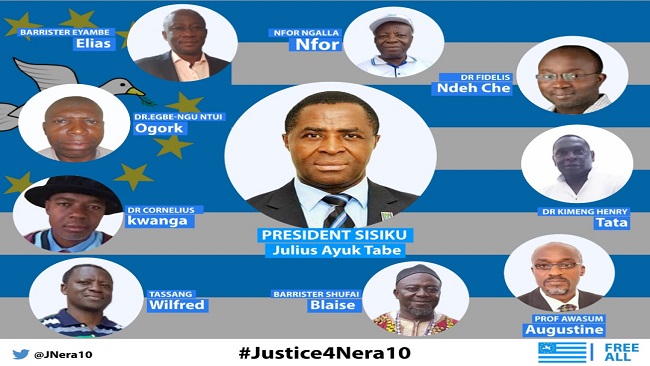
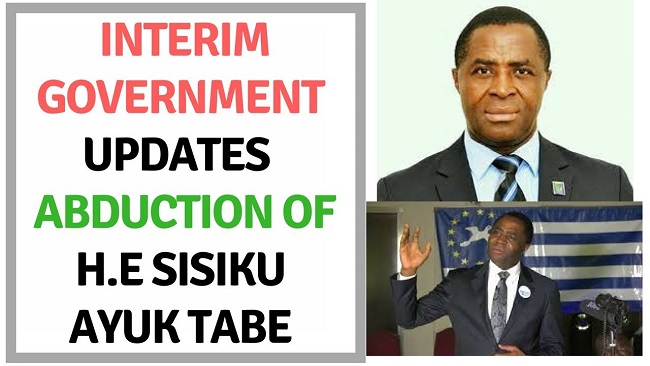
The judgment of the Nigeria Federal High Court in Abuja on March 1, 2019, declaring illegal and unconstitutional, the abduction and deportation to Cameroun of the President of the Interim Government of the Southern Cameroons/Ambazonia Sisiku Ayuk Tabe, members of the Interim Government and several Southern Cameroons refugees carries significant symbolic weight.
The judgment has comprehensively determined the legal status of the abductees which was in controversy since Cameroun characterized them as terrorists on the account of alleged crimes committed against Cameroun from the territory of Nigeria; so, the Isa Tchiroma and the Court-martial alleged. The Federal High Court of Abuja Nigeria on the territory of which the crimes alleged in the court-martial were allegedly committed has decided that they are persons who were legally in the territory of Nigeria as refugees under the protection of international conventional law at the time of their abduction and deportation. They were not therefore terrorists nor did their presence and activities constitute terrorism to warrant their being characterized as terrorists to warrant abduction and deportation to face a court-martial. Even if they were terrorists, international law still outlawed the abduction and deportation without compliance with the municipal and international rule of law.
This judicial determination settles a key issue in the subsequent case brought against the victims by Cameroun, the state to which they were deported. The failure of the court-martial in Cameroun where the abductees are forcefully subjected over their objections, to take judicial notice of the Judgment of the Abuja Federal High Court will have bilateral relations and multilateral treaty obligations consequences on the two countries, in the short and long term. Nigeria and Cameroun are state parties to the 1951 United Nations Convention on Refugees and its Additional Protocol 1967. Both countries are state parties to the OAU 1969 Convention Governing the Specific Aspects of the Refugee Problem in Africa which came into force in 1974.
The refugee problem globally and in Africa is a matter of significant international emergency, if not a humanitarian crisis. Without the existing multilateral treaty regime to manage this humanitarian crisis, millions, of the world’s vulnerable refugee population will be pursued across international boundaries and slaughtered by the murderous regimes and criminal squads from whom they fled in the search for protection. International law mandates state parties to the Refugee Convention to open their frontiers to allow refugees fleeing from wars, genocide, crimes against humanity and other life-threatening conditions to their lives to provide them protection. International law outlaws the abduction, deportation, rendition or the refoulement of persons who have sought refugee status to the countries from which they fled. Once the status of refugees is sought or obtained, the person concerned becomes a ward of international law under the Refugee Convention and its Additional Protocol. State Parties to the Refugee Convention are mandated to ensure compliance and indeed are obligated to submit periodic reports on compliance with their treaty obligations under the convention. Nigeria and Cameroun had a multilateral obligation to ensure that the refugee status of the abductees in Nigeria was respected and protected. Their mandate and responsibility are to the international community, since the 1951 Refugee Convention has near world wide membership. By engaging in criminal conduct to abduct and deport the victims to face a court-martial that applies the death penalty to Cameroun, Nigeria and Cameroun betrayed, violated and endangered the multilateral treaty regime and a protected international human rights value system.
The Federal High Court Judgment provided an opportunity to Nigeria to explain to the world, the rationale and legality of the abductions. It is significant that Nigeria did not convince the court that the abduction and deportation was informed by any compellable reasons justifiable in municipal and /or international law. Nigeria did not convince the court of any legally justified reason to violate with impunity the Nigeria Federal Constitution (1969), its multilateral treaty obligations under the UN Refugee Convention and its Additional Protocol, the African Convention, the International Covenant on Civil and Political Rights and the Rome Statute. There is no compelling reason to explain why Nigeria mortgaged its reputation, its influence in Africa and its claims to lead and represent Africa as a world power at the UN Security Council to fulfil the dictatorial and criminal proclivities of a regime baying for the blood of millions of Southern Cameroonians. Hundreds of thousands of Southern Cameroonians have been deported by Cameroun from their ancestral home which are systematically torched as a deliberate government policy as senior military commanders and civilian government officials have admitted, across the border with Nigeria. The victims who at a great risk of a genocide sought international protections within the territory of Nigeria are living under continuing threat of abduction and assassination, after Nigeria provided support to Cameroun to pursue the commission of international crimes against them in the territory of Nigeria.
The answer as to what endeared President Mohammadu Buhari to place Nigeria at the centre of an unfolding genocide, rather than acting as a facilitator of negotiations and peace may not be answered in this one critical historic judgment. Yet the judgment has the merit of laying an enduring foundation for answers to be provided within the compelling injunction of history. The truth, it is said, will never die with those who thought they could imprison it with sheer political chicanery and stealth transborder corrupt operations. Truth is as stubborn as a rock. Nigeria and Cameroun are aware, and this is important, that the underlying cause of the war declared by Paul Biya as a proxy of France, are the resources within the territory of the Southern Cameroons. These minerals are the umbilical cord to the perennial Nigeria misadventure that has devasted the Niger Delta, its ecosystem, maritime resources, economy and human health. Time will reveal if there are a convergence of economic and hegemonic interests by the known yet, invisible political god fathers enforcing the genocide using Nigeria and Cameroun proxies.
I learnt from my years as a lead counsel at the Special Court for Sierra Lone, in the case of the Revolutionary United from for Sierra Leone (RUF)-Morris Kallon that minerals are the curse of Africa. That is why Central Africa Republic has never been at peace since independence despite its mineral rich capabilities. The Democratic Republic of the Congo is one case in point; so also, Burundi where abundant mineral resources have attracted the interest and wrath of neo-colonial economic and natural resource predators.
The bazaar auctioning of the Southern Cameroons at independence as my late friend Dr Bate Besong stated, or the Mc McLeod slave deal, as the father of Ambazonia Fon Gorgi Dinka described it, was intended to silence the liberating ambition of Ambazonia patriots. For the record, the slave and bazaar dealers did not know that Ambassbay from which Ambazonia derived its name, stood watch over the liberating spirit of its Ambazonia offspring. Ambassbay is a natural environment for the sharks in the Ambazonia sea as opposed to the neighbouring sea which is inhabited by “crayfish”. Those with a good sense of aquatic life know that a shark is not an ordinary fish, surely not a crayfish. And this is where the difference lies.
This judgment of the Abuja Federal High Court conveys an underlying message to the abductors that the abduction of Southern Cameroons leaders and citizens will have consequences that may potentially threaten peace and security in the Gulf of Guinea. That Nigeria has become a key ally of the state actor that declared the war of choice that have the capacity of igniting a conflagration in the Gulf of Guinea affecting its own citizens and interests on both sides of the borders, is a matter of profound concern.
The judgment is a municipal judgment on compliance by Nigeria of its multilateral treaty and constitutional obligations. Finding that Nigeria violated its municipal laws and treaty obligations, is an important contribution to international law. This judgment therefore must be served on the United Nations Secretariat, the United Nations High Commissioner for Refugees in Geneva, all the permanent and non-permanent members of the Security Council through their permanent representations in New York, all ECOWAS state parties through their diplomatic representations in Abuja, the EU state parties present in Brussels, the AU Commission, and give wide publicity.
This judgment negates the charge by Cameroun that the abductees were and are terrorists. Nigeria did not make this charge before and during the hearing. Nigeria should be concerned that persons found to be refugees by its own judiciary are facing a court-martial based on international and municipal violations of its own government. With this judgment, the blood of the abductees and other Southern Cameroonians will lay on the hands of Nigeria should they be further held in violation of this judgment or should they be executed pursuant to the court-martial.
International law mandates that any offence committed on the territory of Nigeria can be investigated and prosecuted by Nigeria failing which Nigeria can send the refugees to a third country willing to accept them but not to the country from which they fled and sought refuge in Nigeria. Will Nigeria submit itself to a court-martial in Cameroun to provide evidence of acts alleged in the charges before the court-martial that were allegedly committed in Nigeria? Does Nigeria recognize a court-martial for civilians which is international human rights jurisprudence has characterised as torture and thus illegal? Does Nigeria by the abductions give legal approval to the crime of abduction which criminalised under the Rome Statute which Nigeria is a state party? Is abduction of civilians not one of the crimes alleged against Boko Haram in which hundreds of thousands of Nigerian civilians have lost their lives? The Abuja High Court trial was an occasion for Nigeria to prove that abduction is legal when conducted by a state actor but illegal when carried out by non-state actors. Nigeria failed to prove this or even convince the court that this crime may be legal under such or other circumstances.
Nigeria under President Mohammadu Buhari tends to disobey court orders and indeed disobeyed the order of the Federal High Court in Abuja made by Justice Gabriel Kolawole dated December 2, 2016 ordering the release of Ibrahim el Zazaky the leader the Shiite Muslim Movement who was abducted by the DSS on December 13, 2015. The DSS alleged that he was detained at his own request for protection. The Judge was unpersuaded on the grounds that protective custody was unknown to law or National Security Agencies Act establishing the DSS. Since December 29, 2015, Colonel Abubakar Malami former National Security Adviser of President Goodluck Jonathan has remained in jail despite court orders for his release.
However, in a suit brought by a constitutional lawyer Johnmary Jideobi praying the court to void the SAN of the Attorney General of the Federation, Abubakar Malami for professional misconduct for advising the Federal Government to disrespect court orders, the Attorney General refused being held accountable for advising the Federal Government to disrespect court orders and that he was not informed about the detentions and so his advice was never sought in the cases. The Attorney General argued in his defence that in cases where his advice was sought, he advised, and the Federal Government complied with court orders. He cited the release on bail of Mazi Nnamdi Kanu the leader of Independent People of Biafra (IPOB) and that of the survivals of an attack on an uncompleted house in Abuja which was stormed and murdered by some operatives of the National Intelligence Services after the Nigeria Human Rights Commission ordered that victims and their dependents be compensated.
This defence by the attorney therefore begs the questions, if he was never informed how then did, he enters appearance to defend the illegal actions of the Nigeria Government?
Africa, and African leaders should hail the Judgment of the Federal High Court of Nigeria in Abuja and pressurise Nigeria and Cameroun to execute it without delay. This judgment protects the municipal and international protections of refugees afforded by multilateral treaties and municipal constitutional provisions. The international multilateral treaty regime has been tested and proved to be critical in checking the excesses and exactions of the world refugee crisis and the humanitarian calamity that is rocking the conscience of humanity. In their imposed inhuman dungeons Sisiku Ayuk Tabe and the Ambazonia abductees represent the face of humanity at risk. This judgment protects that human value represented by Sisiku Ayuk Tabe. African leaders and the international community should applaud this judgment and pressurise Nigeria and Cameroun to obey and execute it.
This judgment should be a shock reminder to everyone, the powerful and the weak, that a refugee is a protected ward of humanity and the legal regimes emplaced to protect him or her attest to this fact. Abducting and deporting refugees to be court-martialled or placing them in harm’s way tantamount to driving a sword on the collective conscience of humanity. This should not be allowed to happen without consequences.
I have a message for those responsible for the abduction and court-martial of civilian victims. Respecting this judgment may be the only opportunity for them to avoid placing their own poisoned chalices to their own lips. Babatoura Ahmadou with the use of terror pursued nationalists who sought refuge in foreign lands but died a refugee himself in solitude in distant Senegal. The refugee status he imposed on others and pursued, abducted and killed or assassinated them was the status that protected and sustained him until he died. In 1968, Joseph Desire Mobutu otherwise called Mobutu Sese Seko lured and murdered Pierre Mulele over strong world-wide appeals and condemnation. Mobutu died a miserable refugee in Morocco. The extensive empire he acquired through, murder, looting and plundering the mineral resources of his country are in ruins. The blood of the thousands he slaughtered to keep himself in eternal power still haunts the memory of him. His countrymen and women are even traumatised, turning his extensive empire into the memorial for his innocent victims.
This recorded history may already have extended a hand of invitation to the actors in the theatre of criminality and violations that the Federal High Court High Court in Abuja addressed in this judgment. Whether they will on their own volition abide by this judgment, is not known to me. However, this judgment is addressed to the collective conscience of Humanity represented by the multilateral treaty regime which the court found was violated. The multilateral treaty regime must demonstrate that it has teeth and that it must not condone or encourage the impunity of state violators of their treaty obligations, lest it wrongly encourages non-state actors. Nigeria itself has a refugee problem in far and distant lands, including Cameroun. It will be unfortunate if Nigerians allow their government to determine their fate through the legitimisation of the violations found in this judgment.
I wish to conclude by addressing a few words to Ambazonians who should be strategizing on how to rely on this judgment to highlight their predicament worldwide where ever they find themselves. I am appalled by how much social media activism and sideshows are distracting them from following the rapidly evolving events that may determine their fate yet again while they are asleep or self-destructing in search of power. While internal squabbles must be addressed, that cannot override rallying behind the Interim Government that instructed the lawyers working on this and other cases to raise the profile of the cases to the highest levers of international intervention. While not trivialising the complaints or matters which some components of the struggle may hold dear to their hearts, and I will not and never get involved in such squabbles, I strongly advise all Ambazonians, to henceforth recognize that the Abuja abduction of Sisiku Ayuk Tabe and others and their deportation to Cameroun requires a strong international legal intervention. It is a crime against the Rome Statute which Nigeria is a state party. The unwritten underpinning of the Judgment indeed has this implication. It has violated the UN multilateral treaty regime and that of the AU.
Social media activism alone will not get this judgment executed, enforced. It will not rely on the judgment to pursue all international crimes and violations in which hundreds and thousands of civilians are systematically exterminated and civilian settlements, places of worships and hospitals are torched and reduced to rubbles. It is therefore advisable to support the IG to move quickly to fulfil these tasks while other weighty issues are internally reviewed and quickly redressed without the intension of rocking the boat for the sake of power. Protracted disagreement empowers adversaries. Clearly established areas of agreement should be identified, and prioritised and collective action sought to attain the position outcomes while perennial disagreements struggle for institutional solutions. What cannot wait even for a minute are contributions intended for the collective good, the protection of victims, refugees, vulnerable categories and preventive and protective strategies.
By Chief Charles A. Taku



















13, March 2019
Cameroon: Can the mess ever stop? 0
For more than three decades, Cameroon has made the headlines for corruption and each time a senior official is arrested, the public feels that things will get better. But for three decades now, things have moved from better to worse with the future looking really bleak.
Way back in the mid-80s, only very few people were known to have stolen state funds and this did not look like an epidemic. In 1986, two years after the country’s President, Paul Biya, came to power, there were rumors of senior officials of his government stealing state funds. He promptly organized an interview with CRTV, the country’s national network, to dispel such rumors.
In his interview, he asked for proof and many Cameroonians were displeased with his statement on national TV. Many Cameroonians thought that it was incumbent upon the government to investigate any allegations instead of asking ordinary citizens to bring any evidence in their keeping.
The business of embezzling money is very sophisticated for an ordinary man to understand and it is only the government with its vast resources that can get to the bottom of things if it really wants to know the truth in a country like Cameroon.
But the truth did not take time to come out. No sooner had the president challenged the population than the very first managing director of CRTV, Elie Florent Etouga, absconded with the corporation’s budget. This was a sign that things were not as tidy as the president had portrayed in his interview. He later came on TV to acknowledge that some of his collaborators had stolen state money and were living out of the country.
This announcement was not only an indictment of Mr. Biya’s government, but a clear indication that the president was blissfully unaware of what was happening around him. Indeed, his statement in defense of his collaborators only served as the opening of the floodgates. After Mr. Elie Florent Etouga, Mr. Messi Messi, a managing director of a popular government financial institution, also fled the country with huge amounts of money in the early 90s as Cameroonians started demonstrating for multiparty politics and as things looked like Mr. Biya was losing his grip on power.
Mr. Messi Messi later alleged that the financial institution had been ruined by Mr. Biya’s wife and her family who constantly showed up at his office with bits of paper to collect money at the behest of the president’s wife. From that date, Cameroon made its way into the spotlight for the embezzling prowess of its government officials.
The last two decades have seen hundreds of Cameroon government officials being sent to jail for embezzlement. Even a Prime Minister, Ephraim Inoni, is also languishing in jail for dipping his hands into the government’s coffers. Cameroonians now joke that there is an entire government in jail and that the only vacancy in the country’s maximum security prison, Kondengui, is the post of president.
This implies that Cameroonians are looking forward to the day Mr. Biya will be taken to jail for presiding over a corrupt system. Cameroonians are at a loss for words. They argue that much of the embezzlement cannot be occurring without the president’s knowledge. They point to the fact that most of those in prison are people who are from the president’s ethnic group or region, arguing that there should have been a well-defined background check system to ensure that the public service does not get filled with criminals.
The public has been calling for a computerization of the system to ensure that a few people do not have absolute control over state funds, but these pleas have fallen on deaf ears and the looting of the system has continued unchecked. The embezzlement of state funds has not only hurt the president’s reputation as a leader, it has also hurt the economy.
Stealing state money has become a favorite sport among Cameroonians. Most Cameroonian civil servants, especially customs officials, tax inspectors, and heads of national corporations are clearly living well beyond their means and most of them have their children out of the country, mostly in Western countries where the stolen money is safely kept.
But this week, the country has been asking if the country’s economy will ever recover following the arrest of a former minister of defense, Alain Edgar Mebe Ngo’o, for the embezzlement of billions of taxpayers’ money. Pictures of the former minister’s mansion have been trending online and many Cameroonians are shocked at the display of opulence by Mr. Biya’s ministers.
Mr. Mebe Ngo’o’s case seems to be the worst in the country’s history. His wife, children and nephews are all involved and the list of his assets has left many Cameroonians wondering if this will ever stop. For more than three decades, the country’s government has been conducting itself like a crime syndicate and many members of the president’s ruling party are considered as Mafia kingpins who hold that they are above the law.
While the country is bleeding money and jobs, many members of the country’s ruling party have become very rich. The country’s economy is in a free fall and if something is not done, it will collapse and many lives will be exposed to hardship and death. The corruption has become all pervasive and it has now reached other sectors of the economy.
Schools, banks and hospitals have not been spared by this cancer that is tearing the country apart. The country’s hospitals have been ruined by corruption and most of them are more of consultation clinics. The country’s death rate has risen and it is even unsettling to know that medical doctors are more interested in money than in the health of their patients.
Regarding the financial sector, it could be said that it too has been hit hard by corruption as a result of what is happening in government circles. Late last year, the Central African Banking Commission (Cobac) issued sanctions on Cameroonian bank managers for various acts of corruption. This followed its September 22, 2018, meeting, the conclusions of which were published by Abbas Mahamat Tolli, the commission’s Chairman and Governor of BEAC.
The concerned managers reportedly violated exchange regulations and did not comply with prudential standards. Those affected by that decision included Alphonse Nafack, MD of Afriland First Bank; Isong Udom of United Bank for Africa; Gwendoline Nzo-Nguty Abunaw of Ecobank Cameroon; Waidi Loukoumanou of BGFIBank Cameroon as well as André Alexis Megudju, Managing Director of Crédit communautaire d’Afrique, a former microfinance institution that received Cobac’s banking accreditation in March 2017.
Furthermore, Cobac also examined seven financial institutions accused of non-compliance with banking regulations, lack of internal control and money laundering, among others. According to the regulator, these institutions have freed themselves from the rules governing the foreign exchange market.
This is the story of a country that has made corruption its hallmark. The story of Cameroon’s corruption is one that will continue for a long time, as long as the government does not find anything wrong with its ways. Corruption has blighted many lives. Many young Cameroonians are unemployed and millions are looking outwards for opportunities in distant lands. Today, it is normal for young Cameroonians to hold that their country has no plans for them and this is causing the country to lose many talented people. The brain drain has reached alarming proportions and it will be difficult for the government to reverse this unfortunate trend.
By Kingsley Betek and Linda Embi