31, December 2018
Southern Cameroons Crisis: A review 0
The Southern Cameroons crisis that started in October 2016 following a strike by teachers and lawyers calling for better working conditions and the protection of the Southern Cameroons educational and social culture will continue in 2019 as the country’s authorities are in no mood to seek peaceful and long-term solutions.
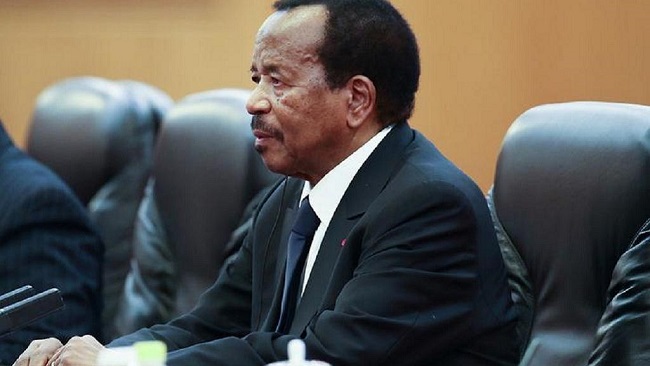
In its third year, the crisis has already consumed more than 5,000 lives, including some 2,000 army soldiers sent to the region with clear instructions to shoot and kill. Despite honest and frantic calls by the international community for a peaceful resolution, the country’s president, Paul Biya, also known as the “monarch” has continued with unwavering determination with his reckless and dangerous military campaign.
Today, the region is awash with weapons and the crimes against humanity are simply mind-boggling. Government forces have been killing young Southern Cameroonian males, many of whom have nothing to do with the insurgency that is playing out in the region. The real fighters are in the jungles of Southern Cameroons, but since army soldiers cannot go to the jungles, they have been killing innocent civilians to prove to their Yaoundé bosses that they are mopping up the region.
Their brutality has not only been against young healthy males, but also against the old and disabled who cannot escape to the bushes where most of the population is hiding. In so many villages in the region, many old and disabled residents have been burnt to ashes, as the government’s collective punitive expedition has no limits.
This approach to solving problems adopted by the government predicated upon intimidation is only radicalizing more young Southern Cameroonians who understand that their best bet is to join the insurgents who are doing a great job at giving army soldiers a run for their money.
It should, however, be mentioned that the insurgents are not any saints by any standards. Besides defending themselves and protecting the population, they too have been committing gross human rights violations, sometimes even killing people they suspect of collaborating with the Yaounde government. This approach is sowing fear among the population and it is causing many critics to question the rationale behind the insurgency if its objective is to strike fear in the same people the insurgents claim they must protect.
With law and order completely down, the rule of the gun is prevailing in the region. Even army soldiers are using the occasion to make fast cash. They have been arresting young Southern Cameroonians and threatening to take them to Yaounde or even kill them if their parents do not pay for their release. The soldiers have been asking for huge sums of money and this is upsetting to the local population which holds that the insurgents are totally right to challenge the establishment whose hallmark is corruption.
But some fake insurgents (fake Amba boys) are also making hay while the sun shines. With guns within everybody’s reach, some young men have constituted themselves into groups and they are kidnapping civilians to acquire money. Their main targets are Southern Cameroonians living abroad who are in the region to either bury their loved ones or to spend the holidays with their families.
The fake “Amba boys” are sometimes a creation of the Territorial Administration Minister, Paul Atanga Nji, who is using them to infiltrate the real insurgents. But not all of his undercover agents are honest. Many have turned out to be rogue elements and they have been wreaking havoc on the local population and this is causing a lot of indignation among the population.
Some of these rogue elements have been arrested by the real insurgents known by the population as “Amba boys” and they have had to confess, but in a world ruled by impunity, many of these rogue elements get killed as their crimes have gone well beyond money.
They sometimes betray the real insurgents and after an operation by government forces which usually results in the killing of many real fighters, there is usually a round of revenge and even relatives of the rogue elements sometimes get targeted by the real fighters. This is the messy situation that the war declared by Biya and implemented by the Defense Minister, Joseph Beti Assomo, and Territorial Administration Minister, Paul Atanga Nji, has created in the region.
Besides human life that has been destroyed by the warring factions, the country’s economy has also taking a punch to the liver. The Southern Cameroons crisis has really been a true nightmare to this once-upon-a-time oasis of peace. It has indeed been a millstone around the neck of the government which has used all the resources available to it to quell the insurgency, but to no avail. Government authorities are still very worried although they have been putting on a brave face, especially as the fighting is robbing the country of much-needed financial resources and stability.
Their fear was all the more justified when the Confederation of African Football (CAF) withdrew the hosting rights of the African Nations Cup in 2019 from the country due to insecurity and corruption. Southern Cameroonian fighters had clearly expressed their determination to disrupt the event and they were quick to advise CAF of their decision and this had a huge impact on the withdrawal of the hosting rights from Cameroon which had many crises to manage at the same time.
Cameroon’s political authorities are still living in fear. They fear that Southern Cameroonians might walk away from the union that was hastily stitched together in 1961 between West Cameroon and East Cameroon. Southern Cameroonians have continued to hold that the union was predicated upon lies right from the beginning and for there to be peace, the country must be split. Walking away from that ‘political marriage’ implies Southern Cameroonians will be taking with them about 60% of the country’s wealth and this is no good news for the Yaoundé government that is already cash-strapped. It has indeed been bled by two years of fighting and there is no end in sight.
Southern Cameroons is blessed with many resources, including oil, gas, diamond and timber. Its rich sub-soil has brought lots of economic benefits to the country. For almost 50 years, the Rio Del Rey estuary has been the source of more than 90% and at times 100% of all of the country’s hydrocarbons, specifically oil.
The region’s waters are also home to large fish stocks. Its forest is home to unimaginable fauna and flora and it is not in error that the world also knows the country because of the Korup National Park which straddles Manyu and Indian Divisions. This region is also known for its fertile volcanic soil and this explains why agriculture is one of the many activities that have been yielding huge foreign earnings to the country. Many of the country’s neighbors have their food supply from this region.
While the country has been raking in millions of dollars from the region’s oil, the residents of the region have been tied up in degrading poverty. The country’s lone refinery (SONARA) is located in Southern Cameroons, precisely in the Southwest port city of Limbe formerly known as Victoria, but the natives of the region have been reduced to sorry spectators of events in their own region.
From every indication, the Southern Cameroons crisis is an outcome of this injustice. More than 90% of the refinery staff are Francophones and to add insults to injury, staff of the refinery have their own neighborhoods that are well designed and very clean. Besides, petroleum products are more expensive in the region than in any other region of the country.
This economic apartheid that has been around since 1977 when oil was discovered in Ndian Division is one of the many reasons why Southern Cameroonians hold that a clear break with Francophone Cameroon will be the ideal solution and they are willing to sacrifice their lives so that future generations will not have to deal with the same issues. This same mentality will surely continue in 2019 and Cameroon will continue to be in the spotlight for all the wrong reasons.
The Southern Cameroons crisis has hit the Yaoundé government like a ton of bricks. The country’s economy is suffering. Its Automatic Teller Machines (ATM) seem to be out of service. State corporations located in Southern Cameroons are already feeling the heat. Pamol, a palm oil production corporation located in Lobe, a small town in Ndian Division, finally shut its doors in 2018 as the fighting between Southern Cameroonian fighters and army soldiers took a turn for the worse. This revenue stream has stopped flowing and Yaoundé is really ill-at-ease.
Pamol’s closure was indeed bad news for the government. More than three thousand Pamol workers are still unemployed and living in permanent fear, as the fighting between the warring factions rages on. Schools and courts in the region have been closed for more than two years and it is increasingly obvious that the Yaoundé government has lost control of certain parts of the two English-speaking regions.
But it is not only Pamol’s closure that caused the government nightmares. The Cameroon Development Corporation (CDC), one of the country’s major employers, also went through a rough patch. 2018 was indeed a bad period for this national corporation and this situation might not improve in 2019. Some of the corporation’s factories had closed shop, while the fighters deliberately set some of its infrastructure ablaze as part of their economic sabotage campaign. Malende, a small town located some 6 km from Muyuka, witnessed huge unemployment rates. The corporation’s rubber factory was set ablaze in 2018 by some unidentified men and this hit CDC like a ton of bricks.
In other plantations, many workers have simply deserted. The fighting is disrupting economic activities in those plantations and many workers hold that it is better to quit than be caught up between the devil and the deep blue sea. The fighting, coupled with the derisory salaries the corporation pays to its workers, made CDC unattractive and this actually eroded the government’s tax base.
Similarly, 2018 was a nightmare to government coffers. Government revenue took a nosedive, as the national oil refinery located in the Southwest region also faced some major challenges. While falling global oil prices were spreading pain and suffering among oil exporters, the declining oil output and constant attempts by Southern Cameroonian fighters to bring down the country’s lone oil refinery left the government in a huge messy economic quandary.
In 2019, Cameroon will continue to be in the spotlight for the wrong reason. The country’s president, Paul Biya, will soon be addressing the nation. He will continue to talk tough regarding the crisis and this does not augur well for the country and its economy which is in the throes of a severe crisis.
The government is yet to understand that this conflict will not be going away anytime soon and that no military action will sweep the frustrations and anger of the people away. The people’s determination to go the distance is there and it will only continue to morph as the government changes its military tactics. The more people the government kills in the region, the more insurgents it will create and the more money the Diaspora will mobilize to continue to make the region ungovernable.
The government must understand that cleaning up the mess it has created in the region will be a long haul. Southern Cameroonians are determined to walk away, and they are in no mood to talk with the Biya regime which is noted for speaking from both sides of its mouth. They have clearly stated that Biya is the problem and that if he continues to be in power, then there are no chances for a peaceful resolution of the conflict. This message will be clearly articulated in the end-of-year speech to be delivered by the Interim Government’s president, Sako Ikome, who will be addressing Southern Cameroonians from Washington, D.C. on December 31, 2018.
The ball is in the government’s court. It knows that it cannot kill Southern Cameroons through military action. Southern Cameroons is an idea and not just a location. While different factions of the fighters have recently been at each other’s throat, the government must understand that its brutality will only go a long way in uniting these disagreeing brothers. The Yaoundé government stands to gain if it sounds a note of peace and unity and Mr. Biya’s speech to the nation today is a huge opportunity which should not be missed.
By Kingsley Betek in Yaoundé and contributions from correspondents in London, UK, and Toronto, Canada












9, January 2019
Southern Cameroons War Crimes Tribunal to Convene 0
Two years after declaring unilateral independence, Africa’s newest country, Ambazonia, is in a deadly spiral of ever increasing violence . After decades of marginalization the two English speaking provinces of Southern Cameroons declared independence. Ambazonian self-defense units have fought a running battle with government forces over control of villages and strategic roads. The government of President Paul Biya, Africa’s longest serving ruler, has ordered mass arrests and a military campaign against what he terms terrorists. The result for civilians has been catastrophic, over ten thousand casualties, hostages taken, schools closed, and displacement of tens of thousands fleeing battles, brigands and marauding government forces. Indiscriminate violence has claimed thousands of innocent lives including an American missionary and Ghanaian priest. Villages have been burned, civilians butchered, limbs hacked off with summary arrests and executions carried out with impunity.
The international response to date has been nonexistent because of the Biya regime’s long-standing trade and diplomatic relations with France, Canada, the USA, and UK and as a partner in the war against Boko Haram. Respected NGOs like Human Rights Watch, Amnesty International, and International Crisis Group however have been quick to identify the human rights abuses, many of which are recorded on cell phone video. Nonetheless, the UN, African Union, ECOWAS, the Commonwealth and other international organizations have failed to step in while the casualties and atrocities mount.
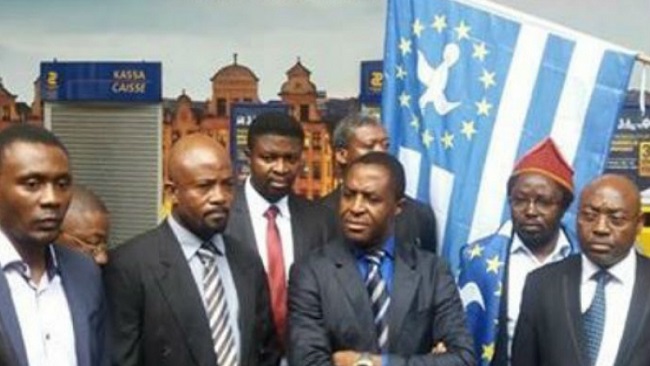
Fearing another Liberia or Sierra Leone type conflict, in which murder, torture, and war crimes became endemic; several Ambazonian groups have come together now to declare the formation of a War Crimes Tribunal – The Southern Cameroons Special Tribunal Coordination Committee (SCSTCC). The initial backers include the Southern Cameroons National Council (SCNC), the Southern Cameroons Defense Force (SOCADEF), the African Peoples Liberation Movement (APLM), the Organization of Emerging African States (OEAS) and the Cameroon Anglophone Civil Society Consortium. Other groups are expected to join soon.
Dr. Jonathan Levy, an international lawyer specializing in human rights was appointed Chief Coordinator of the tribunal. According to Dr. Levy, the special tribunal’s immediate mission is to use existing courts and procedures to investigate and prosecute war crimes: “Right now we have solid proofs of numerous crimes against civilians committed by government forces. There are also reports of brigands and bandits. However, the overwhelming evidence shows a policy and pattern of brutality against civilians by government forces engaged in the so called anti-terrorist campaign. The command structure is such that these atrocities could not be committed on such a large and ongoing scale without the knowledge and consent of president Paul Biya, the Minister of Defense and their field commanders.”
The next step according to Dr. Levy is to assemble a team of experts through the good offices of the International Criminal Bar and other organizations and to immediately begin both civil and criminal prosecution against Paul Biya and his military commanders in worldwide courts. “We hope someday to have our own UN backed war crimes tribunal and chambers, but we cannot wait years while people are dying, we will act now using all legal means available to us.” Said Levy, who added, “Right now we need lawyers who are willing to take these cases to court in London, Washington, Barcelona, Banjul, and any other venue in which a civil or criminal case can be lodged against Paul Biya and his commanders.”
Dr. Jonathan Levy