20, July 2018
Ambazonian MPs, Senators still in Yaounde as Southern Cameroons faces more persecution 0
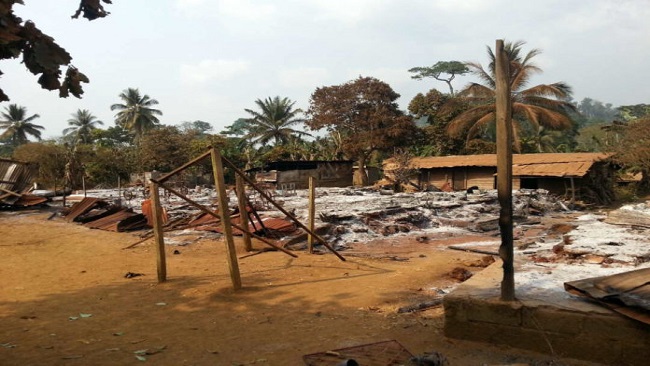
The Ambazonian Interim government says French Cameroun army violence persists against Southern Cameroonians and the overall environment remains menacing for Ambazonians on ground zero. Communication Secretary, Hon. Chris Anu said in a statement on Thursday that the genocide going on in Southern Cameroons towns and villages and the arrival of thousands of Southern Cameroons refugees in Nigeria reflects the continuing gravity of the human rights violations by French Cameroun soldiers in Southern Cameroons.
Chris Anu wondered aloud why Southern Cameroons members of parliament and senators were still serving in French Cameroun mindful of the overt threats they faced of violence and persecution. The Ambazonian Communication Secretary also noted that it was shameful Southern Cameroons political elites are mute when their people are being cut off from their sources of livelihood, hundreds including women and children are being killed and the overall menacing environment is pushing thousands to flee their ancestral homeland.
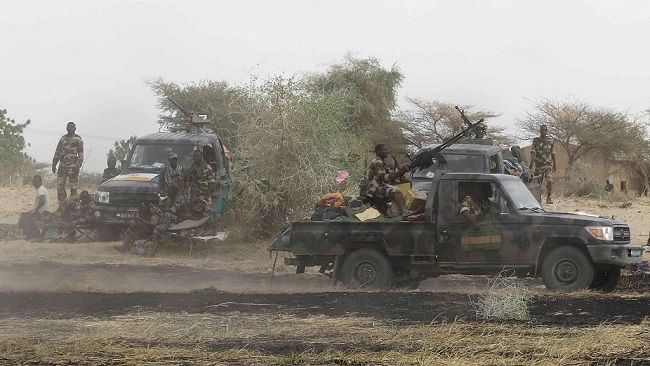
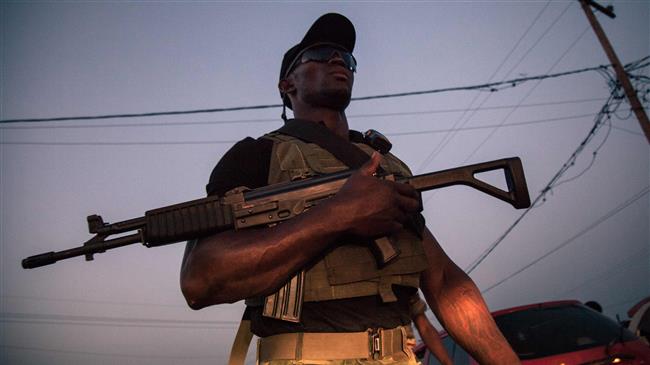
The statement comes as the Francophone dominated army has reportedly intensify its onslaught in Southern Cameroons. There are reports that the deadly violence against Southern Cameroonians is premeditated and amounted to genocide. Human Rights groups including Amnesty International have all indicated that the Cameroon military was guilty of committing crimes against humanity and genocide.
Cameroon Intelligence Report understands that the French Cameroun army made systematic preparations for genocide against Southern Cameroonians in Belo, Batibo, Kwa Kwa and Muyenge. The brutal campaign has forced some 50,000 Southern Cameroonians to flee their homeland and seek refuge in Nigeria. Southern Cameroonians based in Ndian, Meme, Manyu, Menchum, Fako, Mezam and Bui Counties have been subjected to a campaign of killings, rape and arson attacks by the Cameroon government military backed by the country’s ruling CPDM party.
By Sama Ernest with files from Rita Akana













20, July 2018
Southern Cameroons Crisis: The dangers of Yaounde-Buea’s war of words 0
FOR decades Cameroon, wedged between central and west Africa, enjoyed a reputation for calm and stability while its neighbours were mired in a cycle of coups-d’état, wars and bloodshed. Yet today that stability is no longer guaranteed, and a long-simmering crisis is erupting. Protests, which began in October 2016 with Anglophone teachers and barristers demonstrating about French curricula and legal texts, have morphed into a conflict of kidnappings, beheadings and the torching of villages. What went wrong?
Cameroon was colonised by the Germans in the late 19th century, and after the first world war the League of Nations entrusted the administration of different parts to the British and the French. In 1961, lured by the promise of federalism, the formerly British-held North-West and South-West regions chose to join the newly independent and previously French-held Cameroon. But 11 years later, the country’s first president, Ahmadou Ahidjo reneged on the federalist deal and imposed a unitary state, governed from French-speaking Yaounde. In 1984 the current president, Paul Biya, changed the name of the country to the Republic of Cameroon (the name of the former Francophone territory) and removed from the national flag the second star, which represented the Anglophone regions. The effects are still felt today. Anglophones, who make up less than a fifth of the population, feel marginalised in almost every sphere of life, ranging from the allocation of state resources to political representation.
The government reacted to the spreading protests by dismissing the demonstrators as terrorists, throwing their leaders in jail and cutting off internet connections to the two Anglophone regions. This just created more problems. The leadership vacuum was filled by a range of separatist groups, with senior activists ranging from worried men in suits to armed criminals taking advantage of the chaos. Still angered by Ahidjo’s treachery almost half-a-century ago, Anglophones continue to complain that they were not given the option to set up their own state after independence. That has become one of the main demands of some fighters, who declared the establishment of the “Republic of Ambazonia” last October. The crisis has duly developed into a vicious war. Both sides have committed atrocities, but the Anglophones are paying the harshest price. More than 21,000 have fled to neighbouring Nigeria, while in south-west Cameroon entire settlements have become ghost villages, with more than 150,000 people displaced.
Worse, this is just one of three crises facing Cameroon. Northern parts have been affected by the Boko Haram insurgency spilling over from Nigeria. The jihadists’ campaign of suicide bombings and other attacks has forced almost 250,000 Cameroonians to flee their homes and led to the arrival of more than 95,000 Nigerians refugees. At the same time, over 230,000 refugees from the Central African Republic have come to eastern Cameroon, bringing with them a bloody struggle for power and access to natural resources. In the presidential election due for October, Mr Biya—Africa’s oldest ruler at 85—is expected to seek a seventh term in power. Mr Biya has no obvious successor, in a government anchored in sclerosis. Yet stability in Cameroon is vital not only for the region but for Africa at large. It is the biggest economy in central Africa, and for many people in Cameroon, Chad and the Central African Republic, the port of Douala is a life-line. Cameroon’s elite soldiers, arguably the most efficient in the region, have played a crucial role in the fight against Boko Haram and ISIS splinter groups. If Cameroon plunges further into chaos, other countries could be pulled down with it.
Culled from The Economist