20, April 2018
Villages Burn as Cameroon Troops Clash With Separatists 0
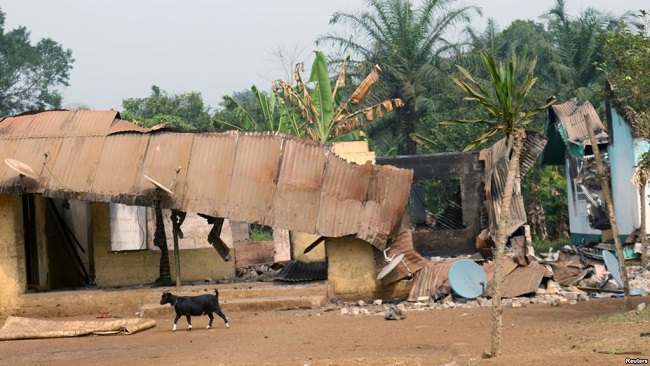
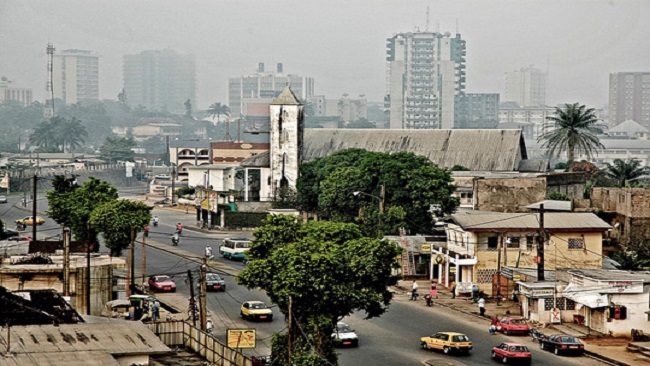
In Cameroon, officials say eight villages in the English-speaking northwest have been torched and hundreds of residents have fled amid clashes this week between security forces and separatist rebels.
Terence Fukah, a 33-year-old pig farmer, told VOA he fled his village of Ajin on Tuesday as the military responded to an attack by armed men.
“It was around five o’clock in the morning. I saw dead people lying down. I had to cross on top of them and run for my dear life,” Fukah said.
“I don’t even know where my children are. I don’t even know where my wife is. I don’t know how the pigs are doing, how many have died. I don’t know if my own house has been burned. I am crying, crying for the government to do something.”
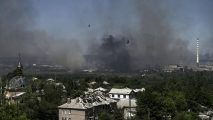
The military says armed separatist rebels torched at least eight villages in northwest Cameroon; however, residents told VOA the fires were set by the military after the attackers had fled.
“We heard gunshots. We did not know exactly what to do. Everybody was running up and down,” said Thomas Tuboh, a maize farmer from the village of Anyajua. “It was the burning that made us to know our lives were at stake, so I decided to run away from Anyajua. When the military people invaded the area, the bridges were blocked and they decided to put them down with flames.”
He said his village is now nearly completely deserted.
“You see it is a farming area that helps the whole division and the region at large. I don’t know how we are going to cope if this persists,” Tuboh said.
General Agha Robinson, who is commanding troops in the northwest region, said his soldiers were not responsible for the burning.
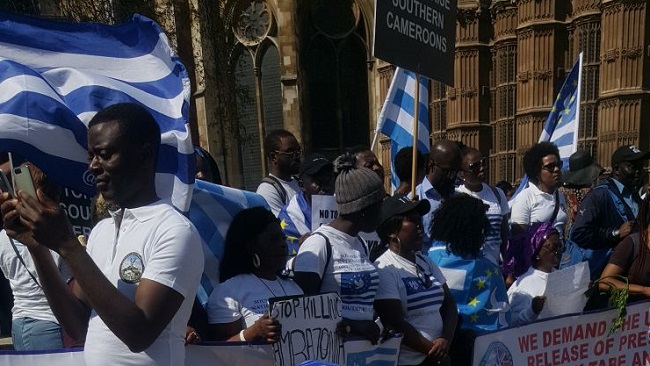
The crisis began in November 2016 with a strike by Anglophone lawyers and teachers, who were demanding reforms to address what they say is the marginalization of the country’s English-speaking minority by French-speakers.
The situation spiraled into all-out conflict as separatists demanded independence for the two English-speaking regions.
Thirty-eight members of the military and hundreds of rebels have been killed in the fighting, according to Cameroon’s ministry of defense. The U.N. refugee agency says tens of thousands of people have fled their homes, with at least 20,000 crossing over to neighboring Nigeria in search of safety.
There appears to be little hope for dialogue. Separatists say they will not budge on secession. Meanwhile, Cameroon has refused to release dozens of detained separatist leaders, and President Paul Biya says he will entertain no talks that threaten national unity.
Source: VOA



















21, April 2018
UN alarmed by continuing forced returns of Nigerians by Cameroon 0
UNHCR, the UN Refugee Agency, is today expressing its alarm at continuing forced returns to Nigeria of refugees and asylum-seekers from Cameroon’s Far North Region.
Despite UNHCR’s advocacy efforts and engagement with the authorities, 385 Nigerians have been forcibly returned from Cameroon since the beginning of 2018. The majority of them were returned during the last month.
More specifically, on 10 April, 160 Nigerian refugees and asylum-seekers were forcibly returned to Nigeria’s Borno state – an area whose residents continue to face risks. They had been seeking refuge in Cameroon’s Waza district since 2014.
On 17 April, an additional 118 asylum-seekers were forcibly returned to Borno state. They had arrived in Cameroon only two days earlier, having fled violence by Boko Haram.
The forced returns are in violation of the principle of no forced returns or non-refoulement. They are also a significant setback to progress previously achieved by Cameroon in granting asylum to Nigerian civilians fleeing Boko Haram violence in Borno State.
UNHCR appeals once again to the authorities in Cameroon to refrain from further forced returns and to ensure protection to those fleeing insecurity and persecution in Nigeria, in accordance with Cameroon’s national and international obligations. In total, UNHCR has registered some 87,600 Nigerian refugees in the country.
While recognizing the legitimate national security concerns of States affected by the Boko Haram crisis, it is important that refugee protection and national security are not seen as being incompatible. Properly functioning screening, registration and asylum systems help safeguard host country security.
UNHCR reiterates its support to the government of Cameroon to ensure that all those seeking international protection have access to efficient screening and registration procedures, as well as appropriate reception arrangements.
Source: UNHCR.org