
20, January 2017
Consortium confirms Ghost Town to resume on Monday, MTN, CAMTEL, NETTEL to face boycott action 0
Since Tuesday January 17, 2017 the English speaking regions of Cameroon partitioned by the Francophone regime as North West and South West have been cut off from the internet world. Internet connection was shut down late Tuesday shortly after the government arrested the main leaders of the now outlawed Cameroon Anglophone Civil Society Consortium.
Businesses have been grounded in both regions. Several Money transfer agencies are unable to operate, banks are inactive and mobile telephone operators who deal with internet have had their businesses closed. The leaders of the Consortium have announced a continuation of the civil disobedience campaign beginning on Monday the 23rd of January. The seat of the Consortium has also been moved to an unnamed European country and Southern Cameroonians have been called to listen to the Consortium.
The ghost town operation starting next week will be staged every Mondays, Tuesdays and Wednesdays. Schools will remain closed and Anglophone parents have been cautioned not to end their children to school. The Consortium is aware that the Yaoundé regime has ordered Francophone schools in Southern Cameroons to open their doors this coming Monday.
Cameroon Intelligence Report gathered that the Consortium considers the Yaounde position as an act of provocation. The interim leaders of the Consortium have announced that they are discussing plans with the Southern Cameroons business community to develop a strategy for a complete and total boycott of CAMTEL, MTN, ORANGE and NEXTTEL.
The shutting down of internet was intended to make communication difficult for locals of these two regions who have been using the internet as fast means of disseminating information to one another. Denizens see this as a failure by these companies to risk their businesses by forgetting the Customer King philosophy and allegedly working with the government.
Culled from Cameroon Intelligence Report







20, January 2017
African Commission on Human and Peoples Rights releases statement on the situation in Cameroon 0
Press Release on the Human Rights Situation in Cameroon Following strike actions of Lawyers, Teachers and Civil Society
The African Commission on Human and Peoples’ Rights (the Commission) continues to follow closely the deteriorating human rights situation in Cameroon, State Party to the African Charter on Human and Peoples’ Rights (the African Charter) caused by the ongoing protests in the English speaking North West and South West regions of the country.
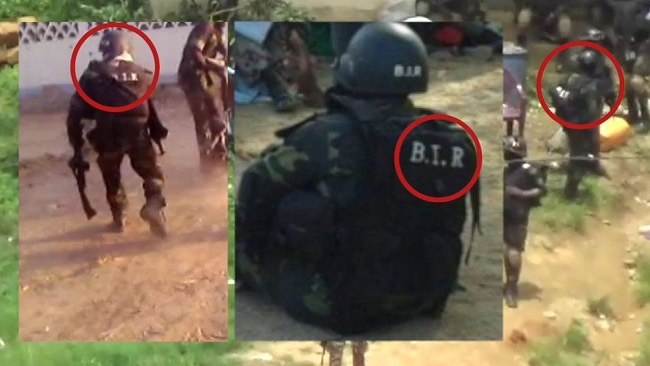
The Commission’s Country Rapporteur for Cameroon and Special Rapporteur on Human Rights Defenders in Africa, Hon. Commissioner Reine Alapini-Gansou, is deeply concerned by the deteriorating human rights situation in Cameroon, in particular: killings of civilians; the deployment of armed military personnel, special security forces (BIR) and war machines to these two regions; the disproportionate and deathly use of force and violence to dispel peaceful and unarmed Lawyers, Teachers, Students, civilians and protesters in Bamenda, Buea and Kumba; the raping of students in Buea; the arbitrary arrests, detention and merciless beatings orchestrated by the police, gendarmerie, military and the BIR following strikes and protests that have been going on since October 2016.
The Special Rapporteur has received information that the strikes and protests are allegedly provoked by what has been dubbed, “the Anglophone problem,” due to discontented Anglophone Lawyers, Teachers and Civil Society in English speaking Cameroon legitimately and peacefully seeking a halt to: the gradual, but systematic destruction and obliteration of the Common Law Legal System and the Anglosaxon System of Education; the marginalisation and neglect by the administration of Cameroon of the two English speaking regions of Cameroon; and the return to Federal system of governance.
The Special Rapporteur is particularly concerned about the alleged deaths of more than nine (9) Cameroonians during the protests in Bamenda, Buea and Kumba, and the allegations that the Government is planning mass arrest, kidnappings and assassination of leaders of Lawyers’ associations, Teachers’ unions, Civil Society and human rights defenders as a means to thwart the Anglophone cause.
The Special Rapporteur condemns very strongly the alleged use of disproportionate force against civilians, the violent and deathly suppression of peaceful demonstrators and calls on the Government of the Republic of Cameroon to:
The Special Rapporteur would like to remind the Cameroonian authorities of their obligations to guarantee fundamental rights, including the right to life, the right to freedom of assembly, association and expression as well as the right to self-determination as provided in Articles 6, 7, 9, 10, 11 and 20 of the African Charter.
The Special Rapporteur also calls on the international Community to look into the matter and support the Government of Cameroon in the peaceful resolution of the “Anglophone problem”; by encouraging genuine and inclusive dialogue between the Government of Cameroon and the Cameroon Common Law Lawyers, Teachers, and Civil society in the Anglophone regions and other such bodies established to resolve the issue.
The Special Rapporteur will continue to monitor developments in the Northwest and Southwest regions of Cameroon and calls on the African Union to contribute towards the effective realization of human and peoples’ rights in the country as a whole.
Done in Banjul-The Gambia
Honourable Commissioner Reine Alapini-Gansou
Country Rapporteur for Cameroon and Special Rapporteur on Human Rights Defenders in Africa