13, February 2023
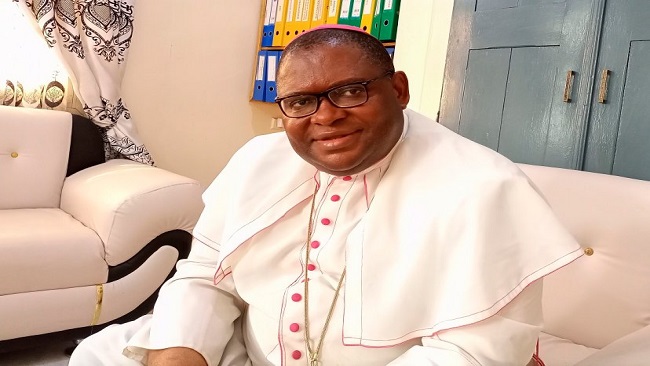
Buea: Bishop Bibi backs Pope Francis on ‘economic colonialism’ in Africa 0
The exploitation of Africa has remained a major talking point across the continent, especially after Pope Francis roundly condemned what he called “economic colonialism” in Africa.
On his long-awaited trip to the Democratic Republic of Congo and South Sudan, the pope repeatedly decried the transformation of ill treatment from political domination to economic victimization.
“Political exploitation (of the Congo and more generally of Africa) gave way to an economic colonialism that was equally enslaving,” Pope Francis told an audience of Congolese politicians and other dignitaries. “As a result,” he continued, “this country, massively plundered, has not benefited adequately from its immense resources.”
“It is a tragedy that these lands, and more generally the whole African continent, continue to endure various forms of exploitation,” Francis said. “The poison of greed has smeared its diamonds with blood,” he said—a reference to what has become known as Congo’s blood diamonds.
“Hands off the Democratic Republic of the Congo! Hands off Africa! Stop choking Africa: it is not a mine to be stripped or a terrain to be plundered,” Francis warned.
That message has continued to make headlines.
The Bishop of the Cameroonian diocese of Buea, Michael Bibi, whose diocese is located in the far south of Cameroon’s majority anglophone western regions, told Crux the Pope’s “economic colonialism” criticism was a reference to the idea of neo-colonialism.
In a conversation with Crux, Bibi described the political liberty African nations obtained from their erstwhile colonial overlords as a “flag and anthem” independence, “while the purse strings remained in the hands of the former colonial masters.”
Bibi said he sees a marked difference in the levels of such neo-colonial arrangements between former British and French colonies. “France,” he said, “more than any other former colonial power, continues to have an iron grip in the economic and political affairs of her former colonies.”
“Many wonder whether we should even use the adjective ‘former’,” Bibi said, adding that the rate at which young Africans are dying in the Mediterranean Sea “as they risk their lives in search of greener pastures in Europe,” dramatically illustrates the relevance of the pope’s message.
Bibi said that the degree and extent of interference in the economic affairs of African states differs between the former colonial powers.
“Some of the biggest economies in Sub-Saharan Africa are former colonies of Britain (Nigeria, South Africa, Kenya, Ghana) and these countries are also the leading democracies on the Continent,” he said. “When you compare their lot with that of the former French (and Belgian) colonies, you begin to see that France, more than any other former colonial power, continues to have an iron grip in the economic and political affairs of her former colonies.”
“Frequently,” Bibi went on to say, “these states have turned to China for help, but they are often so weak that they cannot strike a fair bargain with the Chinese Government. When loans are given, the construction must be done by a Chinese company.”
The resulting picture is one in which the major players fostering this economic colonization “are the former colonial powers in Europe, especially France, the Chinese, and the Americans as well.”
He said that France uses “a complicated network of financial economic policies and political control through the threat of regime change and their military presence to maintain the status quo,” while China exercises financial and commercial influence through loans, and “the Americans use their influence over the United Nations Security Council and the IMF and similar International Organization to have their way over many issues.”
Bibi said there is a cultural element to the involvement of Western powers, especially, in African affairs. “Another major instrument used by the players, especially the former colonial masters, is the formation of Associations ostensibly to celebrate the same culture such as the Francophonie and the Commonwealth of Nations,” he said.
Colonization, in Bibi’s view, continues to affect the continent’s economic life and impact the impact on the lives of ordinary people.
“The economic life of the African continent will not change,” Bibi said, “if foreigners continue to make all the decisions.” He went on to say: “If Africans must be the first beneficiary of the economic decisions of the continent, then they themselves must make the decisions.
Bibi said that the mass migration of young Africans to Europe and America of young Africans, “who should stay back and contribute towards the development of the continent,” is one consequence of the current state of affairs.
African leaders are not blameless, in Bibi’s view, many of whom for many years “have played this role of accomplices sometimes willingly and sometimes unwillingly,” but always with the same consequences.
“It is often said that the oppressor would not be so strong if he did not have accomplices among the oppressed,” Bibi said, adding that he believes African leaders should “look less on what they stand to lose” in standing up to those who would exploit their nations and peoples.
“Economic colonization is a dynamic phenomenon,” he said, noting the recent economic summit to which US President Joe Biden had invited them, and a similar invitation from China, and the knowledge that Russia has another similar meeting in the works.
Bibi said African leaders “must use this opportunity to seize control over their economic affairs because it may never be given to them on a platter of gold. Freedom, whether economic or political, must be seized.”
“Too often,” Bibi said, “they only seek to protect their small individual interests at the detriment of that of their countries.”
Bibi spoke also of the “will to be free” that both leaders and citizens in Africa “must have.” Leaders, he said, “must have the courage to enact policies that will benefit their people and their countries first. They must have the courage to bear the consequences of doing so.”
African citizens, for their part, “must start giving up short term solutions like struggling by all means to travel out of the country.”
“The people who will make Africa great,” Bibi said, “are not those who travel out, but those who remain to work: to open up businesses, whether farms or factories.” Bibi noted that some of those who leave think that they will come back and do that, but in the main, they gradually become “absorbed by the material abundance in the West and forget about their lofty ambitions.”
“Africans,” said the bishop of Buea, “must love their continent enough to want to stay back and contribute to its development.”
Source: Crux














13, February 2023
Global Think Thank Donates to IDPs in Mamfe 0
The Global Think Tank for Africa has once more put smiles on the faces of pupils in Mamfe following the donation of didactic materials to pupils who have been displaced due to the socio-political crisis in the country’s twoEnglish-speaking regions.
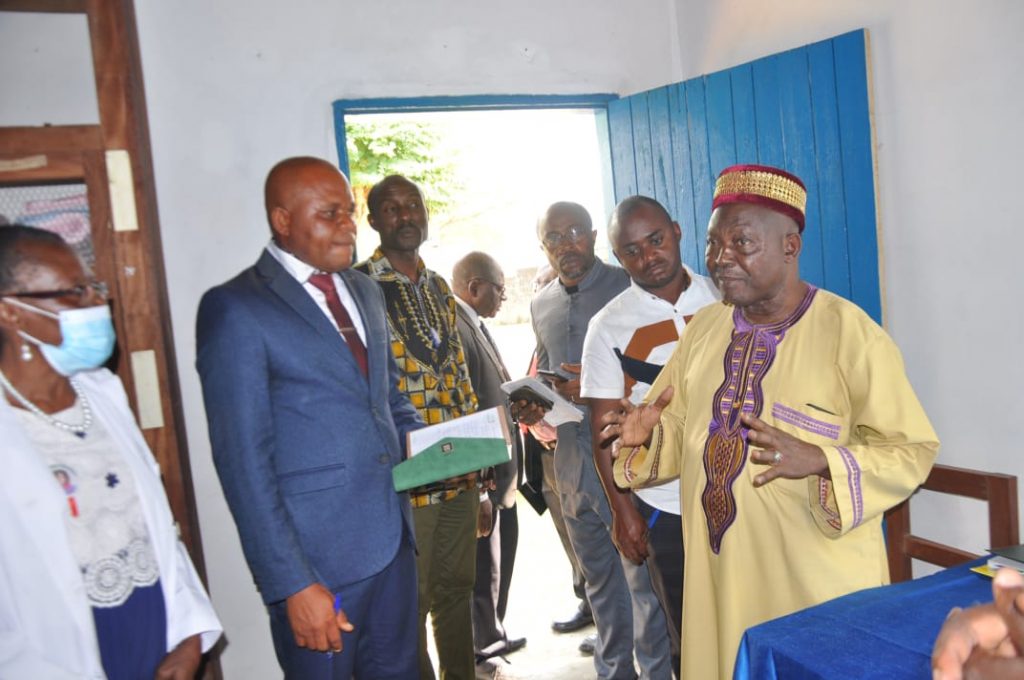
On Friday, February 10, 2023, the organization through the inspectorate of basic education in Mamfe donated didactic materials to some 50 internally displaced children drawn from 10 schools in mamfe.
This is the 4th batch of pupils to benefit from the largesse of the Global Think Tank for Africa, a Canada-based not-for-profit organization.
So far, some 250 IDPs have benefited from this humanitarian assistance and the project is on going as planned and it will be extended to villages close to Mamfe town where the fighting has stopped.
On behalf of the children, the Inspector of Basic Education for Mamfe, Mr. Herman Taku Arreyngang, extended his great appreciation and called on other external elites of Manyu Division to follow the example of the Global Think Tank.
Speaking over the phone from Abidjan, Ivory Coast, the Executive Director of the Global Think Tank for Africa, Dr. Joachim Arrey, said that education was the foundational key to a child’s success and that it was important to help Africa’s future leaders to have that foundation so that they can acquire the skills and knowledge which will enable them to play their future leadership role.
“There is no better way of helping our children than by granting them the knowledge and skills they will need in future, Dr. Arrey said.
“No society will be ready for the future if its future leaders are not educated. While education alone will not grant the children the knowledge and leadership skills they will need tomorrow, it will however open their eyes and will grand them the foundation they need to live in a society which is increasingly a knowledge-based society,” he stressed.
He thanked the inspector of basic education and his team members who have been working tirelessly to help the children cope with the stress of leaving their natural environment.
“The teachers in Mamfe are really doing a good job. It is not easy to work in a war zone where the most vulnerable of our society are being threatened for going to school. I don’t know how to thank the authorities of basic education in Mamfe for their selfless services to our desperate children. May the Lord grant them more energy so that they can continue to do the great job they are doing,” Dr. Arrey said.
Asked about the program, Dr. Arrey said his organization would continue to support the IDPs for as long as the crisis continues.
By Thomas Ashu Atem