10, July 2025
Cameroon, Nigeria and Ethiopia hit by US cut to visa duration 0
The United States has announced sweeping changes to its non-immigrant visa policy for Cameroon, Ethiopia and Nigeria, cutting the duration and conditions under which most travellers from those countries can enter.
The US Department of State says nearly all non-immigrant and non-diplomatic visas issued to citizens of the three countries will now be single-entry and valid for only three months.
It says this is part of a “global reciprocity realignment”, a sharp shift from previous visa terms, which often allowed for multiple entries over two years or more.
Nigeria has denied reports that it only offers single-entry e-visas for three months to US citizens.
Presidential spokesman Bayo Onanuga said on Thursday that Nigeria continues to offer five-year multiple-entry visas to American nationals.
“We want to reiterate that the US government’s claim of reciprocity as the reason for its current visa policy towards Nigeria does not accurately reflect the actual situation,” he said.
Likewise, US citizens can get visas of up to a year in Cameroon and 90 days in Ethiopia.
The authorities in those two countries have not yet commented.
The Nigerian government has expressed its concern, describing the move as disproportionate and calling for reconsideration.
It added that the restriction could hamper cultural and educational exchanges that have long been a foundation of US-Nigeria relations.
The State Department says visa policies remain “subject to ongoing review” and may change depending on evolving diplomatic, security, and immigration benchmarks.
In a statement, the US government said it was working closely with authorities in the three countries to ensure they meet key international standards.
These include:
issuing secure travel documents
managing visa overstays
sharing security or criminal data for public safety purposes.
Last month, even stricter measures were imposed on Eritrea, Somalia, and Sudan -with the United States suspending all immigrant and non-immigrant visas to citizens of those countries.
The US has already ordered that the social media accounts of all foreigners applying for visas would be vetted for “any indications of hostility toward the citizens, culture, government, institutions, or founding principles of the United States”.
Nigeria was the seventh largest source of international students to the US, and the highest in Africa, according to the 2024 Open Doors report on international education exchanges.
The report published by the US department of state, bureau of educational and cultural affairs showed a 13.5% increase from 2023.
An aide to former Nigerian President Muhammadu Buhari said he believed the US was not reciprocating but showing its displeasure with Nigeria.
Bashir Ahmad posted on X that President Bola Tinubu‘s recent visit to Brazil for the Brics gathering was behind the move.
“This is not solely about reciprocity. Rather, it appears to reflect growing US discomfort with Nigeria’s increasing global realignment, particularly the warm reception we are receiving from the Brics,” he wrote.
Immigration lawyer Godwin Oke thinks differently and told the BBC: “This is a classic case of visa reciprocity under international diplomatic practice. Countries often align their visa terms to reflect mutual treatment.
“The US had been issuing Nigerians five-year multiple-entry visas, while Nigeria only offered Americans short-term, single-entry visas. From a policy standpoint, it was only a matter of time before the imbalance was addressed.”
In March this year, the US mission in Nigeria issued a stern warning, saying overstaying a visa could lead to a permanent travel ban and potential criminal prosecution.
There is no official data showing the number of Nigerian travellers to the US who overstay their visas.
But Nigerians are worried that the number who get visas will fall under President Donald Trump’s tough immigration policies.
Many young Nigerians would like to leave the country in what is called Japa (Japa means escape in the Yoruba language) and the US remains one of the most desirable destinations.
Source: BBC




















11, July 2025
Paul Biya’s candidacy dividing the CPDM 0
The ruling party has had an uneasy several weeks. Ministers and party officials are now in open disagreement about the possible candidacy of President Paul Biya in the upcoming October elections.
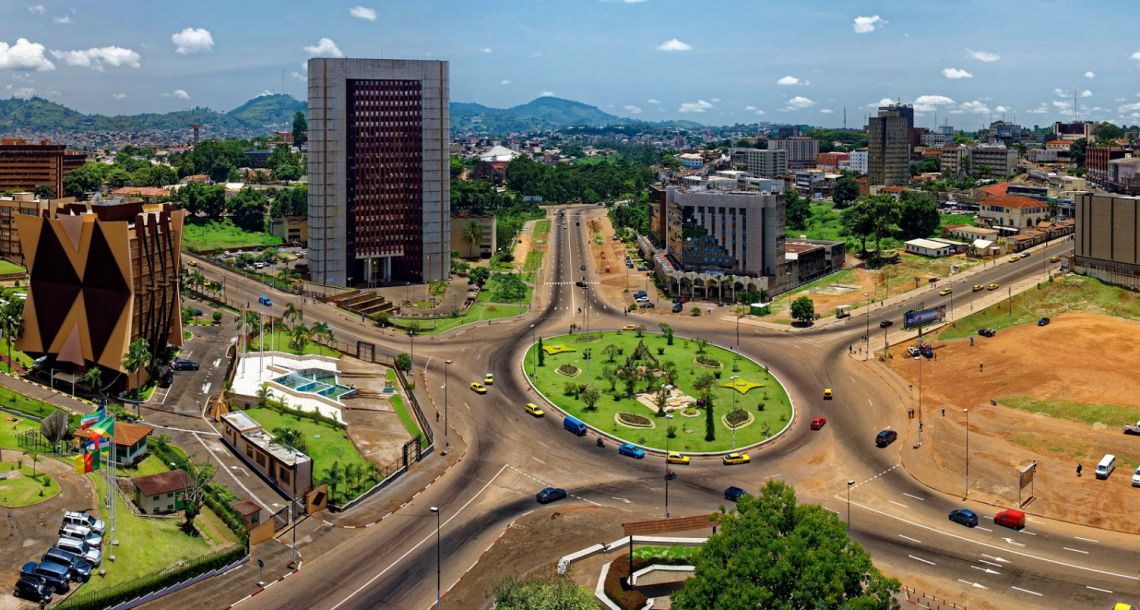
While some see this as a diversionary tactic, for residents of the capital, the country is no longer being governed.
“This internal battle says it all, and we can say that the country is no longer governed because there’s no leader to bang their fist on the table,” says Yves Tuya, resident of Yaoundé. “The silence of the President of the Republic is what’s causing all this disorder.”
It’s an unprecedented situation for the party and is starting to raise questions about the CPDM’s legitimacy.
“We have Minister Sadi, for example, who doesn’t know what to say, and Minister Jacques Fame Ndongo trying to reassure people — but in reality, Cameroonians are not fooled,” says political analyst Landry Atangana. “Even more so, party members themselves don’t know who to turn to. And what’s most dangerous in this kind of situation is that everything depends on just one man. We are left wondering: in such circumstances, does this kind of party even still have the legitimacy to speak on behalf of the people, when they can’t even agree or speak with one voice internally?”
Inevitable transition
For Atangana, it’s clear that the ruling party is now on the verge of implosion in Cameroon, as its top officials have shown their limits and inability to prepare a successor.
“The chaos we are witnessing in the CPDM lately can be explained by three factors. First, the absence of a clear direction. Second, the lack of an identified successor. And third, the fear of a power vacuum at the top.”
This is no longer about hidden dissent, but rather an open fracture within the CPDM. According to the expert, political transition is now inevitable by October.
“Opposition parties, including former allies, have decided to reshape the political landscape in Cameroon. Whether we like it or not, the country is now facing a transition,” Atangana says.
According to observers, the breakup of the CPDM’s historic alliances and the current situation could give the opposition one last chance to bring an end to the ruling party’s 43 years of undisputed dominance in October.
Source: Africa News