22, December 2025
Southern Cameroons: Security situation worsening 0
Daily life in Southern Cameroons today is defined by fear. Killings, armed confrontations between Ambazonia Restoration Forces and Cameroon government troops, kidnappings, enforced civil disobedience campaigns and arson have shutdown and disrupted education, healthcare and local economies.
The Southern Cameroons educational sectors have been particularly affected, denying a generation of children their right to learning. Anglophone farmers are struggling to access their land amid worsening poverty and food insecurity. These realities underscore a grim truth: the people of Southern Cameroons are bearing the brunt of a conflict they did not choose.
The security situation in the two English speaking regions is deteriorating at catastrophic rapidity. Years after the Ambazonia crisis started, violence continues to escalate, civilian suffering is deepening, and prospects for a sustainable peace are slowly but surely vanishing. The Southern Cameroons resistance that was once framed as a temporary security challenge by the failed regime in Yaoundé has hardened into a protracted conflict with devastating human consequences.
Despite repeated assurances from the Biya Francophone Beti-Ewondo regime, the government’s security-heavy approach has failed to restore calm in Southern Cameroons. Militarization of the entire English speaking regions has not delivered peace; instead, it has intensified cycles of retaliation and mistrust. Allegations of abuses by all sides—combined with a lack of credible accountability—have further alienated communities and fueled resentment. When justice appears absent, violence finds fertile ground.
The Southern Cameroons situation is indeed a hydra headed one. While calls for genuine talks persist, meaningful engagement remains limited. Fragmentation among Southern Cameroons restoration groups and the actions of hardliners deep within the Francophone dominated political structure in Yaoundé have stalled progress. Yet history teaches us that conflicts rooted in governance, identity, and rights cannot be resolved by military power alone. Without a genuine political process that addresses long-standing grievances—language rights, local governance, and equitable development—the conflict will continue to metastasize.
The international community’s attention has waned, but the crisis has not. Humanitarian needs are rising as displacement grows and basic services collapse. Silence and fatigue are dangerous allies of prolonged conflict. Renewed diplomatic engagement, targeted humanitarian assistance, and support for mediation are urgently needed.
Southern Cameroons now stands at a crossroads. Continuing down the current path promises only more suffering and instability. A decisive shift toward dialogue, accountability, and inclusive reform is not a concession to violence—it is an investment in peace. The cost of delay is already painfully clear.
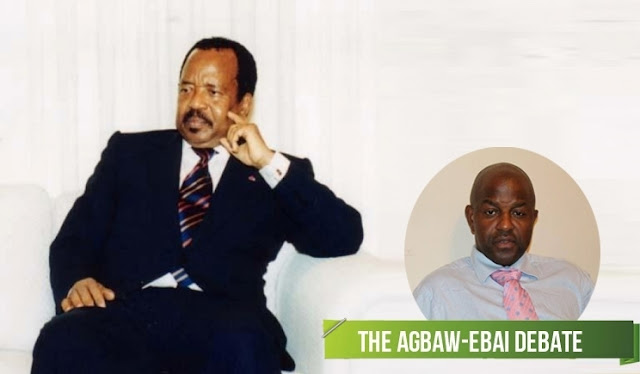
By Soter Tarh Agbaw-Ebai
















22, December 2025
Southern Cameroons UN Situation Report 0
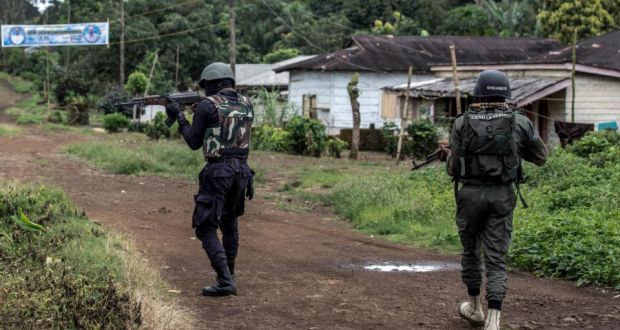
The security situation in the North-West and South-West (NWSW) regions remained highly fragile, characterized by persistent clashes between non-State armed groups (NSAGs) and State security forces (SSF). The context was marked by widespread violence, including kidnappings for ransom, loss of life from stray bullets, targeted killings, arbitrary arrests, and the use of improvised explosive devices (IEDs). Six men and two women were kidnapped in Ako sub-division, NW region, and three men were kidnapped in Mbonge sub-division, SW region. All these kidnappings are based on allegations of people attempting to attend election campaign events.
A prolonged lockdown imposed by NSAGs from 8 September to 14 October in the NWSW regions disrupted school resumption and interfered with activities related to the presidential election. Throughout the lockdown period, civilians not only faced severe restrictions on their freedom of movement but were also exposed to protection risks and multiple forms of violence like kidnapping, threats, and mass arrests. The lockdown further compounded the situation by disrupting humanitarian operations, delaying the delivery of critical services, and significantly limiting access to vulnerable communities. Partners were compelled to suspend or adjust field operations due to insecurity and movement restrictions. Some adopted remote working modalities while others leveraged weekends to deliver life-saving assistance in hard-to-reach areas, when NSAGs temporarily lifted restrictions to allow civilians to restock essential supplies. This helped to reach over 36,000 people with multi-sectoral assistance, including food, health, nutrition education, WASH, and protection services.
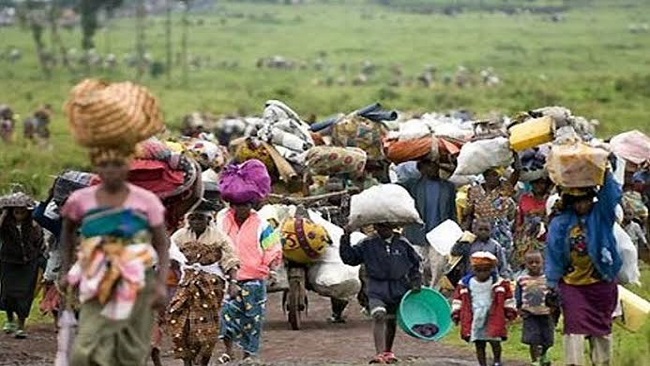
Natural disasters, particularly floods, and ongoing violence have led to multiple population displacements. Over 1,419 people (313 households) have fled to nearby bushes, villages, and towns from Konye sub-division in the South-West region, as well as the Menchum Valley and Widikum sub-divisions in the North-West region. Additionally, pendular displacement has been observed in Mezam division (Bamenda II sub-division, NW). These movements left affected populations highly vulnerable and exposed to protection risks, as they repeatedly move between their homes and safer locations. Many displaced persons, especially victims of natural disasters, remain without shelter and live in precarious conditions.
Source: reliefweb