26, June 2020
Football: Elated fans abandon social distancing to greet Liverpool Premier League win after 30-year wait 0
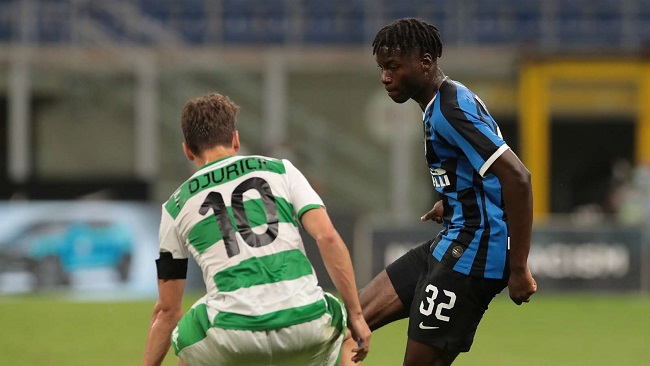
Liverpool ended a 30-year wait for the English title as they were crowned Premier League champions on Thursday, triggering jubilant scenes as fans ignored social distancing to celebrate uproariously.
Jurgen Klopp’s men sealed a 19th league title with a record seven games remaining after Chelsea’s 2-1 defeat of second-placed Manchester City left the 2018 and 2019 champions an unbridgeable 23 points adrift.
Liverpool’s first English title since 1990 — further delayed by the coronavirus shutdown — earns them their maiden trophy in the Premier League, which was introduced in 1992 and has been won 13 times by their arch-rivals Manchester United.
Klopp was in tears after Liverpool’s long-awaited win, which follows their Champions League and Club World Cup victories last year, when they finished just a point behind City in the Premier League.
“It’s such a big moment, I am completely overwhelmed,” an emotional Klopp told Sky Sports. “Tonight it is for you out there.
“It’s incredible. I hope you stay at home, or go in front of your house if you want, but not more. We do it together in this moment and it is a joy to do it for you.”
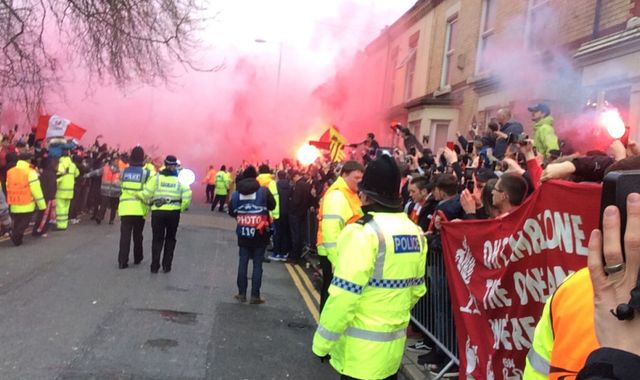
However, thousands of fans, many in face masks, converged on Anfield, lighting flares, chanting and celebrating with a replica trophy, while motorists drove up and beeped their horns.
Congratulations poured in from around the world with basketball star LeBron James, actor Samuel L. Jackson and former world number one tennis player Caroline Wozniacki among those paying tribute.
(AFP)















26, June 2020
Cameroun gov’t army soldiers and armed ethnic Fulani massacre at Ngarbuh: A Chance for Accountability 0
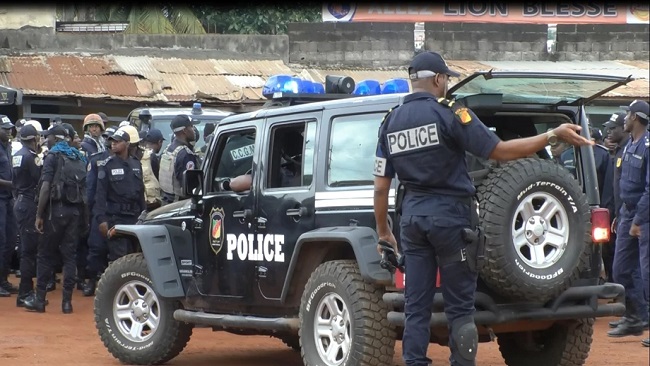
Just over four months ago, security forces and armed ethnic Fulani men massacred 21 civilians, including 13 children, in Ngarbuh, a remote village in the North-West region of Cameroon. Most of the bodies were found completely burned. The killings were the most blatant example of abuse by security forces in the country’s Anglophone regions, but they may serve as a catalyst for accountability and, eventually, change.
Initially the government denied the army was involved in the killings and instead embarked on a smear campaign against human rights organisations and media, which had exposed and denounced the massacre. But, on March 1, following international pressure, Cameroon’s President Paul Biya agreed to establish a commission of inquiry into the killings. There were worries that this may have been an empty promise, especially as the Covid-19 pandemic looked to take over the world’s attention. But on April 21, the Cameroon government admitted their security forces bear some responsibility for the killings.
To be sure, there are concerns over some of the key points of the government’s investigation, especially with respect to the timeline around the attack and the number of people killed. More importantly, the commission’s findings cut the line of responsibility too far down, going after low ranking soldiers and there is a deafening silence from the government as to the role of the Rapid Intervention Battalion (BIR), an elite unit of the army, in the killings. But the investigation led to the arrest of two soldiers and a gendarme last week, one of the few times the government has shown its willingness to hold its own forces accountable for serious crimes.
Impunity is a key driver of the crisis in the Anglophone regions and very few people responsible for serious crimes have been held accountable since it began in late 2016.
While a more in-depth investigation is needed to establish a clear timeline of events and to identify all those responsible, including anyone further up the chain of command we should not underestimate that since the killings, only four months ago, we have gone from blanket denials to an investigation, a statement from the Presidency and now arrests. These mark steps in the right direction – an indication of government willingness to consider accountability for serious crimes committed by its own troops.
For the people of Ngarbuh, accountability cannot come too soon. Last month, the army and gendarmes established a base in the village, striking fear amongst residents. “The images of the killings are still vivid,” one resident told me recently. “I don’t understand how the military can protect us when they came to kill us.”
The attack in Ngarbuh was not an isolated case, but part of a longer history of military abuses in the Anglophone regions. Those crimes also deserve the same level of attention and inquiry that the Ngarbuh massacre received. On this, Cameroon’s international partners can help by assisting the government to establish an independent commission of inquiry, or similar mechanism, to advance accountability for serious human rights abuses committed by both government forces and armed separatists in the Anglophone regions since 2016. They should also encourage Cameroonian authorities to allow human rights organizations and journalists to work without hindrance and fear of reprisal.
The steps towards justice in Ngarbuh, which should lead to prosecutions in fair and public trials, should be viewed as the beginning of a long process in responding to impunity, not as an end in of themselves. It should become the test case to gauge how seriously the government will hold its own men accountable.
Culled from Human Rights Watch