24, May 2019
Human Rights Watch weighs in on the burning of 70 homes in Bamenda 0
Cameroonian soldiers went on a rampage in the English-speaking North-West region on May 15, 2019, burning over 70 homes in Mankon, Bamenda. Soldiers dragged one man from his house, shooting him dead in the street.
In a news release issued on May 16, the defense ministry announced that it had opened an investigation into the burning of homes and destruction of property. The government should hold soldiers involved accountable.
“The government’s move to investigate these attacks on civilians and their property is an important step to ensure accountability,” said Lewis Mudge, Central Africa director at Human Rights Watch. “The investigation should be prompt, independent, and impartial, but it should not end there. The government should immediately review other cases of alleged abuses by its security forces and prosecute those responsible.”
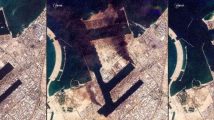
Human Rights Watch interviewed 15 residents of Mankon, including 10 witnesses, who described how soldiers from the Air Force and the Rapid Intervention Battalion coordinated the attack. Human Rights Watch also reviewed satellite imagery showing over 70 buildings affected by fire and photographs and videos showing extensive destruction of property.

Over the past three years, Cameroon’s Anglophone regions have been embroiled in a cycle of violence that has led to 1,800 deaths and uprooted half a million people from their homes. Government forces and armed separatist groups have committed serious human rights abuses against the civilian population.
On May 15, following the killing of two Air Force soldiers by suspected armed separatists, security forces killed Nwacha Christopher Neba, a 41-year-old mechanic, and burned down scores of private homes and shops across Alachu, Matsam, and Muwatsu, three neighborhoods in Mankon, in what appears to be retaliation against residents perceived as sympathetic to separatists. A witness said that the military went to Neba’s house in Alachu, “broke down the door, pulled him out, and beat him savagely.” The witness then heard gunshots. He said the man’s body was found in the street shortly afterward, shot in the head and the back.
Ten witnesses said soldiers looted homes and shops and killed domestic animals.
A pastor whose home was burned in the Alachu neighborhood said that Air Force soldiers stormed his neighborhood at around 2:30 p.m., shooting indiscriminately. “When we saw them approaching, we ran away and sought refuge in a nearby church,” he said. “The soldiers shot my five pigs, broke the door of my home, and set it ablaze. We saw them stealing drinks from a store, drinking and celebrating.”
Another Alachu resident, a teacher, said: “When the soldiers came, I ran, and they chased me. I managed to hide in the Baptist church. When I came out, I found that my house was completely burned and now I have nothing left.”
A local authority from Muwatsu said: “In our area, more than 100 people are now homeless. The military burned up to 20 homes and destroyed our neighborhood council office.”

In the days that followed the attack, the military prevented some residents from taking photos and assessing damage to their homes. “The day after the attack I tried to go back and evaluate the extent of the destruction,” an Alachu resident said. “I was stopped by the soldiers stationed at the junction in Mile 8 and threatened at gunpoint because I tried to take pictures of my burned home.”
On May 17, the governor of the North-West region established a commission to identify victims from the “incident” in Mankon and evaluate their needs, the humanitarian situation, and the material damage and property destroyed. The commission is scheduled to submit its report by May 24.
Unlawful killings and destruction of private property by the Cameroonian security forces have been rife since the crisis started. Human Rights Watch has documented extensive burning of villages by members of the security forces between 2017 and 2019 in both the North-West and South-West regions, as well as killings of civilians.
The Office of the United Nations High Commissioner for Human Rights requested permission to investigate abuses in the Anglophone regions in 2018. The government has not yet granted permission. The UN High Commissioner for Human Rights visited Cameroon in early May and raised the lack of access for both international and national human rights activists and humanitarian agencies.
The Cameroon government denied a Human Rights Watch researcher entry to the country on April 12, two days after Human Rights Watch published a report on a deadly attack by soldiers, gendarmes, and members of the Rapid Intervention Battalion on a village in the North-West region.
Both Cameroonian authorities and the separatists should stop abuses of residents and ensure that humanitarian organizations have free and unhindered access to the area to assess the needs of the population and provide assistance, Human Rights Watch said. The government should also permit human rights monitors to operate without hindrance and allow independent scrutiny of its efforts to adhere to international human rights law.
“Cameroonian soldiers dragged a man out of his home and killed him in Mankon, and burned dozens of houses to the ground,” Mudge said. “Cameroonian authorities should ensure that the investigation of the attack is independent and transparent and holds those responsible accountable. And it should allow independent monitors into the country.”
Source: Human Rights Watch


24, May 2019
Expatriates Report Horrors in Southern Cameroons 0
Beheaded corpses. Entrails spilled onto dusty roads. Photos from the civil war raging in his home country Cameroon nauseate the professor. “Sometimes I wake up and on my WhatsApp feed there’s some pictures I cannot even take, I just have to delete, they’re gruesome,” he said.
It’s time for the world to wake up, he says, to the conflict in that has displaced more than 400,000 people and left at least 1,800 dead as government forces battle groups of separatist fighters and burn villages inhabited by suspected separatist sympathizers to the ground.
The separatists’ goal is to win independence for western regions of Cameroon, on the border with Nigeria, and create an independent country called Ambazonia for English-speaking residents who feel they’ve been relegated to second-class citizens by a president who has been in office for 37 years and foists the government’s preferred language on them.
There are 265 languages spoken in Cameroon, but the conflict involves just two: English and French.
The dispute is not solely a linguistic one. Its tangled roots stretch back to 1916, when Germany ceded control of the territory comprising modern day Cameroon to France and Britain.
“So Cameroon was split to the French, about 80% of present-day Cameroon, and to the British about 20%,” said Professor Nandi. Nandi, a pseudonym, is a medical doctor and naturalized U.S. citizen who teaches at a university in the American South.
He asked not to be identified because he periodically returns to Cameroon for health studies, and expatriate detractors of President Paul Biya have been arrested at Cameroon airports and jailed on questionable charges.
A Broken Deal
In 1961, Anglophones, then known as British Southern Cameroons, were given a choice by a British government eager to distance itself from its dark, empire-building past: Do you wish to achieve independence by joining the Federation of Nigeria, another former British colony, or do you wish to achieve independence by joining the France-backed independent Republic of Cameroun?
With outright independence off the table, the British Southern Cameroons voted to join the Republic of Cameroun in a deal that stated: “The peoples of both territories should have equal status and rights.”
Fast-forward to autumn 2016, when teachers and lawyers in Anglophone regions reached a breaking point and took to the streets in protest, weary of a government that had strayed far from the spirit of the 1961 deal.
Not only had state agencies under Biya frustrated English-speakers for years by issuing public notices in French, with no English translation, Biya’s regime had begun sending French-speaking teachers and judges to schools and courts in Anglophone regions.
By then, Tuskegee University communications professor and poet Bill Ndi had left Cameroon to teach in Paris, then to the United States. He won political asylum in the U.S. after the Cameroon embassy in Paris confiscated his passport due to his history of criticizing Biya.
Ndi, a naturalized U.S. citizen since 2016, is still speaking his mind about Biya. “He cannot speak English. … In a bilingual country he cannot carry a conversation. Even saying good morning to him is an uphill battle,” Ndi said in a telephone interview.
Ndi said employment in Anglophone regions is flipped compared to the Francophone areas, as 80 percent of French speakers have jobs, and 80 percent of English speakers are unemployed.
Though there are English-fluent teachers in Anglophone regions, Ndi said, many are unemployed because the government has assigned French-speaking teachers to the schools.
“You have people who cannot speak English barely at all. They are expected to teach these children geography, history, math, physics, chemistry,” Ndi said.
The courts are an even bigger mess, Ndi said, because in Anglophone regions they are based on common law, a system originated by the English monarchy in which case law, or precedent, is primarily used to resolve legal disputes.
But courts in Francophone areas operate under French civil law system wherein statutes are more important than precedent.
“They bring us French judges in our courts, judges who do not understand our legal systems. How do you expect to have justice in that kind of situation?” Ndi said. “The lawyers who have studied in the U.S., the U.K., Nigeria or who have studied in Cameroon, all their lives in English, they are expected to write all their motions and their depositions in French because the judge doesn’t understand English.”
Fighting for Ambazonia
The peaceful protests in late 2016 precipitated a bloody civil war that started the next year when security forces opened fire on crowds from helicopters, and Ambazonia separatists fought back against troops who have been torching villages and beating and killing people whom they believe support the Ambazonians.
In early 2017, police arrested hundreds of people as they went from house to house looking for separatist fighters and leaders of the Southern Cameroons National Council, a coalition of student, union and activist groups that has pushed for independence for Anglophones for years.
To stifle the resistance, the government shut down the internet for weeks in the area in spring 2017, instituted a curfew and sent in troops who raided homes under cover of darkness.
The separatist fighters, whose numbers are estimated at 2,000 to 4,000, responded by instituting “ghost town” strikes in Anglophone cities and villages, in which all businesses, schools and services are shut down, for weeks or months, and would-be strikebreakers are threatened with violence.
Professor Nandi said the Anglophone areas are replete with oil, timber, cocoa farms and banana plantations.
“So at the crux of the Anglophone problem, the French, do not want the English people to have equal rights or to have their own state because then they cannot control those resources,” he said.
Nandi said France’s military support and weapons sales to Cameroon have kept the 86-year-old Biya in power for more than three decades.
The French embassy in Washington, D.C. did not respond when asked if France has tried to mediate peace talks in Cameroon, nor to accusations that France is exploiting Cameroon’s natural resources.
Biya labeled the separatists terrorists and refused to negotiate with them, announcing in August 2017 that agitators were being monitored.
Nandi said police at checkpoints vet the identifications of people queuing up to board buses headed from Anglophone regions to the country’s financial capital Douala and its capital Yaoundé.
“They like to keep tabs on who is moving,” Nandi said. “So it’s a police state. If they have an inkling you are somebody with opposing views, they keep tabs on you. They put some people on no-fly lists at airports; they make sure some people don’t fly.
“I have colleagues who were arrested in Douala just because they know they have been sympathetic to Ambazonia. So they get arrested when they enter the country. They arrest you or they deny you entry.”
With the civil war in its second year, the United Nations Security Council held its first informal meeting about the conflict on May 13, over the Cameroonian government’s objections.
The international spotlight apparently moved Biya to scrap his vow not to negotiate with separatists: Africanews reported on May 14 that Biya sent his prime minister on a “reconciliation mission” to the Anglophone regions with instructions to hold talks with separatist groups.
Despite Cameroon security forces’ attacks on civilians, the United Nations General Assembly elected Cameroon in October 2018 to the UN Human Rights Council for a three-year term, which began on Jan. 1 this year.
UN spokesman Farhan Haq said in an email it is up to the General Assembly’s member states to decide whether to remove a country from the Human Rights Council.
The Road to Asylum
Nancy Oretskin runs the nonprofit Southwest Asylum and Migration Institute out of her home in Las Cruces, New Mexico.
She started practicing immigration law on the side while teaching law at New Mexico State University, and retired in July 2018 after 29 years at the school, to focus on helping refugees.
She has built a reputation as a tireless attorney taking on pro bono asylum cases of people detained in an immigration prison in El Paso, Texas, an hour drive from Las Cruces.
El Paso immigration judges rarely grant asylum. They approved just seven of 225 applications in fiscal years 2016 and 2017, according to a recent report by the American Immigration Council.
As of December 2018, Oretskin had represented 12 Cameroonians in immigration courts in El Paso and Otero, N.M., and won asylum for seven of them, she said in a telephone interview.
Speaking from home after a long day of meetings with clients, she said, “You know it’s the ones you lose that you lie awake at night on.”
Oretskin said she also has represented people from Somalia, Zimbabwe, Gambia, Eritrea, Ethiopia, Liberia and Ghana. “I’m white, by the way,” she said.
She said there are two main routes by which her Cameroonian clients reached the Southwest border. Some flew to Madrid, Spain, then to Mexico City and traveled by foot or bus to the United States.
“The other ones go to Ecuador, because from Cameroon you can go to Ecuador visa-free,” Oretskin said. “And then they travel in groups on foot from Ecuador. So they have to get to Columbia and then they’ll have to cross the Darién Gap,and a lot of them are robbed. Their passports are stolen. Or when they get to Mexico they’re told by people, ‘Oh if you get to the U.S. with your passport, they’ll deport you.’ So they tear up or throw their passports out.”
Oretskin estimated that 90 percent of the Cameroonians who arrive at the U.S. border do not have passports. “And that’s a big issue on credibility,” she said.
She told Courthouse News in late December 2018 that she had spoken to several of her Cameroonian clients about being interviewed for this story and all were too scared to talk to a reporter.
According to the Department of Homeland Security, from October 2014 through September 2017, the latest data available, 663 Cameroonians were granted asylum in the United States.
Professor Nandi said he receives updates on the civil war from a group of his high school classmates via social media platform WhatsApp, some of them with photos of grisly murder scenes.
His own family has not been spared from the violence. “I have a younger brother who got shot at earlier this year. There was a question if it was government or Ambazonia forces, but he got shot at. Luckily, he survived. So that’s the daily experience of many of us.”
Despite the scant media coverage in the United States, Nandi said Americans should care because people’s rights are being trampled in Cameroon.
“I think it behooves the United States to speak up to dictators so they can bring about transparency and democratic freedom just as we enjoy here. That would also help stem the tide of migration to the United States,” he said.
Source: Court House News Service