25, May 2018
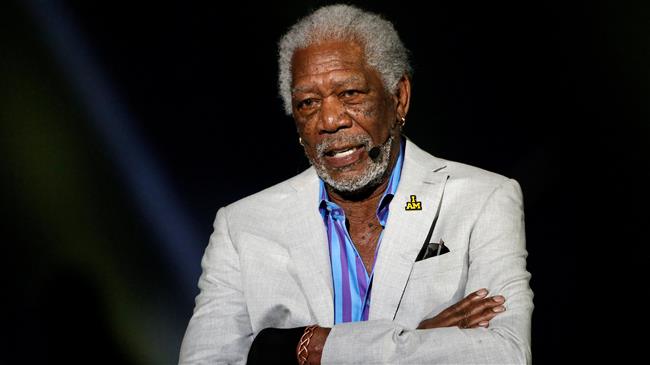
Actor Morgan Freeman accused of inappropriate behavior, harassment 0
At least eight women have accused Oscar-winning actor Morgan Freeman of subjecting them to inappropriate behavior or harassment on film sets or at promotional events, CNN reported on Thursday.
As part of its investigation of the 80-year-old actor, CNN said it had spoken with 16 people, some of whom also alleged inappropriate behavior by Freeman at his production company, Revelations Entertainment.
Freeman said in a statement that he was sorry to anyone who had been made to feel uncomfortable or disrespected.
“Anyone who knows me or has worked with me knows I am not someone who would intentionally offend or knowingly make anyone feel uneasy,” he said. “I apologize to anyone who felt uncomfortable or disrespected — that was never my intent.”
Representatives for Freeman and Revelations Entertainment did not respond to requests for comment beyond the statement. Reuters was unable to independently confirm any of the accusations.
Following the CNN report, credit card company Visa said in a statement that it was suspending its “marketing in which the actor is featured.” Freeman has been the longtime voice of Visa television advertisements.
A torrent of accusations of sexual misconduct against male actors, filmmakers and agents have roiled Hollywood since last fall, leading in some cases to resignations and the halting of projects.

Similar accusations have also engulfed powerful men in US politics and business, and inspired a #MeToo social media movement by people publicly sharing their stories of sexual harassment or abuse.
CNN reported that eight people told the network they were victims of what some labeled harassment and others called inappropriate behavior by Freeman. It said eight others told the network that they witnessed the actor’s alleged misconduct.
CNN also reported that other sources denied having seen any questionable behavior by the actor, and that those sources described him as behaving professionally on set and in the office.
Freeman, whose career has spanned 50 years and more than 100 movies, won a Oscar in 2005 as best supporting actor for his role as a former boxer in “Million Dollar Baby.”
(Source: Reuters)





















29, June 2018
Michael Jackson returns posthumously on Drake album 0
Nearly a decade after his death, Michael Jackson is out with new music in a guest appearance on the keenly awaited new album by Drake.
The late King of Pop appears in a song on “Scorpion,” the fifth studio album by the Toronto hip-hop star who pulled another surprise by using the release to come clean about his secret child.
True to form for Drake, whose sensibility for catchy beats has made him one of the top-selling artists of recent years, the 25-track album that came out Friday sprawls defiantly, as if resisting the traditional confines of records.
Yet Drake loosely divides “Scorpion” in two — a first “side” in which he hones his rap skills and a second, more unexpected half in which Drake branches further into pop.
“Don’t Matter To Me,” the song with Jackson, belongs firmly to Drake’s pop mode. The 31-year-old proves his bona fides as a singer, his piercing rap delivery giving way to a full-textured silkiness that complements Jackson’s higher ranges.
A dreamy mid-tempo track driven by a synthesized R&B bass, “Don’t Matter To Me” is in line with the adult output of Jackson, whose distinct voice is heard on the chorus.
“All of a sudden you say you don’t want me no more / All of a sudden you say that I closed the door / It don’t matter to me,” Jackson sings.
Drake revealed nothing about the song’s genesis.
But Jackson is known to have left a series of unfinished tracks when he died in 2009. A previous posthumous duet, “Love Never Felt So Good,” came out in 2014 between Jackson and pop star Justin Timberlake.
Like “Don’t Matter To Me,” the Timberlake collaboration was credited in part to the legendary crooner Paul Anka.
Jackson had been working on an album of duets with Anka, the voice behind such classic pop hits as “Put Your Head on My Shoulder,” in 1983.
But the project fell by the wayside as the former child star was propelled to fortune with “Thriller,” which went on to become the best-selling album of all time.
Drake, in a rare interview last year, described Jackson as a longtime model and voiced dismay at being pigeon-holed as a rapper.
The song coincidentally comes out little more than a day after the death of Joe Jackson, the King of Pop’s father and manager who guided his children’s careers but was ruthless in his discipline.
– Politics and a secret child –
Jackson is not the only special guest on “Scorpion.” Rap mega-star Jay-Z lends rhymes on “Talk Up” that denounce President Donald Trump — a rare political display for a song by Drake, who while making clear his disdain for Trump has largely preferred apolitical, crowd-pleasing rhythms.
Drake incorporates his recent input into “Scorpion” — “God’s Plan,” an infectious hip-hop track that has spent the longest stretch on the top of the US singles chart this year, and “Nice For What,” a fast-driving dip into New Orleans’ bounce scene.
But while “Scorpion” is full of feel-good vibes — “Ratchet Happy Birthday” seems destined to be played at many a boisterous party — Drake closes on a serious note as he acknowledges he is a father.
Drake admits the substance of a diss track in May by Pusha T who said that Drake had a son with Sophie Brussaux, a French former pornographic actress.
“I wasn’t hiding my kid from the world / I was hiding the world from my kid,” Drake raps in “Emotionless,” which samples Mariah Carey’s “Emotions.”
Later on the album, Drake hints that he has only seen his child once and is embarrassed he is following the footsteps of his divorced parents.
“Always promised the family unit / I wanted it to be different because I’ve been through it / But this is the harsh truth now.”
© 2018 AFP