1, September 2025
Yaoundé: US State Department says 14,300 Cameroonians held in pre-trial detention for minor offenses 0
A recent U.S. State Department report on human rights, released August 25, 2024, indicates that approximately 14,300 individuals in Cameroon are currently held in pre-trial detention for minor offenses. The report, citing the Cameroonian Bar Association, estimates that nearly 75% of those awaiting trial are incarcerated for offenses considered minor under local law. The document also highlights the disproportionate impact on minors, raising significant concerns regarding child protection and adherence to international juvenile justice standards.
Cameroonian law stipulates a maximum pre-trial detention period of 18 months. However, the report notes frequent violations of this legal limit, with many detainees awaiting trial for years. This discrepancy between legal provisions and practical application represents a serious breach of fundamental rule of law principles. The case of independent journalist Kingsley Fumunyuy Njoka exemplifies this issue; arrested in 2020 for articles related to the Anglophone crisis in the Northwest and Southwest regions, he was held for over four years before being sentenced in September 2024 to ten years in prison. Charges against him included secession and complicity with armed groups, despite his initial arrest being linked to his writings.
Structural factors contribute to these prolonged detentions, according to the report. Key issues include pervasive corruption within the judicial system and a severe shortage of court personnel. Additional challenges encompass mismanagement of case files, leading to delayed or lost procedures, and detainees’ frequent inability to cover legal costs. The report also points to systematic denials of bail, even when legal conditions for release are met. Furthermore, some legal proceedings are reportedly influenced by political considerations, requiring directives from higher authorities before judgment.
Despite these practices, the Cameroonian Constitution prohibits arbitrary arrests and detentions. It also guarantees citizens the right to challenge the legality of their arrest or detention before an independent court and to seek compensation for damages resulting from unlawful detention. These constitutional safeguards, though clearly articulated, are largely disregarded in the daily operations of the judiciary.
Criticism regarding the state of justice in Cameroon is not new. For several years, lawyers, local and international non-governmental organizations, and multilateral institutions have raised alarms about the widespread abuse of pre-trial detention. Organizations such as Amnesty International and Human Rights Watch, alongside national legal stakeholders, denounce a system characterized by slowness, high costs, opacity, and, in some instances, political manipulation.
In response to this judicial crisis, several long-awaited reforms are necessary. These include modernizing criminal procedures, increasing judicial staff, depoliticizing judicial actions, and implementing alternative measures to incarceration for minor offenses. Options such as community service, penal mediation, or fines could alleviate prison overcrowding while ensuring appropriate legal responses. Beyond legal aspects, the credibility of the entire Cameroonian judicial system is at stake.
The misuse of pre-trial detention, particularly in politically sensitive cases, erodes public trust in institutions and threatens social stability. An efficient, swift, and equitable justice system remains a cornerstone of any democracy. Cameroon now faces a critical choice: undertake profound reforms or continue to tolerate a system that deprives thousands of citizens of their fundamental rights.
Source: Sbbc





















2, September 2025
Cameroon Road Network Crisis: 75% requiring rehabilitation 0
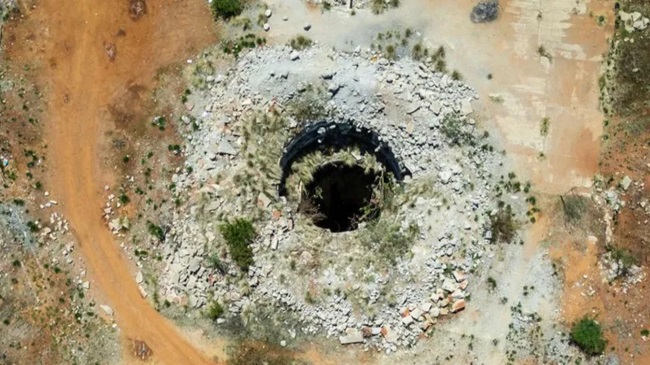
Three-quarters of Cameroon’s road network remains in a poor or mediocre state despite public investment, according to a September 2025 project review by the country’s Ministry of Public Works. The report reveals that 91,405 km of the nation’s 121,873 km road system are in disrepair, presenting a significant obstacle to economic activity.
Only 25% (30,468 km) of the network is rated as being in good or fair condition. The quality varies significantly by road type. While 100% of the country’s small stretch of motorways (109 km) are in good condition, only 18% of crucial municipal roads meet this standard. National roads fare better, with 69% rated as good or fair, but regional routes lag at just 35%.
The report indicates a marginal five-percentage-point improvement in overall network quality compared to 2024. Progress is being hampered by several systemic issues, including pavement degradation, the impacts of climate change, and a lack of discipline among road users.
A critical factor cited is the weakness of the domestic construction sector. The ministry noted that many local firms lack the financial, technical, and logistical capacity to execute projects effectively. This has led to the termination of 27 contracts between 2019 and 2024 and the closure of several other projects at the request of the struggling companies.
In response, the government is implementing structural reforms. A 2022 law aimed at protecting national road assets is being enforced to increase infrastructure durability. Furthermore, a decree from July 2025 has reorganized the national Road Fund to improve resource allocation for maintenance and rehabilitation.
As of December 31, 2024, Cameroon’s road network consisted of 10,576 km of paved roads and 111,297 km of dirt roads.
Looking ahead, the government plans to launch 132 major new road projects starting in 2025. The initiative aims to pave 882 km of new roads, rehabilitate 661 km of existing paved roads, and perform maintenance on another 828 km by 2027, covering a total distance of 2,371 km.
Source: Business in Cameroon