16, March 2026
Bishop Nkuo says government must protect young Cameroonians from traffickers 0
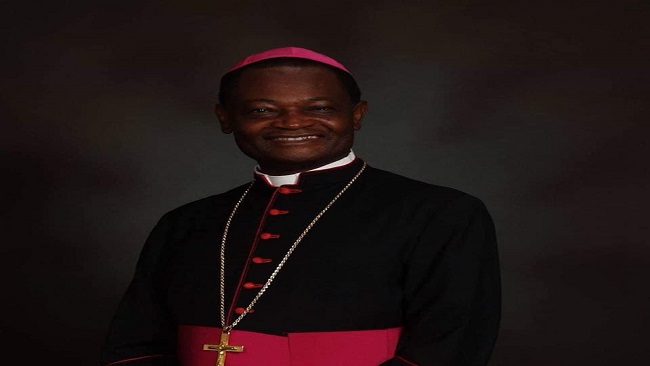
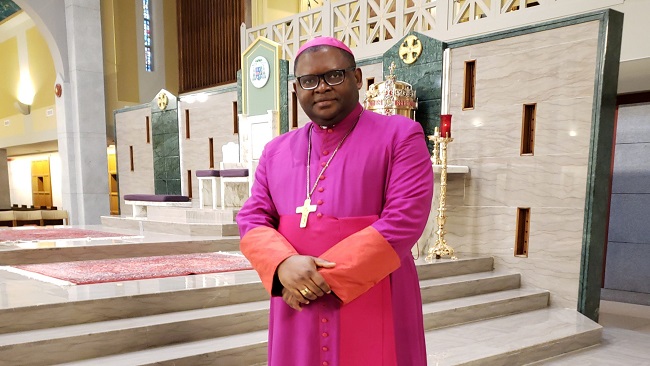
A bishop in Cameroon’s war-torn North West region petitioned the government to act on the alarming number of Cameroonians trapped in human trafficking camps in Nigeria.
Bishop George Nkuo of Kumbo said the Justice and Peace Commission of his diocese has confirmed that over 3,000 Cameroonians are trapped in nine traffickers’ camps in Nigeria.
Speaking to The Tablet shortly after handing over a confidential petition to authorities and consular services in Yaoundé, he said further indicators suggest there could be as many as 40 camps affecting over 7,000 Cameroonians.
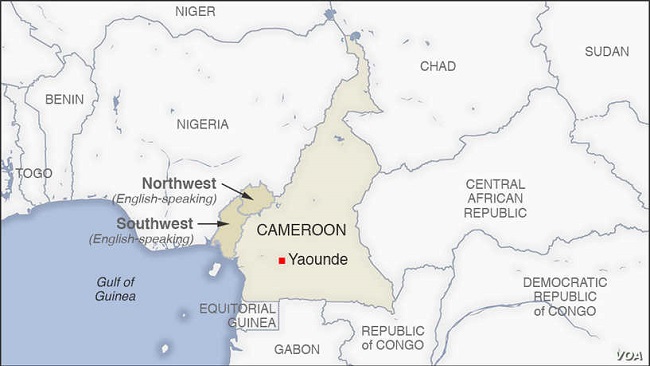
Like many parts of Cameroon’s English-speaking North West and South West regions, the Diocese of Kumbo has become accustomed to the phenomenon of human trafficking, but the separatist war afflicting both regions has caused an alarming escalation.
“The most critical factor is the closure of government schools. In Bui Division [the administrative area that covers parts of the diocese] alone, 42,000 children were attending government schools. Now, all those schools are closed. These children have nowhere to go – they are left idle and helpless,” Bishop Nkuo said.
“Traffickers are taking direct advantage of this vulnerability. With children out of school and families struggling, people are luring them away with false promises. They tell the children they will provide them with jobs, an education or a ‘better life’ in a ‘greener pasture’. For a child with no school and no prospects, these offers are dangerously appealing. The situation is spiraling out of control.”
He continued: “Our youth should be in classrooms and not in camps. They should be on farms and in industries, not in bondage. They should be in seminaries, workshops and families, not on exploitation expeditions.”
“The promises made to them are entirely false,” said Isidore Njodzeven, deputy head of the diocese’s Justice and Peace Commission.
“They cannot return home because their documents are taken away upon arrival. They can only make calls at designated times, while those monitoring them create a false sense of normalcy.”
Bishop Nkuo said he has written to the governments of Cameroon and Nigeria, drawing their attention to the trafficking crisis: “We believe they are committed to resolving it.”
He said a more sustainable solution depended not just on bringing an end to the separatist crisis, but also creating the conditions for young people to thrive in Cameroon.
Source: The Tablet












17, March 2026
Biya regime halts land sales around Olembe Stadium in Yaoundé 0
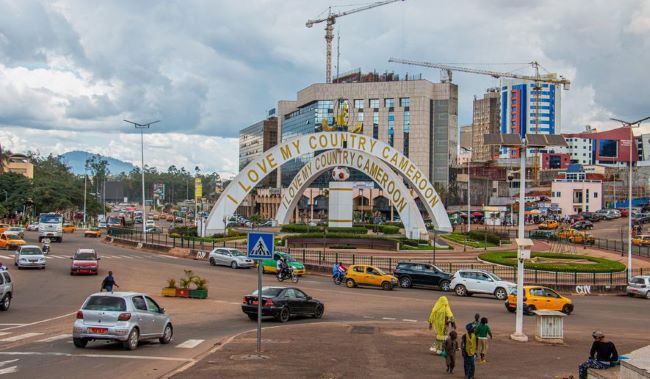
Cameroon’s presidency has ordered an immediate halt to land allocations around the Olembe sports complex in the northern outskirts of Yaoundé.
In a letter dated March 9, the secretary-general of the presidency, Ferdinand Ngoh Ngoh, instructed the minister of state property, surveys and land affairs to revoke all acts granting or transferring plots to private individuals within the perimeter of the Olembe sports complex.
The order follows what the document described as “high instructions” from President Paul Biya, directing the government to cancel all decisions related to the allocation or retrocession of land belonging to the complex.
The decision concerns an area that has experienced rapid demographic and real estate growth over the past decade. The expansion was driven largely by the construction of the Olembe sports complex—whose centerpiece is a 60,000-seat stadium—as well as the development of a nearby public housing estate.
Originally, the state secured about 110 hectares of land for the project as part of preparations for the 2021 Africa Cup of Nations. Beyond the stadium, the complex was expected to include several complementary facilities, including training grounds, a five-star hotel, a shopping center, a museum, a cinema, and an Olympic swimming pool.
However, construction delays disrupted the original development plan. Many of the additional facilities were never built, leaving large sections of land exposed to competing claims, informal occupation, and land speculation, amid tensions with local communities.
By suspending land allocations and transfers, the government is seeking to regain control of these land reserves. The objective is to secure the site, reduce the risk of land disputes, and preserve the possibility of reviving the broader development project in the future.
Source: Business in Cameroon