
2, December 2019
Boko Haram: Nigerian govt explains donation of vehicles to Cameroonian vigilantes 0
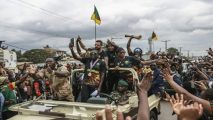
The Borno State Government said it had donated patrol vehicles to members of Cameroonian vigilante to enhance fight against insurgents in border communities of the state.
Mr Isa Gusau, the Special Adviser on Public Relation and Media Strategy to Gov. Babagana Zulum, made the disclosure in a statement on Monday in Maiduguri.
Gusau dismissed as misleading reports indicating that the vehicles donated by the state government to 150 members of the Cameroonian vigilante violated Nigeria’s sovereignty and military protocols.
He explained that representatives of the government presented vehicles to the Cameroonian vigilante in concert with the Headquarters, 5 Brigade Nigerian Army Cell of the Multi-National Joint Task Force (MNJTF), Damasak, Mobbar Local Government Area of the state.
Gusau noted that Zulum was a member of the Lake Chad Basin Governors’ Forum established with support of the Federal Government and UN Security Council Committee on counter-terrorism.
He added that the gesture was in line with the forum spirit to enhance cooperation on cross border security among member states.
Gusau said: “Gov. Zulum operational arrangements with the 150 Cameroonian vigilante happened with full involvement of the Nigerian Army’s component in the MNJTF currently fighting Boko Haram in eight regions affected by the insurgents’ attacks in Nigeria, Cameroon, Chad and Niger Republics.
“The Cameroonian vigilantes are operating in parts of northern Borno; located in the shores of the Lake Chad, and they are operating under the coordination and command of the Nigerian Army Cell of the MNJTF.
“One of the key benefits of having these vigilantes is the latitude to generate and pass on intelligence from border communities in Cameroon and to also pursue insurgents who occasionally flee from Nigerian territories to border communities in Cameroon where Nigerian troops may be constrained to engage them.
“The main objective of the Lake Chad Basin Governor’s Forum is to ease cross border cooperation in the fight against Boko Haram insurgents in the affected countries.”
Source: Pmnews















2, December 2019
Ambazonia: UN Humanitarian Coordinator Condemns Killing of Abducted Aid Worker 0
The Humanitarian Coordinator in Cameroon, Ms. Allegra Baiocchi, strongly condemns the killing of an aid worker in north-west Cameroon. “I am deeply saddened by the news of the horrific execution of an aid worker last night. On behalf of the United Nations and the wider humanitarian community, our deepest condolences go to his family, friends and colleagues,” said Ms. Baiocchi.
On 30 November, Mr. Pascal Ngwayi, of COMINSUD, a local NGO and UN partner, was abducted and later killed by armed men in Donga Mantung Division of the North West Region. At the time of his abduction, Mr. Ngwayi was carrying out a humanitarian assessment to ensure people in need received timely and appropriate support. “Humanitarian workers risk everything to provide aid to people most in need. They must be respected and protected, not targeted. The continued attacks on aid workers only increase the suffering of civilians, as we are unable to safely carry out operations,” added Ms. Baiocchi.
The deliberate targeting of aid and aid workers constitutes a war crime. The United Nations renews the call for all armed actors to ensure the protection of aid workers, to fully uphold international human rights and humanitarian law and to respect the humanitarian principles of humanity, neutrality, independence and impartiality.
In the North West and South West regions of Cameroon, the humanitarian community is working to bring lifesaving assistance to the most vulnerable people, in line with the 2019 Humanitarian Response Plan.