7, December 2019
India: 2 Cameroon nationals among five held for online fraud 0
A criminal gang having involvement in multiple formats of crime landed in the police dragnet in Kadapa on Saturday.
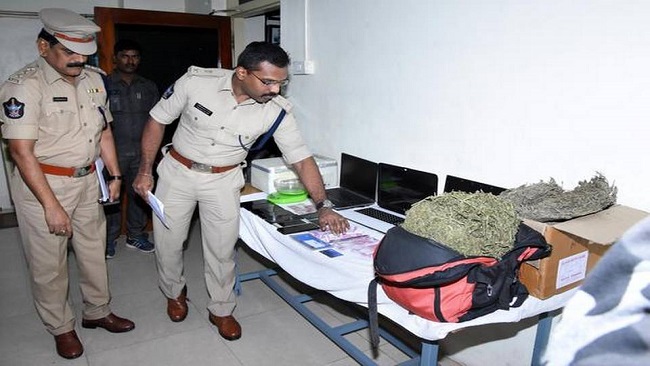
With a lodge in Kadapa city as its headquarters, the team of five, including two Cameroon nationals, allegedly committed online fraud by offering medicines at cheaper rate, printed fake currency with the face value of ₹2,000 and even traded in cannabis.
It all started with a complaint on WhatsApp by Abdul Karim of Kerala to the police, which was accepted as a petition under ‘Spandana’ and passed on to Chinna Chowk police for investigation.
Acting on a tip-off to Deputy Superintendent of Police U. Suryanarayana, a police team zeroed in on the private lodge and arrested Mbi Adolf Ashu (31), Akow Bronson Enow (30), both Cameroon nationals and now living in Bengaluru, Chimpiri Sai Krishna (24) of Kadapa, Pangi Dasu Babu (29) and Kurra Jagannath (26), hailing from Paderu and Araku taluks respectively of Visakhapatnam district.
“In the garb of selling wigs and medical products, the two Cameroon nationals allegedly lured online customers with low prices, but never sent the products after getting the money into their accounts,” Superintendent of Police K.K.N. Anburajan said.
The police seized a laptop computer, printer, counterfeit currency with a face value of ₹7.28 lakh and cannabis weighing 9 kg.
Source: The Hindu.com















8, December 2019
Ambazonia: En route to South Africa, Vice President Yerima says he and Renowned Muslim Scholar Abdul Karim will pray together in Buea 0
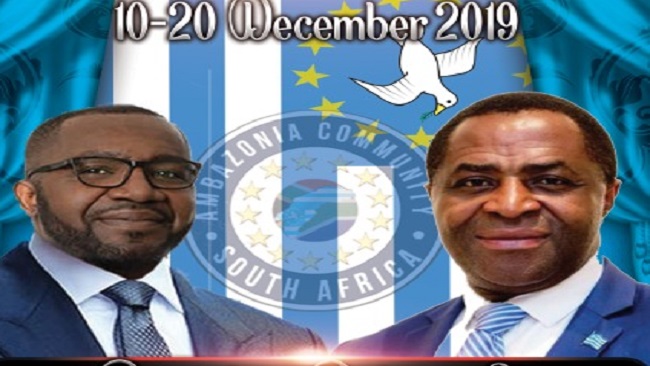
Ambazonia Vice President Dabney Yerima who has been living in exile for almost two decades will be making an emotional displacement from his headquarters in Den Hague, Holland on Monday and fly to the Republic of South Africa.
Recalling how the leader of the Southern Cameroons Interim Government President Sisiku Ayuk Tabe and his top aides were abducted in Abuja, Nigeria and forcefully repatriated to French Cameroun, Comrade Yerima told a town hall meeting in Holland recently that his first publicized official outing as Vice President had to be in Africa.
“For the first time, we Southern Cameroonians will again begin the journey to Buea and by extrapolation to the sacred land of Ambazonia,” Yerima said at last week’s Interim Government briefing.
Dabney Yerima added that the mission to South Africa will focus on marketing the Amba Bonds Project and to assure Southern Cameroonians in Ground Zero that the desperate days of failed leadership are over and above all, to congratulate Ambazonians in South Africa for their huge contribution on the long diplomatic drive toward Southern Cameroons self-rule.
In a message addressed to the Vice President, the Southern Cameroons European think tank in Germany said “All our congratulations to the Federal Republic of Ambazonia on the occasion of your maiden trip to the Republic of South Africa and all our congratulations too to the valiant people of Ambazonia and our combatants in Ground Zero.”
The Ambazonia Interim Government will maintain its political, international relations and refugee departments in South Africa to be able to monitor the deteriorating situation in Nigeria and in Ground Zero.
However, Ambazonia Restoration Forces resisting the French Cameroun military are largely unfunded and embittered. The Southern Cameroons diaspora in Europe and America has to adapt and rally behind Vice President Yerima in the new situation if they want to get anything out of the Ambazonia revolution.
Correspondingly, if those small Southern Cameroons groups doesn’t change their attitudes and join the Interim Government and fight according to the present circumstances, they will fade away.
Yerima has pledged to convene a Southern Cameroons forum to rewrite the Ambazonian charter on the armed struggle. But a majority of the Interim Government cabinet members particularly those in the USA have admitted that there is no consensus for convening the forum now.
The next two months for Vice President Dabney Yerima are going to be very, very difficult—addressing Southern Cameroonians in Ground Zero on the 31st of December empty-handed and with a big smile and no Santa for the hundreds of Southern Cameroonians dying in Mexico.
Yerima is mindful of the financial problems ahead, even as he looks ahead with bravado. “The Southern Cameroons struggle will continue until the Ambazonia flag is raised in all Southern Cameroons lands,” he said.
Speaking of the recent breakdown in communication involving the renowned Muslim scholar, Vice President Dabney Yerima pledged repeatedly that he and Abdul Karim will pray together in Buea.
“Southern Cameroonians will continue until we reach Buea the capital of our Ambazonian state.” At the same time he added, “Ambazonians are full of pain and bitterness about the uncertainty in the new situation.”
By Soter Tarh Agbaw-Ebai in London