13, February 2026
Norway’s former PM charged with gross corruption over Epstein links 0
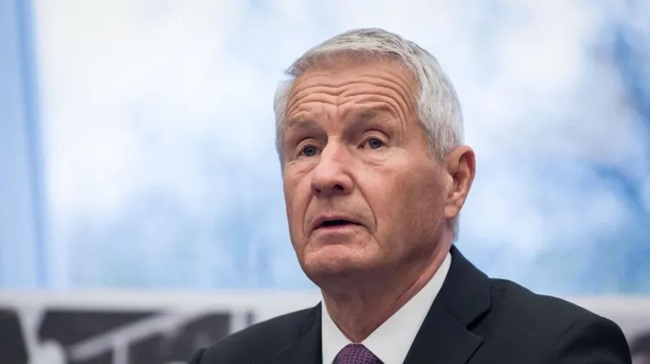
Former Norwegian Prime Minister Thorbjørn Jagland has been charged with “gross corruption” over his ties with the US sex offender Jeffrey Epstein, police have said.
The charge was brought after the Council of Europe lifted Jagland’s immunity, which he enjoyed because of his past diplomatic role. He denies criminal liability and is willing to cooperate, his lawyer says.
Emails released by the US government are thought to show that Jagland planned solo and family visits to Epstein’s homes in Paris, New York and Palm Beach after the billionaire was convicted of a child sex offence.
Three of Jagland’s properties were searched by Norwegian crime unit Økokrim and he is now expected to be questioned.
As well as serving as prime minister from 1996 to 1997, Jagland is also a former head of the Norwegian Nobel Committee and spent a decade as secretary general of the Council of Europe.
Jagland had diplomatic immunity from heading the Council, Europe’s watchdog for democracy and human rights, for alleged acts carried out during his 2009 to 2019 tenure.
Økokrim requested the Council revoke his immunity after it launched an investigation earlier this month into allegations of gross corruption made against him between 2011 and 2018.
The so-called Epstein files appear to show instances where the late financier covered the travel expenses to his properties for Jagland and his family.
The former leader had planned a family trip to Epstein’s private Caribbean island in 2014, but it was ultimately cancelled after Epstein fell ill.
Jagland also faces allegations that he solicited Epstein’s help in obtaining a bank loan in another exchange, although it is not clear whether this materialised, according to Norwegian broadcaster NRK. Police have not confirmed whether this allegation is part of the gross corruption charge.
Mention in the Epstein files – which have been released by the US Department of Justice (DOJ) – does not indicate any wrongdoing.
Jagland was seen walking out of his home alongside his lawyer in Oslo on Thursday, one of the properties – alongside two in Risør and Rauland – that Økokrim confirmed it had searched.
Politicians, celebrities and royals have been caught up in the turmoil after the US DOJ published the latest tranche of files last month, containing millions of private emails, images and FBI reports into the late sex offender – who died in 2019 while awaiting trial for sex trafficking.
The Nordic country has seen several public figures drawn into the widening scandal, including Crown Princess Mette-Marit, diplomats Mona Juul and Terje Rød-Larsen, and chief executive of the World Economic Forum (WEF), Borge Brende.
Mette-Marit gave a “profound apology” to Norwegians for her friendship with Epstein, after it emerged they had exchanged messages for three years.
Mona Juul and her husband Terje Rød-Larsen are also being investigated by Norway’s Økokrim for “aggravated corruption” following Norwegian media reports, that each of her children would receive $5m (£3.6m) in a will allegedly signed by Epstein days before he died.
Juul’s lawyer has said she “does not recognise the accusations made against her” and Rød-Larsen’s lawyer said he is confident the investigation will clarify “there is no basis for criminal liability”.
The WEF ordered an independent review into Brende – who also served as the Norwegian foreign minister – over his interactions with the paedophile.
Brende has acknowledged dining with Epstein three times in 2018 and 2019 and communicating with him by email and text, but said he was “completely unaware” of his past criminal activity. He added that he welcomes the WEF’s decision to launch a review.
Source: BBC

















19, February 2026
UK: Former Prince Andrew arrested! 0
The King’s brother was arrested at 08:00 GMT on Thursday morning at the Sandringham Estate in Norfolk – here’s how the news broke
Meanwhile, King Charles does not respond to questions about Andrew’s arrest as he attends an event in central London – watch the moment.
Earlier, the King, who was not told of the arrest in advance, released a statement saying “the law must take its course”. Prince William and Catherine are understood to support his remarks.
Police are searching addresses in Berkshire and Norfolk, including the Royal Lodge in Windsor where the former prince lived until recently.
It comes after Thames Valley Police said they were assessing a complaint over the alleged sharing of confidential material by the former prince with late sex offender Jeffrey Epstein.
Andrew, who turns 66 today, has previously denied any wrongdoing in relation to Epstein; he has not responded to the BBC’s requests for comment on the specific allegations in relation to the release of millions of Epstein files in January.
Source: BBC