
24, October 2020
US: Cameroonian asylum seekers were subject to torture at an ICE detention center in Mississippi 0
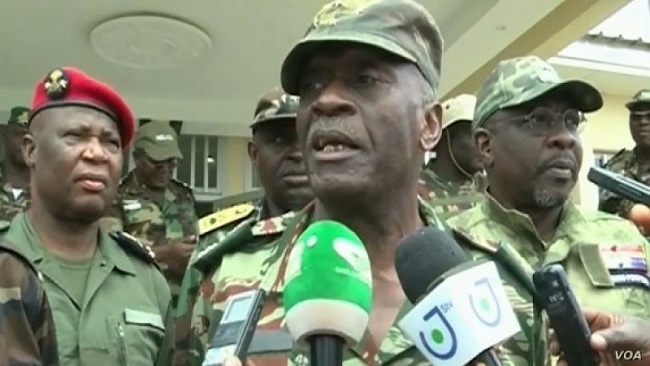
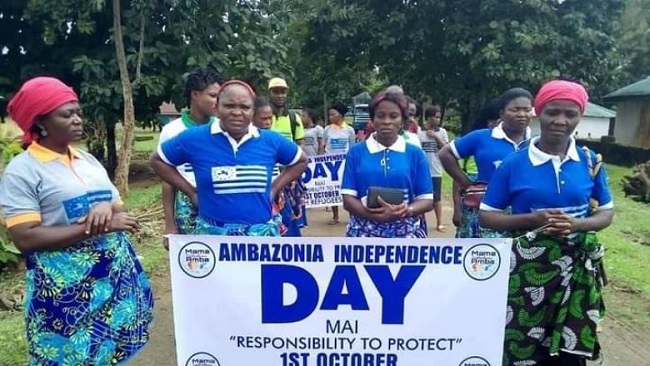
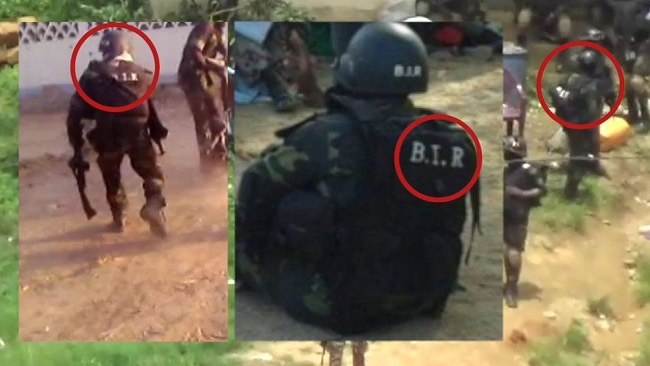
If you thought ICE detention centers couldn’t get any worse, think again. In Mississippi, US immigration staff allegedly tortured Cameroonian asylum seekers until they signed their deportation documents. Cameroonians are seeking refuge outside of their country due to Cameroon’s Anglophone Crisis, which has been occurring since October of 2016.
According to the Central Africa branch of the International Crisis Group, 20% of the population feel marginalized.
Four years ago, strikes and riots resulted from years of frustration in the country’s Anglophone minority and led to political demands from the population. The government’s approach was deemed not effective and was forced to negotiate trade unions with Anglophones. However, the population was subject to three months without internet, six months of strikes, and one entire school year lost. Today, there is a demand for federalism or secession at a boiling point.
The Instagram account, Justice For Cameroon, details the history of migrant Cameroonians, and why some are fleeing the country and seeking refuge in the United States as a result of the crisis.
On February 5, 2019, The Washington Post also published an investigative video on the crisis in Cameroon.
For the first time since 1996, Cameroon will hold its first regional polls in December. Current President Paul Biya has been in power since 1982.
English-speaking provinces will also take part in the election process, which comes after years of separatists fighting with the government that has cost more than 3,000 lives and uncertain living conditions for many more.
The people who have fled from Cameroon have come in fear of government forces that have enacted countless civilian killings, and are are awaiting asylum hearings in ICE detention centers.
There is where the problems begin for the already threatened people.
Multiple refugees have alleged detainees were threatened with violence, choked, beaten, and pepper-sprayed as a way of forcing them to to request the complete opposite of asylum.
It is reported ICE agents put several of their detainees in handcuffs, and forcibly took their fingerprints to replace their signature for the stipulation order of removal. This meant the asylum seekers were forced to waive their rights for immigration hearings and accept deportation.
Advocates for human rights alongside attorneys reported an acceleration in deportations recently. With the election around the corner, the link between the Trump administration’s immigration policy and quicker rates of deportation is clear.
Freedom for Immigrants Executive Director, Christina Fialho said reports of the abuse began in late September and early October of 2020.
“We began to receive calls on our hotline from Cameroonian and Congolese immigrants detained in ICE prisons across the country. And they were being subjected to threats of deportation, often accompanied by physical abuse,” she said.
Fialho added that ICE thrives in secrecy, and “operates in the shadows.”
On Oct. 13, a plane flew 60 Cameroonians and 28 Congolese asylum seekers out of the country from Fort Worth Alliance Airport in Texas.
Quietly, ICE used a charter plane with no flight plan. Luckily, it was found and tracked by the immigration rights group Witness at the Border, and they reported a stopover over in Senegal, Cameroon, the Democratic Republic of Congo before landing in Kenya, and then arriving back in Texas.
In 2019, the Trump admin cut trade privileges with Cameroon due to the ongoing uprisings in the country.
The deported individuals on the flight testified about the abuse they suffered in detention centers under the Cameroonian military, with some having family murdered.
Under the U.S. immigration court system, run by the Justice Department, Cameroonians are also regularly denied asylum or parole.
A complaint filed in conjunction with FFI and the Southern Poverty Law Center recounts eight different stories with claims of abuse and torture.
One person, who was taken off the Oct.13 flight, codenamed CA, still faces deportation, but was one of the people that shared their accounts.
They claim to have been pepper-sprayed before being dragged on the ground.
“The officers told me to open my eyes. I couldn’t. My legs and hands were handcuffed. They forcefully opened my palm. Some of my fingers were broken. They forced my fingerprint on to the paper,” they said.
Source: Aldianews.com









24, October 2020
Nigeria’s Buhari says dozens dead in unrest following anti-police abuse protests 0
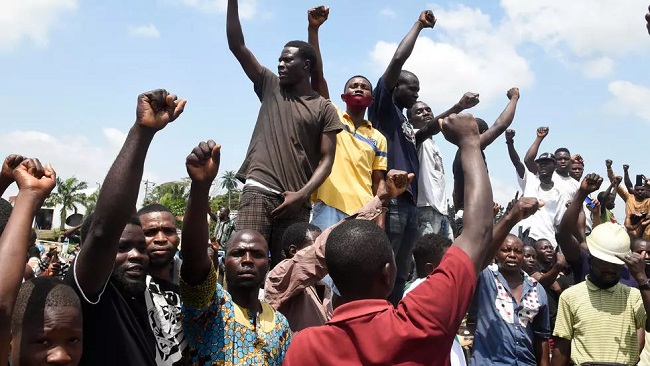
At least 51 civilians have been killed in Nigeria’s unrest following days of peaceful protests over police abuses, the president said Friday, blaming “hooliganism” for the violence while asserting that security forces have used “extreme restraint.”
President Muhammadu Buhari’s comments are expected to further inflame tensions in Africa’s most populous country after Amnesty International reported that soldiers shot and killed at least 12 demonstrators Tuesday night as a large crowd sang the national anthem. The deaths sparked international condemnation.
In a statement, Buhari also said 11 policemen and seven soldiers had been killed by “rioters” as of Thursday, and “the mayhem has not stopped.” He said another 37 civilians were injured in some of Nigeria’s worst turmoil in years.
The president said the well-intentioned protests were hijacked by thugs.
But many Nigerians are upset by what the president hasn’t said. Buhari in a national address Thursday night didn’t mention the shootings, instead warning protesters against “undermining national security and law and order.” On Friday he said the government “will not fold its arms and allow miscreants and criminals continue to perpetrate acts of hooliganism.”
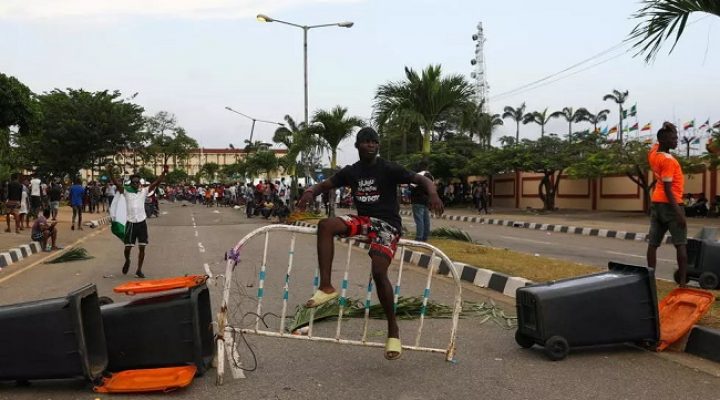
Resentment lingered with the smell of charred tires Friday in Nigeria’s relatively calm streets. Soldiers remained in parts of Lagos, Nigeria’s largest city, as a 24-hour curfew remained in place.
A witness of Tuesday night’s shooting, 33-year-old Isaiah Abor, ventured out anyway to visit the scene where solders had opened fire. He managed to escape the chaos.
“When (the soldiers) were making comments that the flag is not bulletproof, that’s when I knew this was going to go out of hand,” Abor said. Empty ammunition shells still littered the ground.
The president’s speech annoyed him. “The blood that stained a whole Nigerian flag, those youths were not even mentioned,” Abor said. He added: “We are not cowards. We will always come to this ground, and we will always feel for those that are gone.”
Another protester, Olatunde Joshua Oluwanifemi, said simply: “The speech killed our spirit.”
The president’s comments, “devoid of sympathy,” were worrying, said Okechukwu Nwanguma with the Rule of Law and Accountability Advocacy Center. Shielding those behind the shootings will only lead to abuses by the police and military, he said: “If those who carried out the killings did so and nothing happens, it will encourage them and others to do the same thing next time.”
But citing the president’s comments, one influential group behind the protests, the Feminist Coalition, urged youth to stay at home, saying that “we need to stay alive to pursue our dreams to build the future.”
Others disagreed. If the protests have been hijacked, then Nigerian youth should not give up the struggle and instead should “go back and re-strategize,” said Seriki Muritala with the National Youth Parliament.
Campaign to shut down police unit
This week’s scenes have touched a chord with Black Lives Matter supporters in the United States, while the U.S. government has strongly condemned the “use of excessive force by military forces who fired on unarmed demonstrators in Lagos, causing death and injury.”
The protests turned violent Wednesday after the military’s shooting as mobs vandalized and burned police stations, courthouses, TV stations and a hotel. Police battled angry crowds with tear gas and gunfire. The looting and gunfire continued Thursday.
The demonstrations began early this month with calls for Nigeria’s government to shut down the Special Anti-Robbery Squad, a police unit known as SARS. The squad was launched to fight crime, but it carried out torture and killings, according to Amnesty International.
The #EndSARS campaign spread across the country and Buhari’s government announced that it would disband the SARS unit. The protest persisted with demonstrators calling for more widespread reforms of the police and an end to corruption.
In one attempt at calming tensions, the Lagos state government on Friday shared a list of ongoing prosecution against police officers accused of human rights abuses.
“Today seems like a good day to get on to the work of rebuilding Lagos and ending police brutality,” Gov. Babajide Sanwo-Olu said.
But an angry crowd shouted at him over the unrest as officials toured burned-out vehicles and the sacked palace of a Lagos ceremonial leader. The leader, or oba, isn’t popular with some Nigerians who see him as a product of the country’s often corrupt politics.
‘We need to heal ourselves’
Opulence and grinding poverty are in close contact in Lagos, a city of some 20 million, and the inequality sharpens Nigerians’ grievances.
After touring the battered city, the governor told reporters he was “very traumatized” and that “we lost people in several parts of the city.” He didn’t give details.
“Enough is enough,” he said. “We need to heal ourselves.” He said the curfew would begin easing Saturday morning and a panel looking into the unrest would begin receiving petitions on Monday.
And yet nerves were frayed. Near the scene of Tuesday’s shooting, police shouted, then fired into the air, to stop a convoy carrying the body of a Muslim who had died overnight; the cause of death was not clear.
After questioning by police, the mourners were allowed to continue, to go on and bury the dead.
(AP)