
30, July 2020
Biya regime says anti-corruption drive receiving positive results 0
Cameroon’s Special Criminal Court said in a report Tuesday it has recovered 9 billion CFA francs (about 14.86 millions U.S. dollars) in eight years following concerted efforts to fight the corruption.
The report, made public to the media in the capital Yaounde by officials of the court, said the money was recovered between 2012 and July 2020 through investigations and operations carried out by the court.
The report said, the court has rendered 216 judgements since its inception, indicating how serious it was and prompting many Cameroonians to practise good governance principles and ultimately reducing corruption tendencies.
Public property which belongs to the nation must be protected for the interest of all, the report stated.
The Special Criminal Court was created to judge corruption cases in 2011 but it only went operational in 2012. It has since judged bribery and corruption cases of top government and military officials.
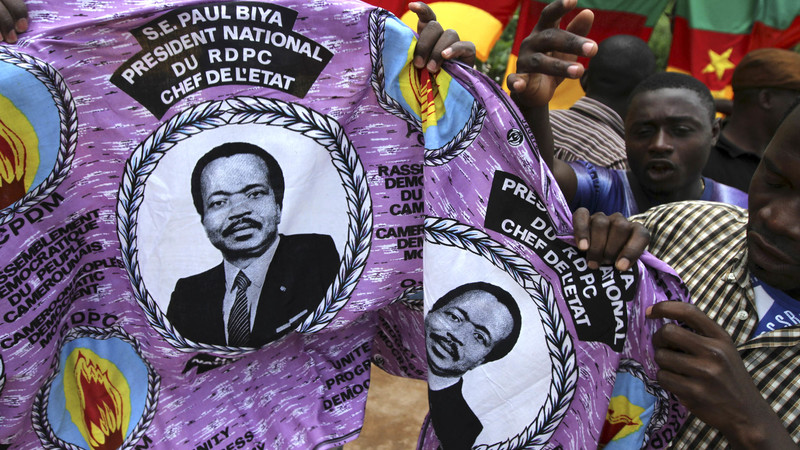
Depicting the Special Criminal Court established to prosecute alleged corrupt government officials and the several Alibabas responsible for pilfering from the public treasury as the President’s court is no misnomer. Cameroon Concord News Group calls it President Biya’s court because it is one instrument of power through which the President is reining in on perceived opponents from within his CPDM power conduit.
An attribute of a genuine court is the fairness of the trial proceedings in cases which are brought before the court for trial. It is not the number of convictions entered against accused. A court is legitimate and recognized as such because of its exercise of judicial, executive, legislative and administrative independence. A court that is independent must be accessible to all citizens after all, is equality before the law, not a constitutionally protected value?
The Special Criminal Court is lacking in these attributes of impartiality, judicial independence and accessibility. It is perceived more as the President Biya’s Court than a Court of Justice.
Establishing this court was President Biya’s way of saving himself the embarrassment of being humiliated during his perennial trips abroad as the President of the most corrupt countries in the world. This ranking of the country as the most corrupt or one of the most corrupt countries had a potential to hamper President Biya’s personal pecuniary interests far from the borders of Cameroon. There was therefore a personal interest need to establish the court. Another personal interest need was to avail himself of a legal tool under his direct control to consolidate absolute power, blackmail potential rebels and competitors within the system and to stifle any form of institutional opposition. He perceived the court as a tool with which to whitewash his more than thirty years of corrupt governance and the rape of the economy.
With the war against Boko Haram, the fight against corruption using the Special Criminal Court has afforded Paul Biya justification contest in the next institutionally flawed elections in order to eternalize power purportedly to direct the war against terror and the war against corruption. True to the name the President’s Court, the President has exclusive preserve in referring cases to the Special Court and the power to terminate them. He decides who will be arrested, who will be investigated and who will serve time and who will not.
Reported by Xinhuanet and Cameroon Concord News














30, July 2020
US to withdraw 11,900 troops from Germany, about half to be redeployed in Europe 0
The US military said on Wednesday it would move its headquarters out of Stuttgart, Germany to Belgium, as it outlined broader plans to shift around 12,000 US troops out of Germany on orders from President Donald Trump.
Trump announced plans last month to cut the number of US troops in Germany to 25,000, faulting the close US ally for failing to meet NATO’s defence spending target and accusing it of taking advantage of America on trade.
Of the 34,500 US military personnel in Germany, some 6,400 will be sent home while nearly 5,600 others will be moved to other NATO countries, US Defence Secretary Mark Esper announced Wednesday.
A key aim of the rotation is to reinforce NATO’s southeastern flank near the Black Sea, Esper said.
Some could also go to Poland and the Baltic states if Warsaw follows through on an agreement already sketched out by the two sides, Esper said.
US officials said some of the moves will begin in months and would likely send air and ground forces to countries that already have an American troop presence.
Shift to Poland
The announcement is closely tied to the plan to increase the US troop presence in Poland, a shift long-desired by Warsaw and Polish President Andrzej Duda.
The moves are expected to cost “billions” of dollars, according to US officials, and require construction at bases in the US to accommodate the additional forces. The officials said that in the future other troops would rotate in and out of Europe.
Members of Trump’s own political party have criticised the troop move as a gift to Russia and a threat to US national security. Twenty-two Republicans on the House Armed Services Committee fired back with a letter to Trump saying a reduced US commitment to Europe’s defence would encourage Russian aggression and opportunism.
It’s also unclear if the plan would survive if Trump is not re-elected in November.
A message to Russia
Germany is a hub for US operations in the Middle East and Africa. The decision to keep nearly half the forces in Europe is a clear move by the Pentagon to assuage allies by avoiding the complete withdrawal of 10,000 troops out of the region. And by spreading forces into the East, it sends a message to Russia that the US is not reducing its commitment to the region and remains ready to protect Eastern Europe from any Moscow aggression.
Shifting forces out of Germany had long been rumoured and is in line with Pentagon efforts to put more troops in the Indo-Pacific. But Trump’s comments indicated the move was tied more directly to his anger over Germany’s failure to meet NATO defence spending goals.
Trump has branded Germany “delinquent” for failing to meet a NATO goal set in 2014 for members to halt budget cuts and move toward spending at least two percent of gross national product on defence by 2024. And he asserted that the Germans had long shortchanged the United States on trade and defence, declaring that “until they pay” more for their own defence, he will reduce US troops.
At a White House event last month with Duda, Trump said that some of the troops from Germany would go to Poland and some would go to “other places”.
Under an agreement announced last year, the US already said it was sending about 1,000 more troops to Poland, and progress is being made, officials said, to lay the groundwork for those moves. Based on that agreement, the US will add a division headquarters, a combat training centre, an unmanned aircraft squadron and structure to support an Army brigade that could rotate in and out of the country.
Overall, the US has about 47,000 troops and civilian personnel in Germany, spread out across a number of bases, headquarters and smaller installations. Most of the 35,000 on active duty are in a handful of larger Army and Air Force bases including Ramstein Air Base, a hub in the region. There also are 2,600 National Guard and Reserve forces in Germany, and almost 12,000 civilians working for the services or the Defense Department.
Several NATO defence ministers had expressed concern about the decision to pull thousands of troops out of Germany, particularly since Trump has talked repeatedly about bringing troops home and getting the US out of “endless wars”.
(FRANCE 24 with AP, AFP and REUTERS)