26, February 2026
Epstein probe: Bill and Hillary Clinton to testify before Congress 0
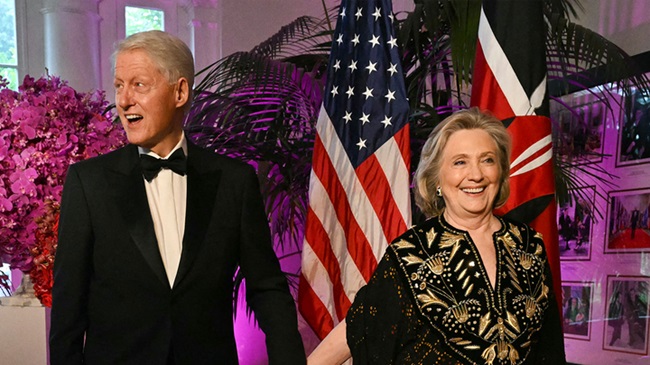
Bill and Hillary Clinton will testify in a US House investigation surrounding deceased sex offender Jeffrey Epstein, a spokesman for the ex-president said, heading off a potential vote to hold the couple in contempt.
They had originally refused to appear before lawmakers examining how authorities handled earlier investigations into the disgraced financier, who had connections and correspondence with the world’s business and political elite.
“The former President and former Secretary of State will be there. They look forward to setting a precedent that applies to everyone,” Angel Urena said on X.
The House Rules Committee had advanced resolutions accusing the Clintons of defying subpoenas to appear in person to explain their links to Epstein, who died in custody in 2019.
The Epstein affair continues to cast a long shadow over Washington, entangling some of the most prominent names in US politics and highlighting the sharp partisan battles that have shaped the scandal.
Democrats say the probe is being weaponised to attack political opponents of President Donald Trump – himself a longtime Epstein associate who has not been called to testify – rather than to conduct legitimate oversight.
Trump spent months trying to block the disclosure of investigative files linked to Epstein, who moved in elite circles for years, cultivating ties with billionaires, politicians, academics and celebrities.
Democratic divisions
Neither Trump nor the Clintons have been accused of criminal wrongdoing related to Epstein’s activities.
In letters where they initially refused to appear in Washington, the Clintons had argued that the subpoenas were invalid because they lacked a clear legislative purpose.
Republicans say the Democratic couple’s past links to the business tycoon, including Bill Clinton’s use of his private jet in the early 2000s, justify in person questioning under oath.
Instead, the couple submitted sworn written statements describing their knowledge of Epstein and his associate Ghislaine Maxwell, who is serving a 20-year prison sentence for sex trafficking.
Bill Clinton acknowledged flying on Epstein’s plane for Clinton Foundation-related humanitarian work, but said he never visited his private island.
Hillary Clinton said she had no meaningful interactions with Epstein, never flew on his plane and never visited his island.
The contempt vote and its targeting of the Clintons could have exposed divisions among congressional Democrats.
Some Democrats have privately acknowledged that their party has long argued no one should be beyond scrutiny in efforts to uncover the full scope of Epstein’s crimes.
But others feared that advancing the contempt resolutions would have played into a partisan strategy to shift attention away from Trump’s past contacts with Epstein.
The Justice Department released last week what it said would be the final batch of files related to the investigation into Epstein.
Source: AFP










27, February 2026
Ambazonia crisis reaches unenviable decade milestone 0
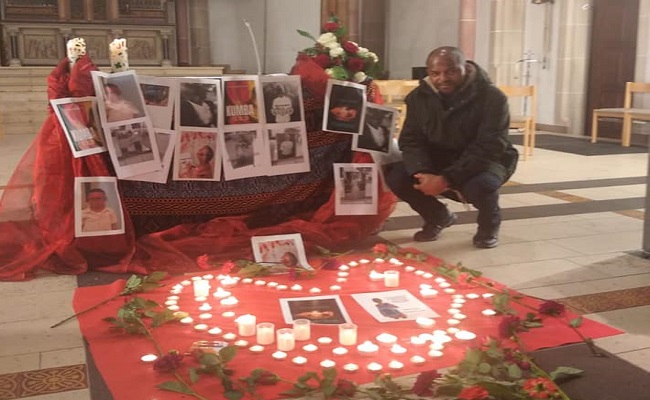
Ten years after it began, the Anglophone crisis in Cameroon is worsening and continues to be one of the most under-reported conflicts in the world.
The conflict, which has been ravaging the North-West and South-West regions, started in late 2016 and has grown into the worst crisis in the Central African country post-independence.
Pitting militants agitating for the autonomy of the English-speaking regions citing marginalisation by the French-speaking-dominated government, it has exposed civilians to human rights abuses.
The United Nations Office for the Coordination of Humanitarian Affairs (UNOCHA) reports how the security situation remains tense, marked by frequent and intense violent clashes between non-state armed groups (NSAGs) and state security forces (SSF), leaving the security and humanitarian situation very fragile and volatile.
The UNOCHA notes that drawing towards the end of the year, multiplicity of illegal checkpoints led to a high rate of extortion from the civilian population by NSAGs in the name of “Liberation tax” across most of the divisions in the two volatile regions.
“Also, there has been an increase in arbitrary arrest, kidnapping for ransom, including some current and former officials,” said a spokesperson.
In December, according to the UN agency’s statistics, at least 14 incidents involving improvised explosive devices (IEDs) were reported in the North-West and South-West.
More than 2 000 people were reportedly displaced from 400 homes.
Humanitarian agencies decry how the displacements expose the affected communities to major protection risks among others, as they move to and from their homes seeking safety and protection, placing additional burdens on communities that are already very fragile.
Access during December was constrained due to insecurity and multiple informal check points with strict verification of “liberation tax” receipts, as well as imposition of large sums on road users including pedestrians.
“These restricted movements narrowed the humanitarian space and negatively affected response activities,” UNOCHA stated.
The crisis began as peaceful strikes and protests by English-speaking lawyers and teachers against the alleged “Francophonisation” of the legal and educational systems in Anglophone regions.
This situation escalated into an armed conflict between the military and separatist groups following a violent government crackdown in late 2016 and early 2017.
Separatists declared the symbolic independence of “Ambazonia.”
Independent since 1961 and previously a German colony, Cameroon was colonised by both Britain and France following the defeat of Germany in World War I.
Eight of Cameroon’s ten regions are predominantly Francophone.
Around 80 percent of the country of 30 million people is French-speaking.
Source: CAJ News