
27, November 2025
The Holy Father arrives in Turkey on first foreign trip of papacy 0
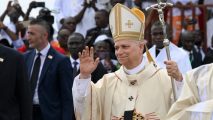
Pope Leo XIV has arrived in Turkey at the start of the first foreign trip of his papacy, where he will mark an historic Christian anniversary, before heading to Lebanon days after Israeli airstrikes on its capital, Beirut.
As he travelled to Ankara, the Pope summed up the message of his trip by saying that “all men, women can truly be brothers and sisters, in spite of differences, in spite of different religions, in spite of different beliefs”.
Visits to both countries had originally been planned by the late Pope Francis, but the overarching theme – building bridges – is one Pope Leo has made his own from the moment he stepped on to the balcony of St Peter’s Basilica after his election in May.
Since he became pontiff six months ago, he has conveyed a sense of being extremely measured, even cautious. But on this trip, his powers of diplomacy will be closely scrutinised.
A key moment of the trip will take place in the Turkish town of Iznik, the site of the ancient city of Nicaea. Pope Leo and leaders of other Christian traditions will gather to mark the anniversary of an ancient council that took place there 1,700 years ago. In 325 AD, among other key decisions, more than 200 bishops at the council affirmed the belief that Jesus was the son of God, eventually leading to what is known as the Nicene Creed.
Eastern and Western branches of Christianity later dramatically split, but during this trip there will be messages of togetherness and healing divisions.
In Turkey the Pope will also visit the Blue Mosque, as both his immediate predecessors Pope Francis and Pope Benedict XVI had done. He will have meetings with other religious leaders in a gesture of inter-religious dialogue before flying on to the second leg of the trip.
Source: BBC












27, November 2025
Yaoundé: 2026 budget deficit set to double on higher spending needs 0
Cameroon expects its 2026 budget deficit to more than double due to a sharp rise in spending aimed at supporting economic activity amid continued global instability, according to a draft finance bill presented to Parliament late on Wednesday.
Cameroon is highly exposed to external shocks, including price volatility, due to its heavy reliance on imports of fuel, wheat and automobiles.
The overall deficit is projected to be 631 billion CFA francs ($1.11 billion), up from 309.9 billion in 2025, raising the government’s total financing needs to 3,104.2 billion CFA francs in 2026, compared with 2,326.5 billion this year.
The government has proposed a 2026 state budget of 8,816.4 billion CFA francs, up 14% from 2025, driven by higher personnel costs, goods and services, transfers and debt payments.
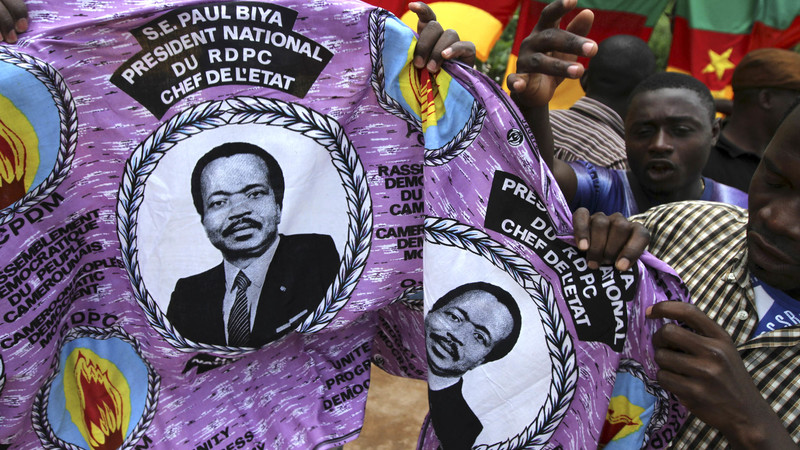
The draft bill is expected to pass as President Paul Biya’s ruling CPDM party holds a majority in both houses of Parliament.
Economic growth is expected to improve, reaching 4.3% in 2026, up from an estimated 3.9% in 2025.
“This growth would be driven primarily by the strong performance in the non-oil sector, while the oil sector is expected to contract slightly by 0.1% in 2026,” a government statement said, adding that inflation would ease by 0.2% from the current 3.2%.
To cover its financing gap and other obligations, the government plans to rely on 1,000 billion CFA francs in external borrowing, 826.7 billion CFA francs in project loans, 589.7 billion CFA francs in bank financing and 400 billion CFA francs from issuing government securities, along with budget support and exceptional financing.
Cameroon, Central Africa’s largest economy with major sectors in oil and gas, cocoa and timber, has recently stepped up borrowing to plug budget shortfalls and fund infrastructure.
Over the past few years, Cameroon has suffered from liquidity problems, pushing the government to carry out structural reforms and broaden its tax base.
Source: Reuters