16, May 2018
Biya regime to probe brutality meted out to “separatist leader” 0
The Cameroon army has admitted that some of its officials had meted out inhumane treatment to a suspected separatist arrested in the NorthWest region of the country.
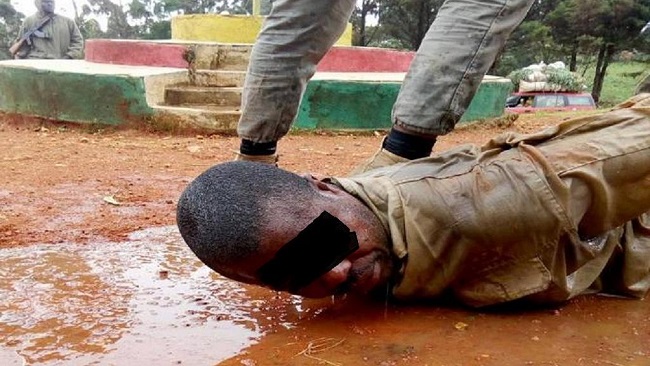
According to the Defense Minister Joseph Beti Assomo, speaking on state radio, gendarmes deployed to the restive region to fight separatists had “mistreated and tied up” an alleged separatist leader during his arrest Saturday.
A viral social media video showed officials having tied the suspects hands behind him. The suspect who was lying on his belly in muddy conditions is kicked and his head is stamped upon by some of the gendarmes and a police.
The gendarmes (paramilitary officials) are “clearly out of the norms and legal techniques in such circumstances,” the minister acknowledged, his condemnation followed a very strong online protest to the video.
It is the first time the army has acknowledged abuses committed by security forces deployed in the two English-speaking regions riled by separatist violence since October 2017.
“An investigation has been opened to identify (and) where appropriate sanction the perpetrators of these acts contrary to respect for human rights,” said the minister.
Nicknamed “general”, the abused person is an alleged separatist leader who was arrested on Saturday, said Beti Assomo. The said general according to authorities “was actively sought for several weeks for his involvement in acts of violence against the population and (in) the killing of the personnel of defense and security forces”.
Security forces have been repeatedly accused by NGOs and witnesses of abuses and burning houses. “We only burn houses where we discover weapons,” the army defended its actions in late April.
The central African regions English speaking regions have been mired in a security crisis that has been tagged the “Anglophone crisis”. In the two regions, northwest and south-west, fighting has become almost daily between the Cameroonian security forces and armed men.
The armed groups say they are fighting to establish an independent Ambazonia Republic. According to the International Crisis Group (ICG), “at least 120” civilians and “at least 43” members of the security forces have been killed since late 2016. The separatist record is unknown.
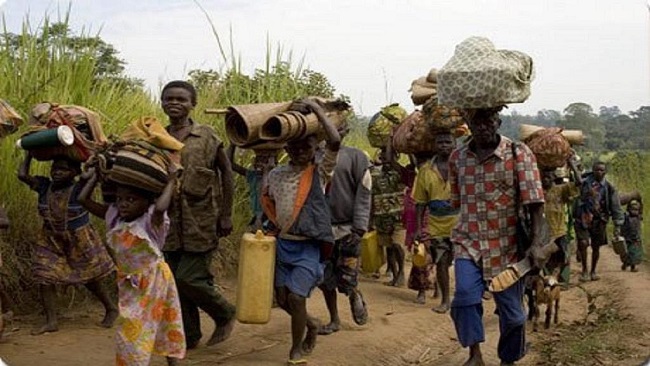
160,000 people have fled their homes as a result of the violence, according to the UN, and 34,000 have fled to Nigeria, according to the Nigerian Emergency Management Agency (Sema).
Source: Africa News














16, May 2018
Kenya’s president approves controversial cyber-crimes law 0
Kenyan President Uhuru Kenyatta has approved a controversial law against the online publications of inappropriate content, a move which critics say would enable the leadership in the Horn of Africa country to further tighten their grip on journalists and opposition activists.
Kenyatta signed the sweeping cyber-crimes act on Wednesday, ignoring calls from rights campaigners not to endorse the law which also criminalizes the publication of “false, misleading or fictitious data”, a clause they say is specifically meant to curb free speech.
The law bans hacking, computer fraud, forgery of data, cyber espionage, publishing child pornography or sending pornographic content via any electronic means, punishing violators with a fine of $50,000 (42,000 euro) or jail terms up to two years, or both.
Critics say the law contains clauses that could make it more difficult for journalists and activists to criticize the government. Rights advocates and journalists have censured the bill, saying it could easily target journalists and others expressing their opinions online.
“Kenyan legislators have passed a wide-ranging bill that will criminalize free speech, with journalists and bloggers likely to be among the first victims if it is signed into law,” said the Committee for Protection of Journalists last week as it urged Kenyatta not to sign the bill.
Kenyatta’s approval of the bill comes following a bloody election season in Kenya in which he beat opposition leader Raila Odinga after two rounds of votes that were marred by widespread allegations of fraud. His government ordered three main television networks to close in January after they ran a live coverage of a mock inauguration ceremony by Odinga, who saw himself as the legitimate winner of the elections. The closures sparked criticisms from governments in Europe.
Eight prominent journalists also left their jobs in March over claims of increased meddling by government and a loss of media freedom in Kenya.
Source: Presstv