22, March 2018
France: Ex-leader Sarkozy charged over Libyan money claims 0
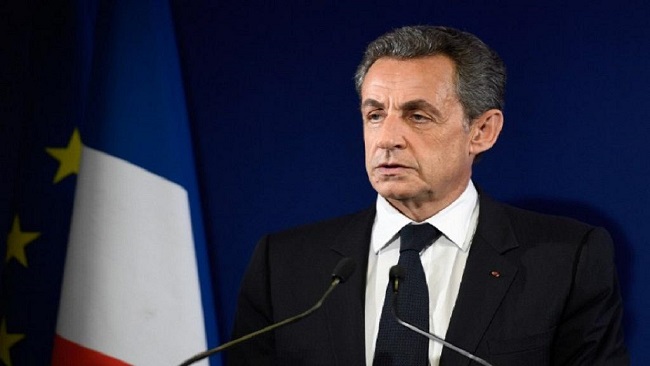
Former French President Nicolas Sarkozy was handed preliminary charges Wednesday over allegations he accepted millions of euros in illegal campaign funding from the late Libyan leader Moammar Gadhafi.
A judicial official told The Associated Press that investigating judges overseeing the probe gave the ex-president charges of illegally funding his successful 2007 campaign, passive corruption and receiving money from Libyan embezzlement.
The person was not authorized to speak publicly about the case.
The charges involving illegal campaign funding from a foreign dictator are the most serious faced by a former French president in recent history. They were presented after Sarkozy was questioned for two days by anticorruption police at a station in Nanterre, northwest of the French capital.
Investigators are examining allegations that Gadhafi’s regime secretly gave Sarkozy 50 million euros (about $62 million) overall for his presidential election bid.
The sum would be more than double the legal campaign funding limit at the time — 21 million euros. In addition, the alleged payments would violate French rules against foreign financing and requiring that the source of campaign funds be declared.
Sarkozy, 63, who was France’s president during 2007-12, has repeatedly and vehemently denied any wrongdoing. According to the same source, he again proclaimed his innocence during his questioning by police.
The former president was released on Wednesday night, but placed under judicial supervision. Details of the restrictions he has been ordered to obey have not been revealed.
In the French judicial system, preliminary charges mean Sarkozy is personally under formal investigation in a criminal case. The judges will keep investigating the case in the next weeks and months.
At the end of their investigation, they can decide either to drop the preliminary charges or to send Sarkozy to trial on formal charges.
Sarkozy has faced other campaign-related legal troubles in the past. In February 2017, he was ordered to stand trial after being handed preliminary charges for suspected illegal overspending on his failed 2012 re-election campaign. Sarkozy has appealed the decision.
In 2013, he was cleared of allegations that he illegally took donations from France’s richest woman, L’Oreal heiress Liliane Bettencourt, on the way to his 2007 election victory.
His lawyer, Thierry Herzog, did not respond to requests for comment from The Associated Press.
Sarkozy’s former top aide, the ex-minister Brice Hortefeux, was also questioned Tuesday, but not detained. He said on Twitter that the details he gave investigators “should help put an end to a series of mistakes and lies.”
The investigation got a boost when French-Lebanese businessman Ziad Takieddine told the online investigative site Mediapart in 2016 that he delivered suitcases from Libya containing 5 million euros ($6.2 million) in cash to Sarkozy and his former chief of staff, Claude Gueant.
Takieddine repeated his allegations during a live interview with France’s BFM TV on Wednesday night.
He claimed he personally handed a suitcase containing 2 million euros (about $2.5 million) in cash to Sarkozy at the then-candidate’s apartment and another suitcase with 1.5 million euros (about $1.9 million) to Sarkozy and a close aide at the French Interior Ministry. Sarkozy was interior minister at the time.
Takieddine alleged he gave a third suitcase with 1.5 million euros in cash to the aide alone. He said the money was not meant to finance Sarkozy’s presidential campaign in 2007, but to honor contracts between France and Libya.
“He’s a real liar,” Takieddine said of Sarkozy.
(Source: AP)







22, March 2018
UN says Southern Cameroonians pour into Nigeria, stretching scant resources 0
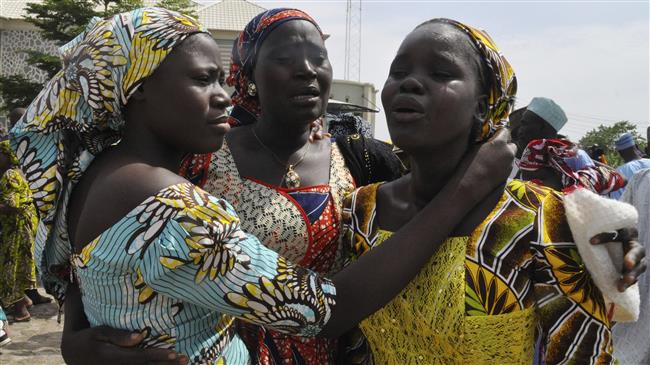
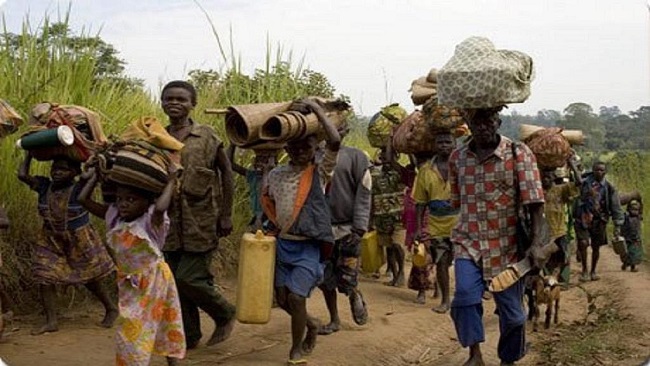
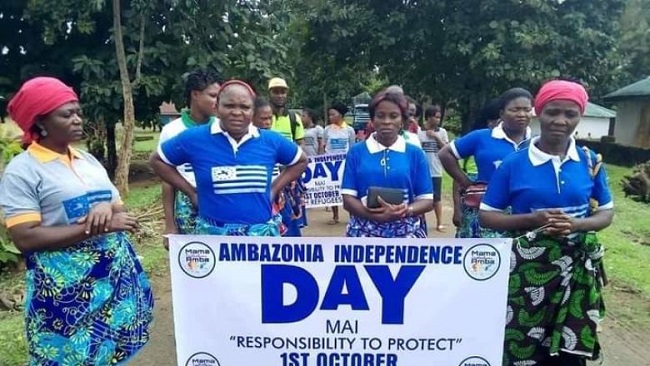
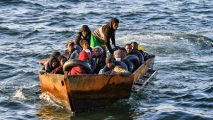
As more and more Anglophone Cameroonians flee a violent crackdown in the region and seek asylum in Nigeria, the United Nations refugee agency warned on Tuesday without more funding and assistance, their situation and that of the Nigerian communities hosting them, will become even more desperate.
“Anglophone Cameroonians began fleeing violence in October 2017 and continue to pour into Nigeria’s Cross River, Taraba, Benue and Akwa-Ibom states,” Aikaterini Kitidi, spokesperson for the Office of the UN High Commissioner for Refugees (UNHCR), said at the regular briefing in Geneva.
“In total, over 20,000 refugees have been registered in the area. Women and children account for four-fifths of the population,” she added.
A recent assessment by humanitarian groups shows how grim the situation has become – with 95 per cent of the asylum seekers having only three days of food. Most families are down to one meal per day and their coping strategies people are themselves risky, ranging from borrowing money to cutting food portions or saving food only for children.
Most say they have to drink water from streams, ponds and other unsafe sources, because of inadequate or dysfunctional drinking water facilities. “Essential relief items, such as clothing, blankets and plastic sheeting, are available to fewer than 25 per cent of them,” explained Ms. Kitidi.
Moreover, only five in every 100 Cameroonians have proper or independent shelter. The rest have little or no privacy, squatting in rooms with some 10 to 15 people. A lack of protection from the cold is increasing health concerns as the start of the rainy season approaches.
Additionally, malaria is reportedly increasing. Many participants at the assessment were suffering from fear and anxiety, poor sleep and flashbacks. According to UNHCR, about 20 to 30 per cent of the asylum seekers have some kind of vulnerability, such as a physical disability.
Three-quarters of the children who recently fled currently cannot access school, because their families cannot afford to pay for books and uniforms. Adults are also struggling to make ends meet. “A political solution to the situation in Cameroon is urgently needed, so that the Cameroonians can safely and voluntarily return home,” stressed Ms. Kitidi.
“Until then,” she continued, “UNHCR and its partners will continue their efforts to provide assistance and support to this population as long as we are able.” While UNHCR has worked on an $18 million contingency plan to help cover their needs, to date, no funds have been received.
Earlier this month, the Nigerian authorities allocated land to UNHCR for shelters, to ensure the refugees’ safety, security and self-reliance. In line with humanitarian principles, UNHCR acknowledges the authorities’ commitment to assist in moving the refugees at least 50 kilometres from the border.
The UN refugee agency also remains concerned over reports of further Cameroonian nationals’ arrests in Nigeria.
“UNHCR urges the Nigerian authorities to refrain from the forcible return of individuals who may have fled persecution in their country of origin, and to respect the principle of non-refoulement or no forced returns,” concluded the UNHCR spokesperson.
Source: The United Nations