
24, March 2018
Cameroonian journalists face ban on political reporting 0
Journalists in the central African country of Cameroon are in a quandary about how to fight a government ban on political reporting in the run-up to the March 25 senatorial elections.
Some, like private media outlets Galaxy FM and Magic FM, are defying the edict.
“We won’t accept limiting freedom of speech when Cameroon wants to be fully democratic,” Galaxy FM presenter Jean Jacques Ola Bebe told Deutsche Welle (DW) earlier this month. Despite the ban, Magic FM recently featured a member of Social Democratic Front, the chief opposition party, as a studio guest taking calls from listeners.
According to reports, however; these are the exceptions.
Many media professionals agonize over how to fulfill their watchdog role without triggering the wrath of the powerful National Communication Council (NCC), the media regulatory body. The government’s track record provides reason to worry.
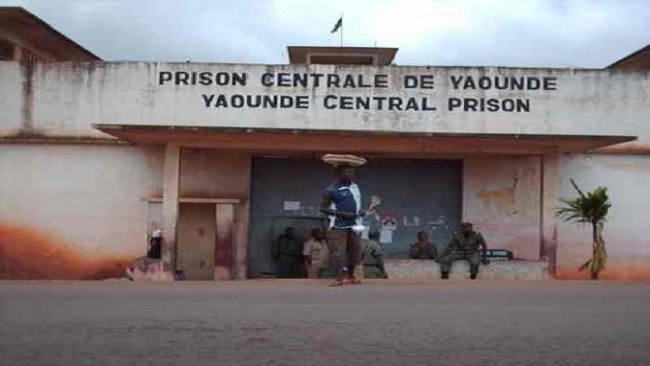
The NCC has banned newspapers, levied exorbitant fines against media critical of the government and put journalists in jail.
Last year, the NCC suspended the licenses of at least 40 media outlets for violating the country’s terrorism laws. The Committee to Protect Journalists (CPJ) documented the abuses in a report, “Journalists are NOT Terrorists: In Cameroon, anti-terror legislation is used to silence critics and suppress dissent.”
Reporter Ahmed Abbas is a prime example. He was sentenced to 10 years in prison for “complicity in acts of terrorism” and “failure to denounce acts of terrorism.” He won the prestigious CPJ International Press Freedom Award in 2017 and was released in December after 879 days in prison.
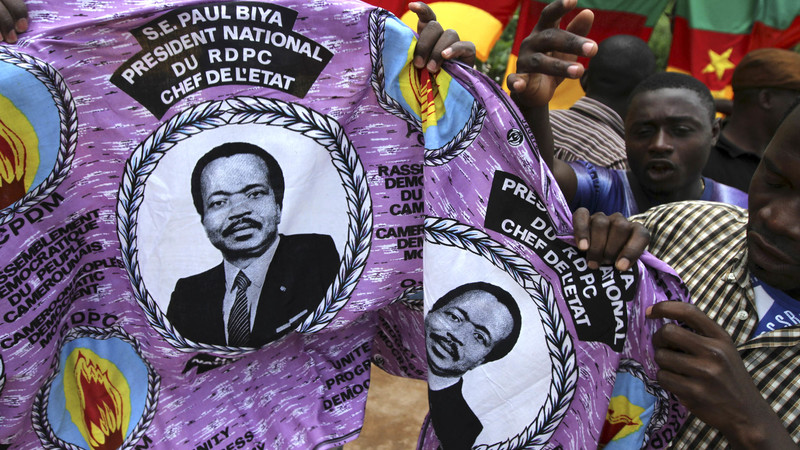
The NCC itself is suspect. Journalists argue that President Peter Biya created the council to punish media outlets that oppose his government and portray him unfavorably. Biya has been in power since 1982 and is Africa’s longest reigning leader, according to Deutsche Welle.
Freedom House designates Cameroon’s media “not free.” Reporters Without Borders’ press freedom index ranks Cameroon 130 out of 180 countries. A Freedom House report noted, “Some independent outlets continue to operate, sometimes in defiance of government sanctions, but frequently self-censor in order to avoid reprisals.”
To gain insight into how Cameroon’s press corps is handling the recent ban, IJNet turned to Comfort Mussa, an award-winning journalist and founder of the Sisterspeak237 blog that “advocates for our rights, shares news, opinions and analysis of women’s obstacles and victories, setbacks and head starts.” Mussa also writes a weekly column Comfort Zone for The Sun newspaper.
IJNet: How are private media outlets in Cameroon reacting to the government ban on political debates? Are many defying the order?
Mussa: Reactions have been varied. The regulations on “political programs” have given rise to a new debate among journalists in Cameroon about what a clear definition of “political program” really is. A report or debate about the state of roads or public health policies can be tagged as political. However, many journalists interpret [the government ban] to mean political debates headed into the 2018 elections.
How do you see media outlets responding?
Most political programs on local radio and TV stations continue to air, albeit with a lot of caution on the part of the journalists. “Cameroon Calling,” a flagship program that often features political debates on the [government-controlled] radio station, CRTV, did not air last Sunday.
There is a certain degree of self-censorship from many journalists, especially those from private stations. It is worth noting that over 100 of the private radio stations in Cameroon operate under “administrative tolerance” without formal licenses.
How has the ban affected your reporting?
Whether on Comfort Zone or Sisterspeak237, I am constantly aware of the environment in which I operate and this makes me cautious and more diligent about how I report and the topics I choose to write about. In the different networks that I am part of, we have been brainstorming about ways in which journalists can get around this. However, so far, it is still business as usual.
Comfort Mussa added this: “There is a shift in the questions that journalists are discussing these days, concerning the future of journalism in Cameroon. I am proud of the conversations that journalists are having now and how they are exploring different formats and innovative ways of practicing journalism.”
Among NCC rules published for covering the upcoming elections:
-
Suspension of all political programs throughout the period of electoral campaigns
-
Prohibition of candidates from taking part in programs other than those authorized within the framework of the campaign
-
Need for media organs to plan equal coverage of all political parties taking part in the election
-
Need for media reports to favor social cohesion, peace, national unity and integration, democracy and human rights
-
Need for media content to reflect the present administrative and political disposition and not favor conflict of any kind
A final note: The NCC president promised to distribute an election guide and warned that any media that go against the established principles would be punished.
Source: IJnet.org










25, March 2018
Thousands rally in Brussels to protest racism, discrimination 0
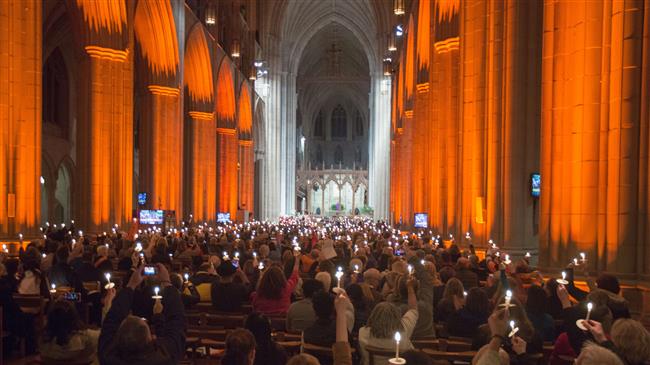
Around four thousand people have rallied in the Belgian capital to denounce racism and discrimination and demand equality for all.
The Saturday rally was organized by social groups and left-wing parties in Brussels where participants marched five kilometers (three miles) through the city.
They held up signs reading, “United against racism” and “together against discrimination.”
“I am here today to demonstrate against racism in Belgium and in the world, against the Federal Government that takes racist measures against refugees,” said one protester.
Meanwhile, 16 anti-racism and migrant support organizations hailing from the country’s Brussels, Flanders, and Wallonia regions issued a joint statement, commemorating the “victims of hatred and terror in Brussels and elsewhere.”
The government has tightened migration laws since Daesh’s bombings of the Zaventem airport and Maelbeek metro station in Brussels two years ago, which left 32 people dead and hundreds more wounded.
In their statement on Saturday, the protesters said they will not allow “terrorists” to create division within the Belgian society.
Europe has been the scene of rallies especially since 2015, when the continent was hit by an influx of refugees, mostly fleeing violence in the Middle East.
Countries across Europe have seen a significant rise in xenophobia and anti-immigrant sentiments, mostly toward Muslims. Amnesty International has sounded the alarm about right-wing parties in Europe advocating anti-immigration and anti-Islam policies.
Last year alone, extremists in Germany which is home to some three to four million Turks launched 950 attacks against Muslims, including many arson attacks targeting mosques.
Source: Presstv