
28, November 2017
More than 3,000 refugees died in Mediterranean this year 0
Over 3,000 refugees have died crossing the Mediterranean in a desperate bid to reach Europe’s shores since the start of the year, the International Organization for Migration (IOM) says.
William Lacy Swing, the IOM director general, said in a statement in the Swiss city of Geneva on Tuesday that the 3,033 deaths happened across three main sea routes in the Mediterranean.
“That mark (was) probably passed sometime over last weekend,” when more than 30 migrants died off the coast of Libya, the official added.
“We’ve been saying this for years and we’ll keep on saying it: It’s no longer enough to simply count these tragic statistics. We must also act.”
The latest figure so far represents a 40-percent drop compared to last year’s record of 5,000 drownings.
The number of refugees who have arrived in Europe this year is less than half of last year’s total of 348,000.
The flow has been stemmed by controversial deals between the European Union, Turkey and Libya. The 28-nation bloc has been desperate to slow the refugee influx via these two main routes,
The United Nations has, however, denounced as “inhuman” the EU’s cooperation with Libya.
The refugees are being held in “horrific” prisons and have even been auctioned off as slaves across the North African country.
UN Secretary-General Antonio Guterres has recently said that the reported auctions of African refugees in Libya as slaves amount to “crimes against humanity.”

In October, the UN refugee agency (UNHCR) warned that thousands of Libyan refugees were living in dire conditions in a hub to the west of the capital Tripoli, saying they could be exposed to abuse on a shocking scale.
Libya, gripped by chaos and lawlessness since the fall of dictator Muammar Gaddafi in 2011, was the main embarkation point for mostly African refugees seeking to head to Europe until recently.
Europe is facing an influx of refugees, who are fleeing conflict-ridden zones in North Africa and the Middle East, particularly Syria. More than 1.5 million people have reached Europe since 2015.
Many blame major European powers for the unprecedented exodus, saying their policies have led to a surge in terrorism and war in those regions, forcing more people to flee their homes.
Source: Presstv



















29, November 2017
“Biya’s closing down of the internet is a crime and should not be tolerated” Mo Ibrahim 0
For almost two months now, Cameroon’s government has restricted access to social media and messaging apps in its Anglophone regions, adding to the already simmering tensions in the country.
The current two-month cutoff is the second prolonged restriction in 2017: there was a 93-day, complete internet shutdown that lasted from January to April. Altogether, the regions have had intermittent or no internet access for more than 150 days in 2017, so far.
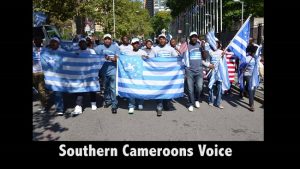
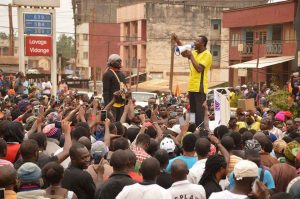
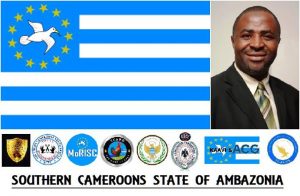
In late September, the government disrupted the internet ahead of protests against political and economic discrimination in the Northwest and Southwest regions. The Oct.1 protests against the dominance of a French-speaking government in the bilingual country, have turned deadly, with explosions targeting local security officials. In a bid to stifle dissent—and even calls for a break-up of the country—the government cut access to these social media platforms as a way to frustrate online mobilization.
Internet and digital freedom advocates tell Quartz that the government blocked or throttled access to widely used communication platforms like WhatsApp and Facebook Messenger, with many using virtual private networks to access these sites.
As one of Africa’s longest-serving rulers, president Paul Biya’s government has come to understand the deft nature of communication technologies and its increased role in organizing social and political movements. As such, the government has criticized social media users in the past, labeling it a “new form of terrorism” controlled by “amateurs, whose ranks, unfortunately, continue to swell and who do not have a sense of etiquette and decorum.”
The January to April blackout took a heavy toll on the country’s budding technology center, located in the Southwest region and popularly known as Silicon Mountain. Entrepreneurs and businessmen were left scrambling, losing clients and working hours, and were forced to move to cities and towns with internet services. The digital rights advocacy Access Now says the current shutdown cost the two regions almost $3 million.
The social media freeze is also disrupting lives, with many reporting that they can’t easily reach families caught in the anti-government demonstrations.
The situation in Cameroon is complicated by the government’s monopoly over the internet infrastructure. Camtel, the country’s national telecommunications company, operates the fiber optic backbone that provides internet to the country—making it easy for them to shut down the internet and pressure other telecom operators to do so. Internet advocates tell Quartz that while the social networking sites are blocked on MTN’s network, they are accessible “from time to time” on Orange. The unruliness, they say, could possibly be linked to a dispute between Orange and Camtel.
However, internet and social media shutdowns are not just a Cameroonian problem—it’s an African problem. In 2016 alone, 11 countries disrupted internet communications before crucial elections in Uganda, during national exams in Algeria, and anti-government protests in Ethiopia. The blackouts also cost African governments hundreds of millions of dollars, disrupting the delivery of critical services and undermining economic growth. Policy proposals to punish governments have often failed, leaving the continent’s thinkers and businesspeople worried about the future repercussions.
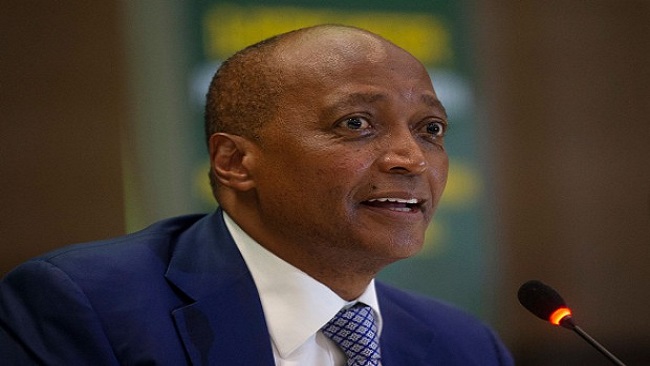
Last week, Sudanese-British billionaire and telecom pioneer Mo Ibrahim told Quartz the shutdowns undermine the continent’s digital development. “Closing down of the internet is really a crime. And that should not be tolerated,” he said.
Source: Quartz