11, June 2021
Chinese official found dead amid probe into fatal ultramarathon 0
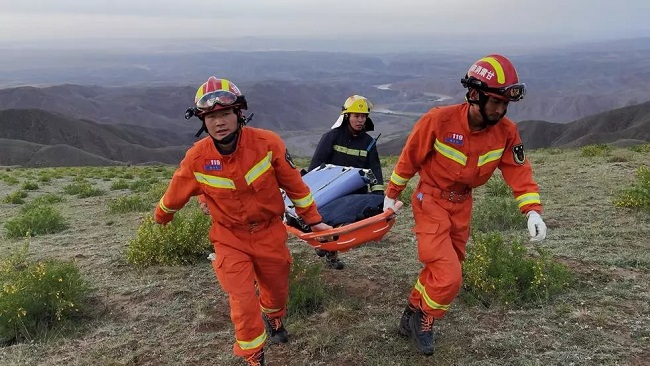
A top official from the Chinese county that hosted a fatal ultramarathon last month has been found dead, authorities said Friday, as 27 people face punishment over the incident.
In May, extreme weather at an ultramarathon in northwestern Gansu province killed 21 runners when freezing rain, high winds and hail hit competitors.
The deadly incident sparked calls for more regulation and raised questions over why organisers had apparently ignored the incoming weather.
On Friday, provincial authorities told a press conference that the Communist Party secretary of Jingtai county — which hosted the event — had been found dead.
Li Zuobi was confirmed to have died after falling from the building where he lived. Police received the incident report on Wednesday, and have since ruled out homicide.
27 people, including municipal government officials, face criminal charges or disciplinary actions over the deadly ultramarathon.
Among those punished include the party secretary and mayor of Baiyin city — which holds jurisdiction over Jingtai — as well as the magistrate of the county, the state-run Xinhua news agency reported.
Last month’s incident also led to a suspension of sports competitions that lacked national safety standards, including events such as mountain trail running and ultra-long distance running.
Source: AFP



















19, June 2021
UN elects Guterres for second five-year term as secretary-general 0
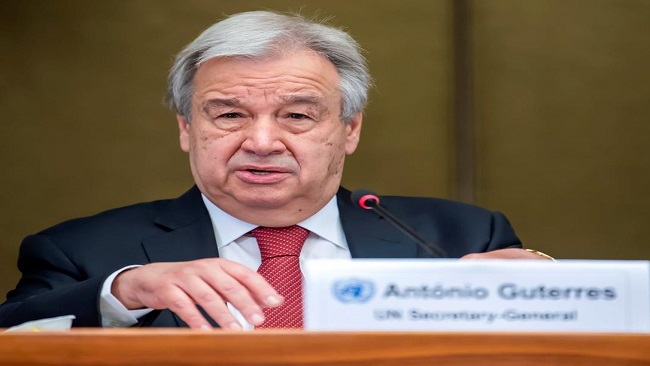
The U.N. General Assembly unanimously elected Antonio Guterres to a second term as secretary-general on Friday, giving him another five years at the helm of the 193-member organization at a time a deeply divided world faces numerous conflicts, the growing impact of climate change, and a pandemic still circling the globe.
Ambassadors in the assembly chamber burst into applause as Assembly President Volkan Bozkir announced Guterres’ re-election by “acclamation,” without a vote. Just before the announcement, Estonia’s U.N. Ambassador Sven Jurgenson, the current Security Council president, read a resolution adopted by the 15-member council recommending Guterres for a second term.
Under the U.N. Charter, the General Assembly elects the secretary-general on the recommendation of the Security Council.
Guterres was the only candidate nominated by a U.N. member state, his home country Portugal where he previously served as prime minister, and the country’s current president was in the assembly chamber to watch the event.
Immediately after his re-election, Guterres took the oath of office and delivered an address urging U.N. member nations “to do everything we can to overcome current geostrategic divides and dysfunctional power relations.”
“There are too many asymmetrics and paradoxes,” he said. “They need to be addressed head on.”
Guterres expressed hope that “what we are living through today in terms of mistrust is, I hope, an aberration but it cannot become the norm.”
Traditionally, candidates for the U.N.’s top job have been nominated by a U.N. member state, but that is not a requirement in the U.N. Charter or in a resolution adopted by the General Assembly in 2015.
That measure made the previously largely secretive selection of the secretary-general more open and transparent, allowing member states for the first time to see basic information about all candidates, including their resumes, and to question them at open sessions.
Guterres, a former U.N. refugee chief, was elected by the assembly to succeed Ban Ki-moon after a hotly contested and transparent race in October 2016 that initially included 13 candidates — seven women and six men. Guterres took office on Jan. 1, 2017.
This year, seven individuals submitted applications to be secretary-general without backing from any government, including most recently former Ecuadorian President Rosalia Arteaga.
Source: AP