13, March 2020
Canadian PM Trudeau in two-week isolation after wife tests positive for coronavirus 0
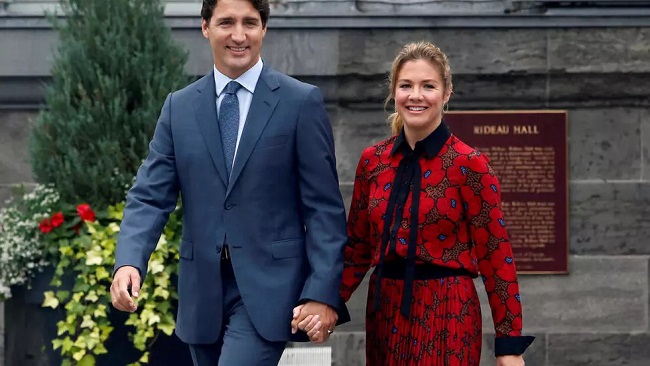
Canadian Prime Minister Justin Trudeau will be in isolation for two weeks after his wife, Sophie, tested positive for coronavirus on Thursday, and the outbreak prompted the province of Ontario to shutter schools to limit the spread.
Sophie Gregoire Trudeau recently returned from London and experienced flu-like symptoms, so she was tested for the coronavirus, the prime minister’s office said earlier on Thursday. The test came back positive, it said in the evening.
“The Prime Minister is in good health with no symptoms. As a precautionary measure and following the advice of doctors, he will be in isolation for a planned period of 14 days,” an official statement said. Sophie will be in quarantine for 14 days.
“The Prime Minister will continue to fully assume his duties and will address Canadians tomorrow.”
In a personal note, Sophie said she was “experiencing uncomfortable symptoms of the virus,” adding that she “will be back on my feet soon”.
Canada reported 145 new case of the virus, a three-fold gain from a week ago. There has been one death. Seven of Canada’s 10 provinces have recorded infections.
Ontario, the most populous province, reported 17 new cases overnight, a 40% jump. To contain the virus, authorities ordered all schools to close from Saturday to April 5.
Globally, more than 127,000 people have been infected by the sometimes deadly respiratory illness COVID-19.
In a blow to hockey-obsessed Canadians, the National Hockey League suspended its season because of the outbreak, although it said its goal was to resume play “as soon as it is appropriate and prudent,” so teams can compete for the Stanley Cup championship.
With the Canadian dollar at a four-year low against its U.S. counterpart and stocks plunging, the Bank of Canada announced measures to inject liquidity into the market.
Working from home on Thursday, Trudeau spoke with U.S. President Donald Trump, British Prime Minister Boris Johnson, Italian Prime Minister Giuseppe Conte and joined a special cabinet meeting on the coronavirus by phone, his spokesman said on Twitter.
The Pacific province of British Columbia, north of Washington state, advised against all non-essential foreign travel, including to the United States. Washington is one of the worst-affected states.
Any warning that involves the United States is politically sensitive, given the two countries’ 5,525-mile (8,890-km) shared border and Canada’s overwhelming reliance on bilateral trade.
“This is really important … the evolving situation both in the United States and globally is a risk for all of us,” British Columbia’s provincial chief medical officer, Bonnie Henry, told reporters.
Alberta’s chief medical officer, Deena Hinshaw, banned gatherings of more than 250 people and canceled all international events. Hinshaw also discouraged foreign travel.
Quebec, which has recorded 13 cases, has banned all indoor events with more than 250 people and said people returning from any foreign country should self-isolate for 14 days. Health and education public-sector workers who travel abroad will be required to self-isolate.
Separately, Canadian authorities canceled the JUNO music awards, Canada’s version of the Grammys, and Toronto’s annual St. Patrick’s Day parade was suspended.
Ottawa committed C$1 billion ($723 million) on Wednesday toward bolstering the healthcare system and limiting the impact of the virus, while Ontario said on Thursday it had set aside C$100 million in “contingency funding.”
On Thursday, Alberta Premier Jason Kenney said the public health crisis alone would cost the country “well north of C$10 billion.”
Source: REUTERS















13, March 2020
US carries out retaliatory air strikes in Iraq against Iran-backed militia 0
The United States waged a series of precision air strikes on Thursday against an Iran-backed militia in Iraq that it blamed for a major rocket attack a day earlier that killed two American troops and a 26-year-old British soldier.
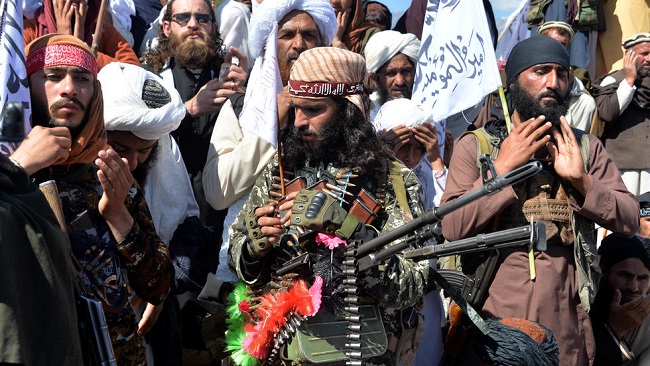
The U.S. strikes appeared limited in scope and narrowly tailored, targeting five weapons storage facilities used by Kataib Hezbollah militants – including facilities used to store weaponry for past attacks on U.S.-led coalition troops, the Pentagon said.
Iraq’s military said in a statement that the U.S. air strikes hit four locations in Iraq.
The U.S. military did not estimate how many people in Iraq may have been killed in the strikes, which officials said were carried out by piloted aircraft.
But there no was no indication of the kind of high-profile killings that President Donald Trump authorized in January, when the United States targeted a top Iranian general, Qassem Soleimani.
U.S. Defense Secretary Mark Esper, in a Pentagon statement detailing the strikes, cautioned that the United States was prepared to respond again, if needed.
“We will take any action necessary to protect our forces in Iraq and the region,” Esper said.
Trump had been quick to authorize the U.S. military to respond following Wednesday’s attack in Iraq, in which militants fired dozens of 107 mm Katyusha rockets from a truck, striking Iraq’s Taji military camp north of Baghdad.
Out of the roughly 30 rockets fired, some 18 hit the base. No one has claimed responsibility for the attack.
It was the third time in recent months the U.S. military lashed out against Kataib Hezbollah. It killed more than two dozen militants in December in response to an attack on an Iraqi base that killed a U.S. contractor. The U.S. military drone strike in January that targeted Soleimani also killed Kataib Hezbollah founder Abu Mahdi al-Muhandis.
It was unclear whether the latest strikes would deter the militants from further action. The rocket attack on Taji took place on what would have been Soleimani’s 63rd birthday, suggesting the militants were still looking for revenge.
Further attacks?
Dennis Ross, a former U.S. ambassador now at the Washington Institute for Near East Policy think tank, cast doubt on the Pentagon’s ability to deter Kataib Hezbollah.
“Regrettably, these attacks on our forces will continue as Iran has no problem fighting to the last of the Shia militias and believe they can force us out of Iraq,” he said on Twitter.
Iran retaliated for the U.S. drone strike that killed Soleimani by launching missiles from its territory at an Iraq base hosting U.S. troops – leaving more than 100 U.S. forces with brain injuries.
In the latest attack, 14 U.S.-led coalition personnel were wounded, including American, British, Polish and other nationals. Private-industry contractors were among the wounded.
U.S. Army General Mark Milley, chairman of the Joint Chiefs of Staff, told Pentagon reporters that five of the wounded were categorized as “urgent,” suggesting serious injuries that could require rapid medical evacuation.
The UK named its fallen service member as Lance Corporal Brodie Gillon. The United States has not yet identified the U.S. service members killed.
In a sign of concern that tensions between the United States and Iran could be headed toward open conflict, the Democratic-led U.S. House of Representatives passed legislation on Wednesday to limit Trump’s ability to wage war against Iran.
The Republican president has been engaged in a maximum-pressure campaign of renewed sanctions and near-constant rhetoric against Iran, after pulling the United States out of the international nuclear deal reached during the administration of his Democratic predecessor, Barack Obama.
Tensions between Washington and Tehran have mostly played out on Iraqi soil in recent months.
Iran-backed paramilitary groups have regularly been rocketing and shelling bases in Iraq that host U.S. forces and the area around the U.S. Embassy in Baghdad.
Source: REUTERS