
8, September 2018
Biya regime, Ambazonian Interim Gov’t Trade Blame for School Attacks, Kidnappings 0
A steady flow of relatives, friends and well-wishers have been visiting Martina Afanwi at her home this week in Bamenda, an English-speaking town in Cameroon’s northwest.
They are encouraging the 40-year-old to have faith that her 11-year-old son, who was abducted Monday from the Presbyterian School of Science and Technology, will be found safe.
But Afanwi is worried because Cameroon authorities have yet to inform her of what they are doing to find her son.
“I feel horrible. My heart is bleeding. It’s not normal. Its horrible,” she says. “The government needs to take measures. I think they have been sleeping. Nothing is being done.”
Afanwi’s son is one of six students missing after gunmen attacked the school on September 3, the first day of Cameroon’s school year. The students are presumed kidnapped as they never returned home and no bodies were found.
The school principal was discovered unconscious with machete wounds and lapsed into a coma after being rushed to the hospital.
Cameroon authorities say a head teacher was murdered the same day in the northwestern village of Bamali.
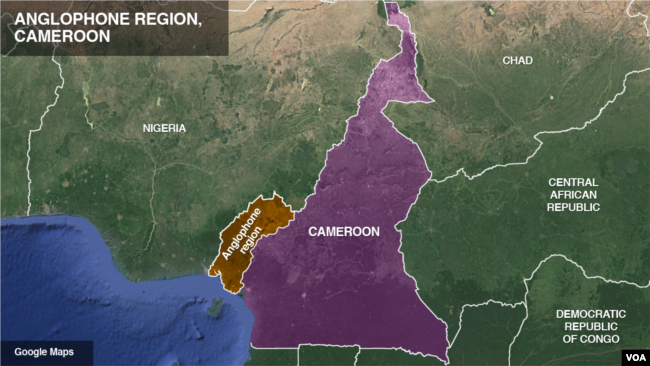
The commander of government troops in the northwest, General Agha Robinson, blames armed separatists, who are seeking an independent, English-speaking state.
“About 837 weapons have been seized. The principal was shot with one of these weapons,” he tells VOA. “We have deployed our soldiers for patrols, we are securing schools, we have also reinforced security in our borders, where ammunition is being imported.”
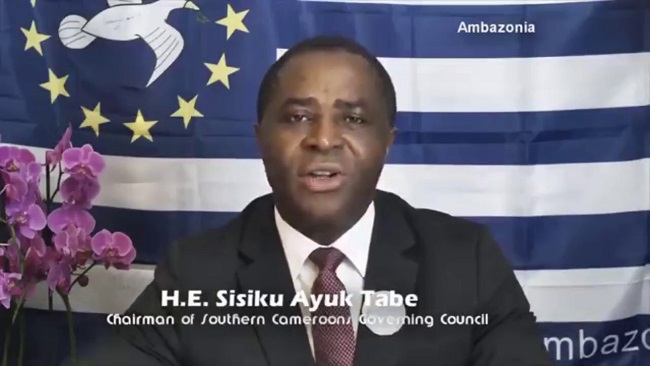
In social media posts, the separatists denied responsibility for this week’s attacks and alleged kidnappings, instead blaming unspecified government-created armed groups.
“Let it be said loudly and clearly that our forces did not commit any act and they only arrived at the schools after the crimes were committed,” read one separatist posting. “Our forces were instead there to bring order and chase occupational troops from Cameroon.”
Activists like Yah Gladys Viban are calling on both sides to end the conflict.
“We are not name calling, we are not blaming, we are just saying that if we want to build this nation and if we want peace and prosperity for the generations ahead of us, we need to put all the guns down, sit on the table and talk about it. Nothing else will work,” she says.
Most schools in Cameroon’s restive northwest and southwest have been closed since 2016 because of attacks from the separatists.
In August, separatists said they would allow the schools to re-open but without a security guarantee and at a date of their choosing.
Culled from the VOA














9, September 2018
Southern Cameroons War: Women protest abuses 0
Hundreds of women gathered for an angry protest in Cameroon on Friday against abuses committed in months of fighting between the government and Anglophone separatists.
With some singing, weeping, crying out or praying, the women described the rapes of their daughters and killings of family members as civilians are caught in the crossfire. Nearly 200,000 people have fled.
The women who gathered in a stadium in Bamenda city in the heart of the conflict called for an urgent dialogue on peace. They say they want to leave their homes and go without fear to the market and fields as before. They say they cannot remain silent and want to denounce what they call a dirty war.
The unrest in the southwest and northwest is a major issue as largely French-speaking Cameroon faces elections in October, with 85-year-old President Paul Biya, in power since 1982, running again.
The unrest that began in 2016 with teachers and lawyers demanding respect for the regions’ English education and justice systems led to a government crackdown and the emergence of armed separatists seeking an English-speaking state.
Tensions rose further in Bamenda on Thursday when a headmaster and three teachers were kidnapped by armed men.
“We are calling on the powers that be that women want peace,” said a protest organizer, Adah Mbah. “We do not have any hidden agenda anywhere. We are tired. For more than two years, we cannot be quiet.”
Many women at the protests carried leafy branches of so-called peace plants. Others clutched rosaries or dressed in black. They sat on the ground.
“The women are the ones mourning. The women are the ones managing their homes … they are struggling in all ways to survive,” said another organizer, Akouoh Aline. “We want our leaders to see our pain.”
In July, then-United Nations human rights chief Zeid Ra’ad Al Hussein said he was deeply alarmed by reports of abuses in the southwest and northwest. Human rights groups have accused both the government and separatists of abuses including torture and the burning of homes.
The government has condemned separatist attacks and defended its security forces, saying all alleged atrocities are investigated.
AP