
10, January 2017
Gambia: Communication Minister resigns, escapes to neighboring Senegal 0
Gambian Communication Minister Sheriif Bojang has left his post in protest at President Yahya Jammeh’s refusal to concede defeat in last month’s election. Bojang’s resignation is the first high-profile cabinet defection since Jammeh refused to accept the outcome of the presidential election held in December 2016. In a statement, Bojang said Jammeh’s defiance was an attempt to subvert the will of the Gambian people, adding that the voters’ decision had to be respected.
Bojang has fled The Gambia to neighboring Senegal. Jammeh, who has been in power for 22 years, lost last month’s vote to the opposition coalition’s candidate Adama Barrow by a thin margin. The veteran leader initially conceded, but later changed his mind and called for a new vote, saying he would challenge the result in the Supreme Court. Barrow has nevertheless asserted that his inauguration will go ahead regardless of the court case.
Back in October, Bojang announced that The Gambia had decided to withdraw from the International Criminal Court, calling the body the “International Caucasian Court” and accusing it of racism and bias against Africa. The news made headlines as The Gambia was following in the footsteps of South Africa and Burundi. Several officials have already either fled the country or resigned fearing a crackdown by Jammah who is notorious for stifling his opponents. Early in January, the electoral commission’s chairman fled the country after he received threats for declaring Jammeh as the loser of the election. Foreign minister Neneh Macdouall Gaye also resigned in December.
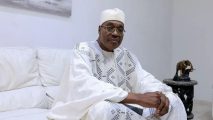
On Wednesday, three leaders from the Economic Community of West African States (ECOWAS), led by Nigeria’s President Muhammadu Buhari, will visit The Gambia to mediate a solution to the country’s political impasse. This is going to be the second visit by ECOWAS leaders to The Gambia in less than a month. West African leaders have repeatedly pursued mediation to ensure a peaceful transfer of power in The Gambia. Last month, after a visit to the country, they declared that ECOWAS did not yet intend to deploy its standby military force and sought a peaceful transfer of power.
Nevertheless, if Jammeh refuses to step down by January 18, when his term expires, ECOWAS may use military intervention. Jammah has already dismissed ECOWAS mediation efforts and accused the body of declaring a war against his country. The Gambia’s army announced loyalty to Jammah last week, going back on its initial pledge of allegiance to President-elect Adama Barrow.
Presstv











13, January 2017
Nigeria to offer asylum to Gambian President Yahya Jammeh 0
Nigerian lawmakers have voted to offer Gambian President Yahya Jammeh asylum if he hands over power to opposition leader Adama Barrow, who was declared the winner of the country’s December presidential election. The House of Representatives, Nigeria’s lower house, on Thursday approved a motion to authorize President Muhammadu Buhari to offer Jammeh asylum if he steps down when his five-year mandate ends on January 19.
Jammeh has a constitutional right to remain in office until his term ends. The Nigerian president is due to travel with other West African leaders to Gambia on Friday to persuade Jammeh to accept the election results. Jammeh had initially accepted the results of the December 1 election, in which Barrow was declared the winner, but reversed his position more than a week later and called for a revote. Barrow says Jammeh lacks the constitutional authority to call for a new vote or to invalidate the election.
Leaders from the Economic Community of West African States (ECOWAS) have already traveled to the Gambia in an attempt to strike a deal with the president to make him to leave power. ECOWAS has said that Jammeh must step down and vowed “to take all necessary action to enforce the results” of the election. Jammeh has, however, questioned the role of the regional body as a genuine mediator. In New Year’s speech broadcast on state TV, the Gambian president accused the regional bloc of declaring a war against his country. He also pledged to defend his country against what he called any foreign aggression.
Jammeh has also described the mediation by ECOWAS as an insult to Gambia’s constitution. His refusal to accept the results prompted political upheaval in the country, bringing pressure from the international community on him to accept the result and step down. Several countries and the United Nations Security Council have called for a peaceful transition of power in Gambia. Jammeh seized power in a military coup in 1994 and has been in power ever since. He has long been under fire by human rights groups, who accuse him of torturing, imprisoning, or even sometimes killing his opponents.
Presstv