
17, November 2019
Cameroon faces harsh times as it waits for Biya’s new “Special Status” 0
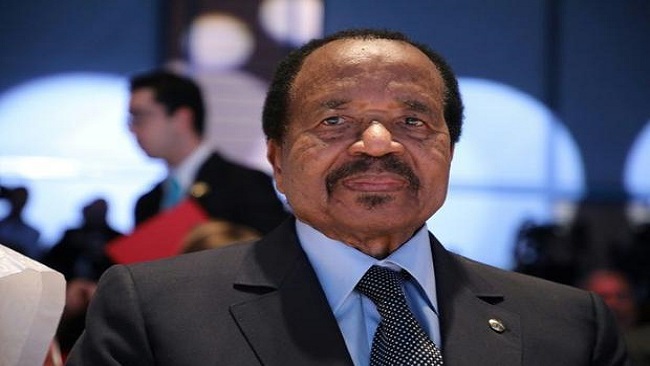
Troops of supporters, bedecked in merchandise bearing the smiling face of President Biya, gathered at rallies in different parts of the country, chanting tributes to the 86-year old leader.
Government officials and members of the Cameroon People’s Democratic Movement (CPDM) had another reason to make merry. The occasion coincided with the first anniversary of President Biya’s re-election for his seventh seven-year term.
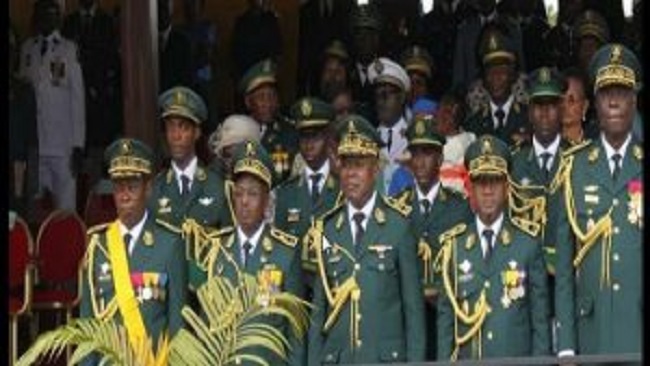
The celebrations however, could not mask the challenges of insecurity, economic malaise and international isolation facing the government.
Having taken power as the second president of the Central African country following the resignation of Ahmadou Ahidjo in 1982 under the single-party system, President Biya has endured harsher political pressures, including an attempted coup after just two years in office during a clamour for multiparty democracy.
He reluctantly agreed to hold elections in 1992, winning against Ni John Fru Ndi of the Social Democratic Front with about 40 per cent of the vote; Ndi got 36 per cent. The two would have had a run-off, but an earlier extraordinary session of parliament failed to enact a Bill to that effect.
Perennial winner
President Biya has since then won all elections, with critics saying most of them were conducted unfairly. He has since spent nearly a combined period of five years of his long tenure in ‘’private visits’’ abroad, notably Switzerland, according to research by the Organised Crime and Corruption Reporting Project released in February 2018.
Since the report was released however, the president has spent less than 30 days abroad, according to Emmanuel Freudenthal who co-authored the investigation’s report.
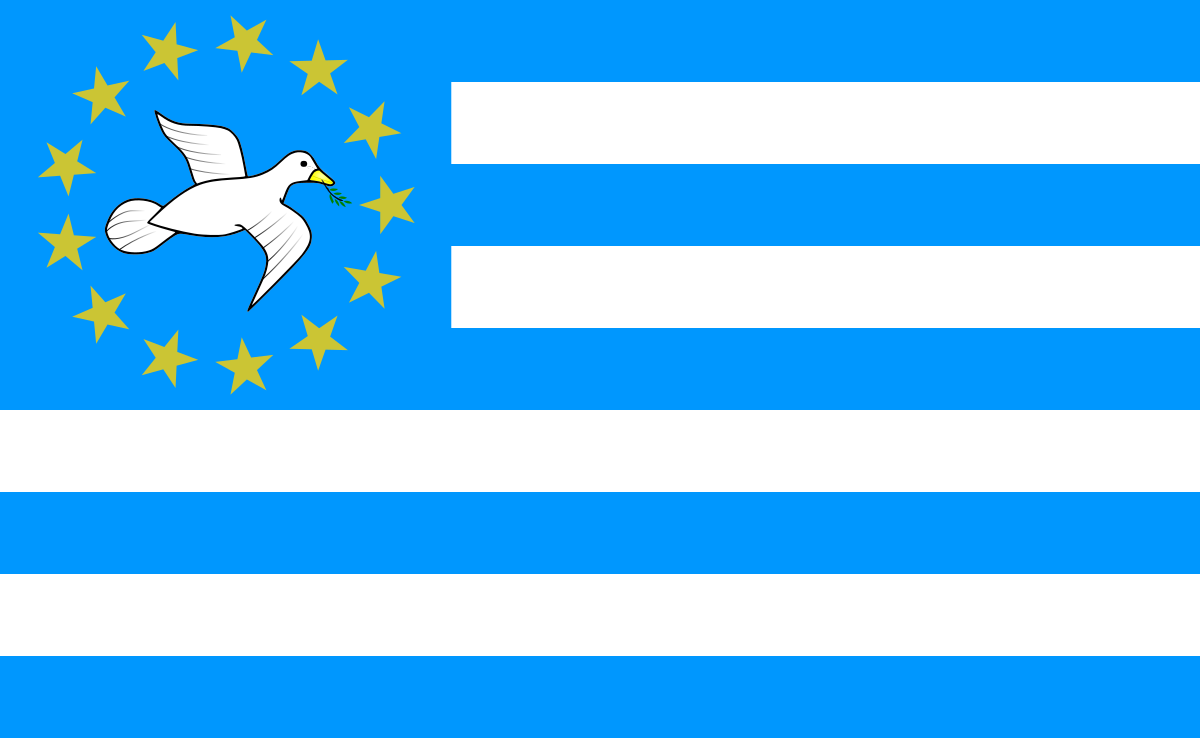
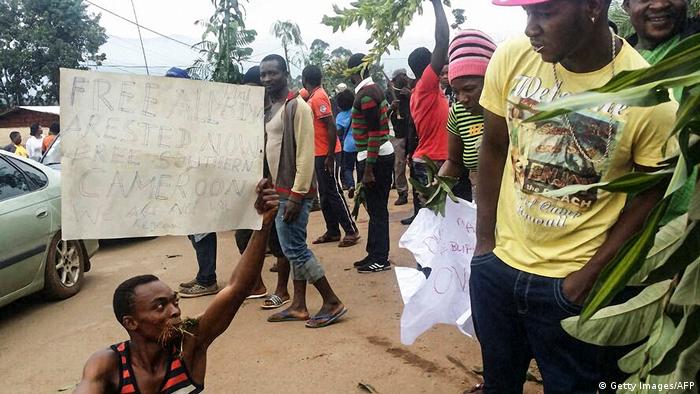
The internal and external pressures President Biya is facing have escalated as separatist militants fight in the country’s two English speaking regions.
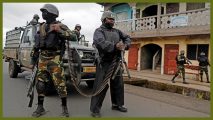
The three-year armed conflict has claimed over 3,000 lives, with half a million people displaced from their homes and 40,000 more having fled to Nigeria, according to data from the International Crisis Group: the regime says these figures are inflated.
The UN says the conflict has created a humanitarian emergency for nearly two million people with no indication that it will end soon despite the Major National Dialogue held in September, a welcome gesture of reconciliation.
An insurgency by Nigerian jihadist group Boko Haram, which continues to carry out attacks against civilian and military targets in Cameroon’s Far North region, and spill-over from the Central African Republic refugee crisis in the East Region, have also stretched the security apparatus.
Weak governance
Besides security, weak governance and endemic corruption—the country was ranked 152 out of 180 countries in the 2018 Transparency International corruption perceptions index—have undermined the effectiveness of state institutions and scared away investors. The country is ranked 166 out of 190 economies in the World Bank’s Doing Business 2019 report.
Signs of increasing isolation started in February, when the US suspended military aid to Cameroon. US President Donald Trump followed it up last month with a note to Congress of his intentions to suspend Cameroon from the African Growth and Opportunity Act (Agoa), a preferential trade scheme, over human rights abuses.
Eyebrows were also raised last month when President Biya did not turn up for the Russia Africa Summit, despite him being among the first invitees and having confirmed attendance. His representative, Prime Minister Joseph Dion Ngute, also did not show up in Sochi leaving junior foreign ministry staff at a loss.
All the while, President Biya was in Lyon, France while French Foreign Minister Jean-Yves Le Drian kept Yaounde’s top ranking diplomatic officials busy as he sought to safeguard a contract for logistics firm Bollore from slipping away.
It is reported that other countries, including Russia, have been discreetly pressurising President Biya to institute a federal system of government as panacea to the Anglophone separatist push.
Critics are not convinced that the international community is doing enough to hold President Biya to account.
“Symbolic half-measures like revoking preferential trade status are not enough to force the repressive regime of Paul Biya to change. Forcing cancellation of IMF loans and the remaining military aid would show that the White House is serious,” said Chris W.J. Roberts, the president of African Access Consulting.
Writing in Foreign Policy, Prof Roberts said Cameroon’s economic meltdown was being shielded by oil revenues and bailouts by international lenders.
“The Agoa blockade will not compel Biya to undertake political and economic reforms, to solve the crisis in the Anglophone region; the related violence driving a humanitarian catastrophe and the deep-rooted governance crisis that includes mass arrests of political opponents and journalists,” the political science don at Calgary University said.
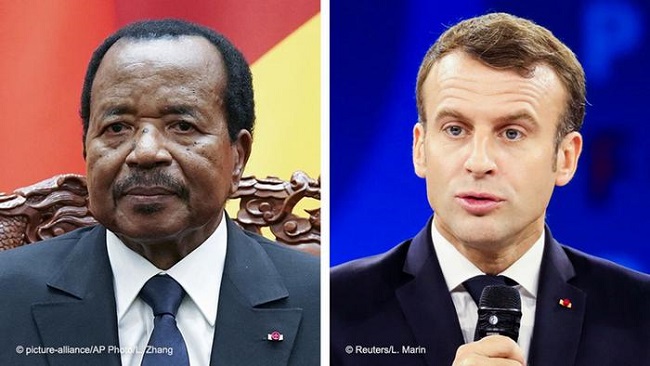
In an open letter on Tuesday, 50 human rights advocates, scholars and writers urged French President Emmanuel Macron to use his country’s “considerable influence” to help bring Cameroon’s ongoing conflict to an end. The call coincided with clips of a frail-looking President Biya being assisted to walk at the Paris Peace Forum.
Fresh start?
President Biya’s Cameroon is also marked different from former US president Franklin Roosevelt’s inspired Renouveau (New Deal), the fresh start that he touted on coming to power.
Unlike Roosevelt’s effort that stimulated the economy after the Great Depression, his mentee’s achievements polarise opinion.
“Statistically the New Deal of President Paul Biya is as significant as it was 37 years ago…Yes, it is worth celebrating,” said Elvis Ngolle Ngolle, the director of the CPDM academy, saying Cameroon and the US still enjoy “other areas of co-operation”.
President Biya, who rarely speaks to the press, once told the French that only those who can, and not those who wish, can maintain a grip on power for long.
In her 2011 book, Au Cameroun de Paul Biya (In Paul Biya’s Cameroon), French journalist Fanny Pigeaud describes the country as being in a “worrying state of disrepair”.
His succession, however, remains a taboo topic within government circles and his ruling CPDM party, as Cameroonians crave for a new deal that would ensure peace, prosperity and a seat at the high table of global diplomacy.
Culled from The East African















19, November 2019
Open letter to President Macron on human rights abuses in Cameroon 0
Dear President Emmanuel Macron,
We, the intellectuals, writers, and human rights lawyers undersigned, write to implore France to strengthen its commitment to the resolution of the Anglophone crisis in Cameroon, described by some analysts as “Rwanda in slow motion”.
Specifically, we respectfully urge France to use its considerable influence on the government of President Paul Biya to encourage Cameroon to openly join the peace talks led by Switzerland, which would make it possible to stop the murders and atrocities perpetrated in the country. North West and South West regions of the country. A durable solution must come from a mediation process that includes English-speaking armed separatist groups and non-violent civil society leaders.
It’s urgent; the dehumanizing violence in Cameroon must not reach the same scale as that which occurred in Rwanda in 1994. On the one hand, non-state armed groups and bandits use machetes to maim, torture and decapitate, on the other hand. Government forces commit crimes against humanity such as extrajudicial executions and burnt villages. Journalists, opposition politicians and other civilians are wrongly detained. More than half a million Anglophones are displaced while fleeing violence. Hundreds of thousands of children have missed school for more than three years, and according to recent United Nations reports, 1.4 million people are at risk of starvation.
France and the international community may be aware that the recent Grand National Dialogue organized by Cameroon did not adequately address the Anglophone crisis. As a result, violence has persisted in English-speaking areas since the end of the dialogue on October 4.
The Great National Dialogue and the release of political prisoners have been a step in the right direction. However, the dialogue does not address the root causes of the conflict; it excluded any discussion of other forms of governance and did not offer sufficient security guarantees to diaspora and separatist leaders. In other words, it did not put an end to the atrocities or produced an acceptable or viable political solution for the English-speaking regions. The talks led by Switzerland now seem to be the only way to reach an appropriate political solution, through an inclusive negotiating table.
Mr. President, we hope that you personally and your country, France, value your historical relations and your ties with Cameroon, and wish for the return of peace in this country. We believe that France does not want to be complicit in another genocide in Africa after Rwanda and that it take all possible measures now. Please strongly promote the Swiss talks so that villainous violence can cease immediately, that human rights are respected and that normalcy returns to English-speaking and French-speaking Cameroon.
Cameroonians and Cameroonians, brothers, sisters and friends of Cameroon in France as well as the whole world are waiting for you.
Center for Human Rights, Faculty of Law, University of Pretoria, South Africa