23, July 2018
Yaounde: Opposition Fails to Present Candidate to Challenge Biya 0
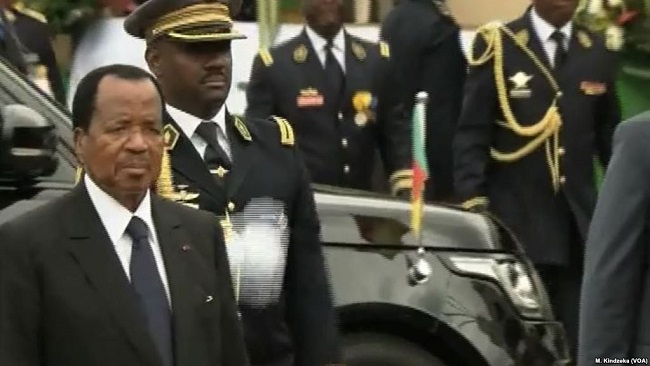
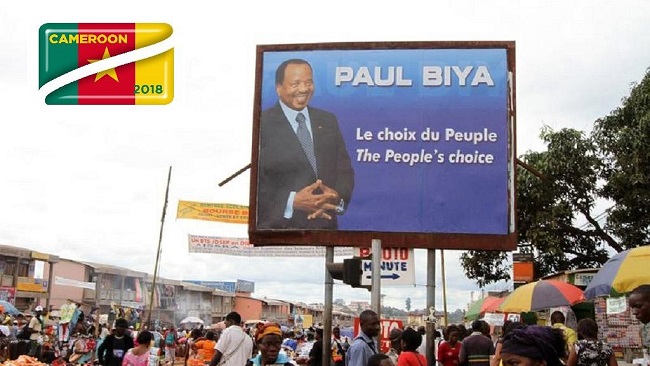
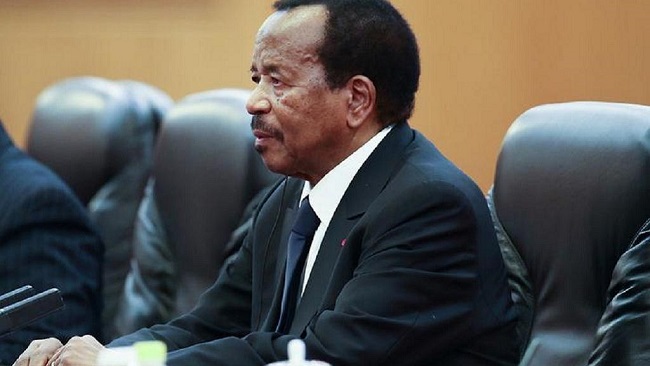
Cameroon’s opposition has again failed to present a single presidential candidate to challenge Paul Biya who has been in office for 36 years. Twenty-eight candidates will be contesting the country’s October 7 presidential election, which Biya is favored to win.
The youngest candidate registered to compete in the October 7 presidential election is journalist Cabral Libi. Just before the filing deadline, the 38-year old said he was still uncertain if he would run because he could not single handedly raise the $60,000 required by the election commission to run. He says he had to ask well wishers to help him.
He says he has demonstrated that he is the only candidate strong enough to challenge the incumbent president because he was able to raise over $ 60,000 from well wishers within three days to pay the caution fee required by Cameroon’s electoral laws for each presidential aspirant.
Libi is one of the 28 candidates to contest the poll. Two women: Ze Genevieve, an independent candidate and Habiba Issa who will run for the opposition UPC party, also registered to challenge the 86-year old Biya, who has been president for 36 years.
Last January, Cameroon’s notoriously fractured opposition attempted to unite behind a single candidate. About a dozen opposition parties were negotiating to back Akere Muna, a prominent lawyer who specializes in fighting corruption. Muna pledged a non-partisan platform, but today is running on the ticket of his Peoples Development Front political party.
Maurice Kamto, who was meeting with Muna and the main opposition political party the SDF to discuss the possibility of a single candidate, is today running for his Cameroon Renaissance Movement Party. Kamto says after discussing with some political parties, he found out that all of them wanted a single candidate, but felt they were the stronger politicians that other weaker parties should join.
He says he then decided that he, like other politicians who want to run for president should present to Cameroonians their programs and projects that they will implement if elected, instead of basing their strengths on the religious, tribal and ethnic groups they represent.
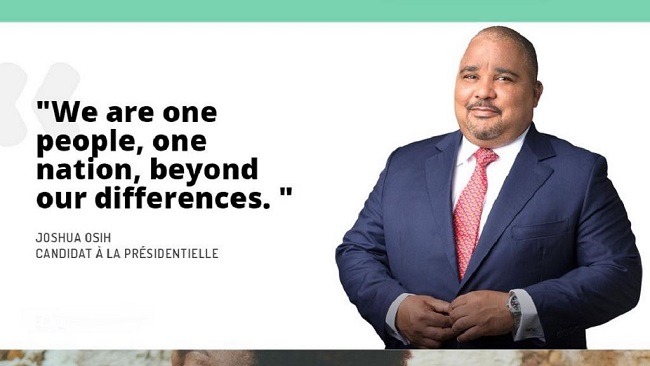
The SDF has chosen a 50-year old lawmaker, Joshua Osih, as their candidate and says it is sure Osih will perform better in the elections if the polls are transparent and fair.
The ruling CPDM party has gathered at least 30 of the divided opposition political parties to rally behind its candidate, Paul Biya. Issa Tchiroma, president of the Cameroon National Salvation Front, says the opposition’s inability to come up with a single candidate indicates how they are divided and so he will support Biya, who according to him is the only one that can bring peace and development to the troubled country.
“By declaring his candidature, this is an indication, clear indication that he sent to the nation and the world that he is the man of his generation. Mr president move forward, we are ready to support you,” said Tchiroma.
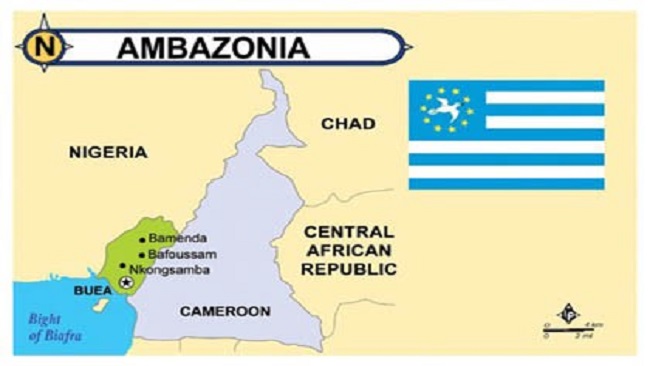
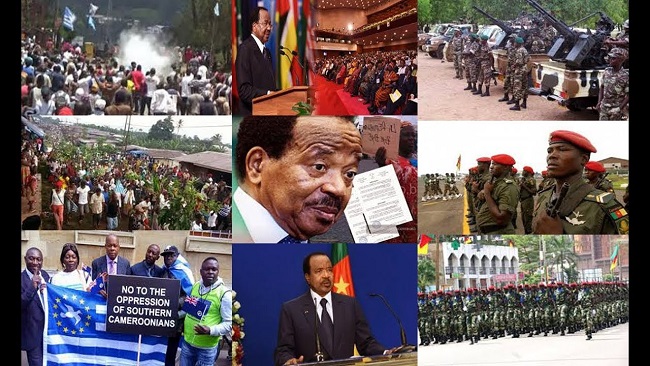
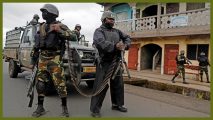
Cameroon is dealing with attacks by Boko Haram militants in the north, separatist movements in two English-speaking regions and a spillover of violence from the Central African Republic.
Biya has ruled Cameroon since 1982 and is Africa’s second longest serving president, after his neighbor Theodoro Obiang Nguema of Equatorial Guinea.
He is seen by many as favored to win the polls. If he does, he will rule the central African state up to 2025 when the next presidential election will take place.
Source: VOA










27, July 2018
Southern Cameroons Crisis: “Five Adjustments To Make The Cardinal TUMI Mediation Work” 0
This Op-Ed serves to contribute to the recent initiative by some Church leaders in Cameroon to seek lasting solution to the Anglophone crisis that has recently taken the turn of an armed conflict. On July 25, 2018; leaders from the Catholic, Presbyterian and Muslim Church communities in the Anglophone regions announced a peace plan to resolve the on-going conflict in Cameroon. The plan involves as necessary first step, the holding of an “Anglophone General Conference” (AGC) convened for August 29-30, 2018 in Buea. The aim of the AGC is to seek consensus among Anglophones on the “issues to be examined at a yet-to-be convened national dialogue, as well as freely designate Anglophone representatives at that dialogue”. The conveners of the AGC designated Dr. Simon Munzu, an international luminary and renowned Cameroonian civil society leader, as their spokesperson and also outlined a number of initiatives that the Cameroon government should take to ensure a smooth conference participation by all Anglophone Cameroonians. These initiatives include notably, an immediate ceasefire, the unconditional release of all detainees, and a general amnesty.
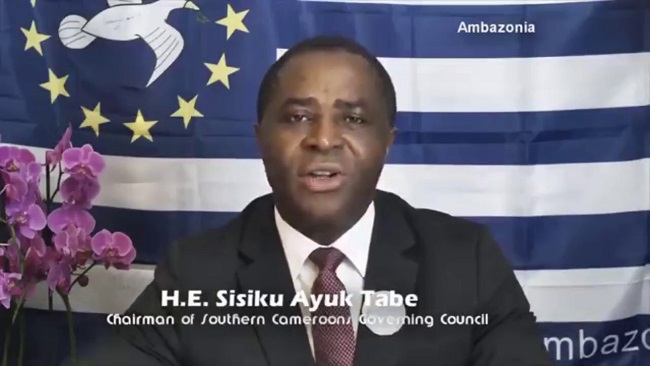
Already, some voices within the Cameroonian diaspora, which has been the brain behind the armed separatist movement, have raised a number of critical concerns regarding the form and modalities of holding such a conference in Cameroon at this time. Let me highlight just three of the main concerns of the separatists. First, separatists claim that the time for dialogue with the government of Cameroon has passed and now is the phase of mediation as the crisis has transitioned to an armed conflict. They also criticize the choice of Dr. Simon Munzu as spokesperson of the AGC, given his controversial vocal stance for a federal Cameroon. Federation is no longer an option for a solution to the conflict, according to the separatists. Lastly, the separatists fear that, even with an amnesty, the Cameroon government is capable of rounding them up while in Buea, attending the AGC. And there are legitimate reasons to distrust the government, notably at the start of the crisis, representatives of the then Cameroon Civil Society Consortium that met with the government to dialogue were arrested soon after the meetings. Separatists are thus suggesting a safe venue outside of Cameroon for the AGC and for a neutral spokesperson, instead of Dr. Simon Munzu.
Let me quickly comment on the initiative by the Church authorities and suggest ways of making this work, considering the concerns raised by the separatists.
The peace plan to gain consensus on the root cause of the Anglophone Problem, it’s solution as well as to designate representatives to a broader national dialogue; dovetails nicely with the biblical approach to resolving conflicts that I opined not long ago in a piece circulated on social media in early June 2018. In particular, it’s of prime essence to have genuine interlocutors of the Anglophone Problem. Although there are two clear parties to the on-going armed conflict in Cameroon, the interlocutors on the side of the separatists are highly divided ideologically and the risks of the conflict becoming intra (among the separatists themselves) is high. Thus, a conference with the stated objectives is highly welcomed as a necessary first step towards dialogue/mediation/negotiation to resolve the conflict.
Now to make the Anglophone General Conference work, there’s more to do and a few more conditions to be fulfilled than the conveners have proposed.
1. In a situation of an on-going armed conflict, there’s need not only for a ceasefire but also for supervision of the ceasefire, in order to limit any further casualties. This necessitates the intervention of the UN in Cameroon, through its peace-keeping arm. The presence of UN peace keepers will also reassure displaced populations about their safety thereby contributing to a smooth holding of the AGC.
2. Although understanding the urgency of the need for a lasting solution to the conflict, the holding of the AGC need not be hurried. The proposed date seems rather hasty and fears are that the conference might not contribute to healing and an atmosphere of detente, if some perceive it’s timing as corresponding to the electoral calendar in Cameroon. This crisis has been on-going for about two years and several peace building initiatives by the government need to take place for trust to build on both sides. That takes time but the timing of the conference a few months to the forthcoming presidential elections to hold in October 2018 sends mixed messages. I would suggest a date for the AGC further ahead, preferably after the presidential elections.
3. Given the fact that the leadership of the separatist movement mostly reside in the diaspora, to ensure their effective participation and representation at the AGC, there need to be a preparatory conference of Anglophone Cameroonians in the diaspora (preferably held in the US) where representatives of the diaspora community to the AGC would be designated.
4. Participants at the AGC should be allowed to elect their own spokesperson and Dr. Munzu (the conveners’ spokesperson’s) mandate should end on day one of the conference, unless he is elected at the meeting to continue.
5. Following the AGC, the next stage of dialogue/negotiation/mediation, should be between the belligerent parties (that is, between the Cameroon government and would-be representatives of the Anglophone community) and not a national dialogue per se, as the Church leaders propose. The resolution of a crisis/conflict, needs to be primarily between the belligerents, of course, inter-mediated by third parties. The role of the international community and friends of Cameroon would be to facilitate as mediators.
By Dr. Julius A. Agbor, Associate Professor at Vanguard University of Southern California (USA)
Author is a Political Economist, and Associate Professor at Vanguard University of Southern California, Formerly, a Research Fellow at the Africa Growth Initiative of the Brookings Institution in Washington DC
Also, a contributor to the NY Times.