29, September 2018
Cameroon lurches toward election amid separatist conflict 0
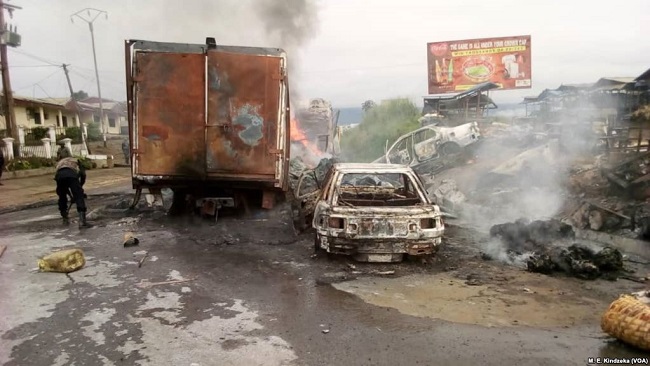
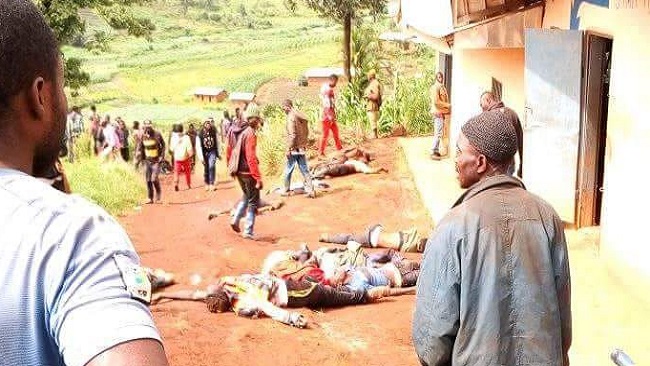
John Nlom has five children and wants to keep them alive. When machete-wielding men attacked a nearby school this month in a suspected strike against the teaching of French, wounded students were rushed to hospitals while frightened parents decided to flee.
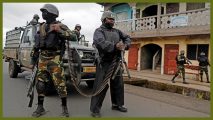
Nlom and his family piled onto one of the dozens of buses now leaving daily from the capital of Cameroon’s Southwest Region, joining thousands of civilians escaping bloody fighting between the government and Anglophone separatists who vow to disrupt next month’s presidential elections.
The government of the largely French-speaking country insists the Oct. 7 vote will be peaceful, even in the troubled English-speaking southwest and northwest where nearly 400 people have died. Nlom, a teacher, could not take that chance.
“The governor himself who is saying that people should stay back, that they are protected, he is moving around with soldiers protecting him,” Nlom said. “Will the soldiers protect all the people? That is the reason why I cannot stay.” He and his family, like many, have taken refuge in the French-speaking city of Douala.
President Paul Biya, one of Africa’s longest-serving leaders since taking power since 1982, vows to hold the country together.
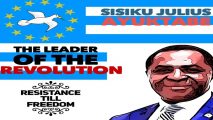
The separatists, with support from some in the diaspora in the United States and elsewhere, are fighting to create an independent state they call “Ambazonia” in Cameroon’s English-speaking northwest and southwest regions.
Their movement grew out of dissatisfaction with what some English speakers, who make up about 20 percent of the country’s population, have called marginalization in the officially bilingual country. The blocking of the internet in English-speaking regions for months last year fed the frustrations.
The government describes the fighters as terrorists.
Weary civilians caught in the fighting have pleaded for peace. Women, saying they can no longer remain silent, have gathered for protests, saying the violence keeps children from their studies. At least 70 schools have been burned.
Last week, Muslim and Christian clerics announced they are afraid a wave of carnage could occur if peace is not found before the election. “We call on the diaspora to stop the hate speech communication that promotes violence, suspicion and fear among the people of Cameroon,” their declaration said.
The clerics asked both the military and armed groups to drop their guns and stop the killing, looting and burning that have sent nearly 200,000 civilians fleeing. The government, however, replied that only the separatists should drop their guns.
Attacks were reported in at least 20 towns and villages over the weekend, according to the country’s minister of territorial administration, Paul Atanga Nji. Casualty figures were not yet available, he said.
“We are happy that some of the terrorists have willfully handed their guns to the military and we have forgiven them,” he said. “I call on all those who are still in the bushes to drop their arms and make use of the ballot if they want a change.”
Human rights groups have accused both sides of abuses. Separatists have burned and crushed buses and used construction equipment to dig up roads in efforts to stop people from fleeing. Some people leaving English-speaking regions have said the military conducts searches on those trying to leave.
With the elections approaching, the tensions have grown. Separatists on Friday blew up a key bridge to stop campaign teams from reaching communities, authorities said.
“The only bridge linking the northwest regional capital, Bamenda, with other localities like Bui and Donga was destroyed by the terrorists,” said Lele L’Afrique Deben Tchoffo, governor of the Northwest Region. Thousands of passengers were stranded, he said.
In response, the military killed at least a dozen separatists near the northwestern town of Mbiame as they planted explosives to blow up another bridge, the governor said.
People who have fled the English-speaking regions will not be able to vote if they don’t return to the polling centers where they are registered, he warned.
In Cameroon’s French-speaking areas, campaign rallies kicked off over the weekend in defiance of the separatist threat.
“We should not fear them. We should brave the situation and go about campaigning. The government has deployed troops to protect everyone,” Prime Minister Philemon Yang told supporters in Bamenda while campaigning for the longtime president.
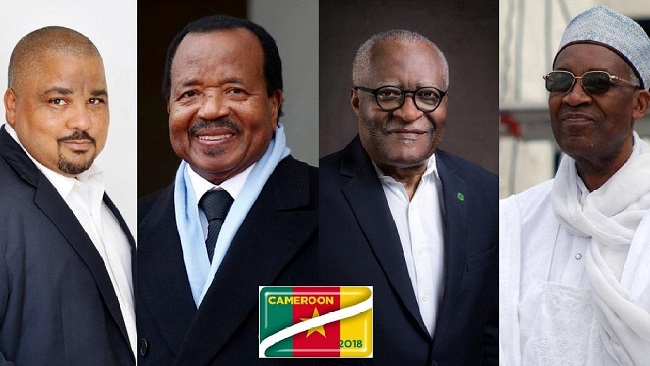
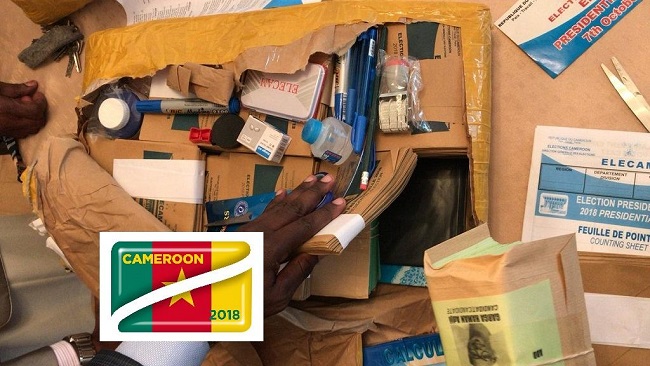
Biya is favored to win another seven-year term, as opposition parties did not succeed in negotiations to back a single candidate. Cameroon’s government has vowed that voting will take place nationwide.
“We have … created polling centers where voters can assemble and vote under the protection of the military,” said the chairman of the country’s electoral board, Enow Abrams Egbe.
AP













29, September 2018
CPDM: Protective gear for criminals 0
Campaigns for the upcoming presidential elections are well underway and the CPDM presidential candidate who has not been campaigning travelled to Maroua to urge the northern population to grant him their votes.
While other presidential candidates have been all over the place highlighting what they will do if they are given power, Paul Biya, the man who has led the country for 36 years is counting more on a rigging machinery he has deployed.
The constitutional council, the body the publishes election results is replete with people loyal to him. ELECAM, the body that organizes elections, has already done its job and it has made sure that fewer opposition supporters have actually received their voter’s cards. While Mr. Biya was absent in the field, his surrogates have been doing their best to convince an electorate that is already aware of the ruling party’s dismal economic and political performance.
As the campaign progresses, it is clear that the English-speaking regions will not be part of the process. The heat is particularly on the CPDM, but hard core CPDM criminals are not backing off despite the threats from Southern Cameroonian fighters. They have huge skeletons in their cupboards and those skeletons may be exposed if they stop working for their party even in war-torn areas.
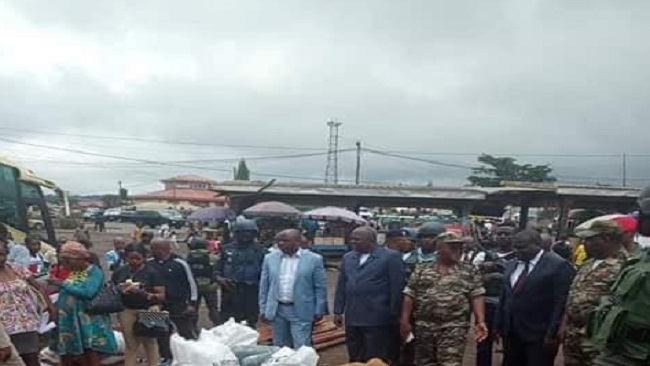
Like most people have said, the CPDM is a crime syndicate and its militants are using it for personal purposes. Chief Moses Obenofunde and Mr Abey Napoleon Ntui seen here wearing military protective gear to campaign in Mamfe have once served as PAMOL’s general manager and Principal of Sar Ndekwai respectively. During their time at the various institutions, huge chunks of money cannot be accounted for. Internal audits have been conducted and there is evidence that Chief. Obenofunde and Mr. Abey Napoleon Ntui are honest men when money is not involved.
To avoid jail time, they are using party loyalty as a shield against the law, but some party insiders who are not happy seeing these two men around the party are working underground for their arrest. It is obvious that after the election, they might be among those who would be appointed to a high position at the Kondengui Maximum Security Prison.
By Soter Tarh Agbaw-Ebai