11, July 2019
The U.S. Should Bid Biya Goodbye 0
It is not hard to find fault with Cameroonian President Paul Biya and his government. The overall stability of the country he has led since 1982, often from the luxury of the Intercontinental Hotel in Geneva, has crumbled over the past three years. After last year’s deeply flawed election—the norm in Cameroon—Biya has done little to resolve increasingly violent demands for secession from armed groups fighting to carve out a new Anglophone state called Ambazonia from the country’s Northwest and Southwest regions. He has failed to give any indication that his regime will scale back its efforts to crush dissent, and there have been no signs that his family will rein in their lavish spending beyond the country’s borders.
Cameroon deserves better—from its 86-year-old leader, and from every foreign power that enables his enduring misrule. Increasingly, Cameroonians at home and abroad are demanding that outside powers examine their ties to the long-ruling Biya regime. On June 29, hundreds of protesters in Geneva endured tear gas from Swiss authorities to do just that. It is well overdue for the United States to fundamentally recalibrate U.S.-Cameroon relations.
The rise of violent Anglophone secessionist militias in Cameroon’s west and of Boko Haram in the Far North region has left 4.3 million people—roughly one-fifth of the country’s population—in need of humanitarian assistance. In addition, at least 1,800 people have been killed and 500,000 more displaced due to these conflicts, with regular reports emerging of war crimes committed by the government, including torture and the burning of villages.
Cameroon deserves better—from its 86-year-old leader, and from every foreign power that enables his enduring misrule.
Biya has exacerbated Cameroon’s multiple, cascading crises by further cracking down on political dissent and opposition voices. Beyond not taking credible steps toward resolving conflict in the country’s Anglophone regions, the Francophone government of Cameroon is actively constricting opposition to Biya’s policies and efforts to challenge his authoritarian grip on power. On June 1, an estimated 350 supporters of the country’s main opposition party, the Cameroon Renaissance Movement, were arrested during demonstrations in which protesters demanded the release of party leader Maurice Kamto.
In October 2018, Kamto declared victory after the country’s presidential election, which resulted in Cameroonian authorities charging him with treason and a host of other major crimes, including “inciting violence” and “disrupting public peace.” Kamto has been in detention since Jan. 26 of this year, and if he is convicted in Cameroon’s notoriously biased courts, he could potentially face the death penalty. Kamto has already been denied access to legal counsel, a violation of both Cameroonian law and international legal norms.
Despite Biya’s recent clampdown on political dissent and his detachment from Cameroon’s multiple conflicts, the response from the United States and other foreign powers has been tepid up to this point.
Much more needs to be done to confront a regime that has routinely and unabashedly violated the rights of its own citizens.
The U.S. government has taken some incremental steps to reset the terms of its relationship with Biya’s government. In February of this year, the Trump administration suspended $17 million of military aid to Cameroon due to ongoing human rights abuses. And last week, Rep. Karen Bass, the top Democrat on a key subcommittee that focuses on Africa and the current chair of the Congressional Black Caucus, led a visiting U.S. congressional delegation to the country to assess the situation and call for peace talks between the government and separatists. However, much more needs to be done to confront a regime that has routinely and unabashedly violated the rights of its own citizens—one that relies on international disinterest and a steady stream of foreign lobbyists to clean up its image.
There are a number of concrete steps that the United States in particular should immediately consider.
Culled from Foreign Policy


11, July 2019
UK ambassador to Washington quits over Trump row 0
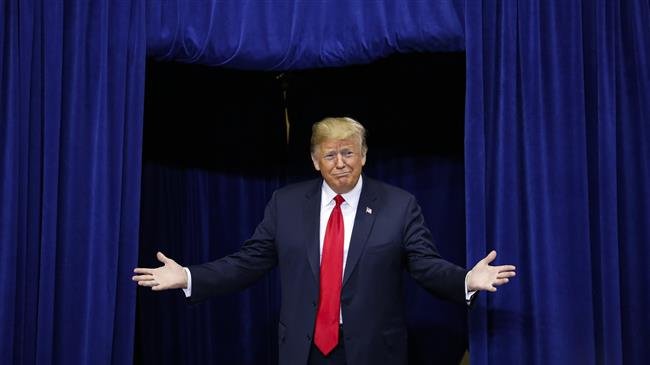
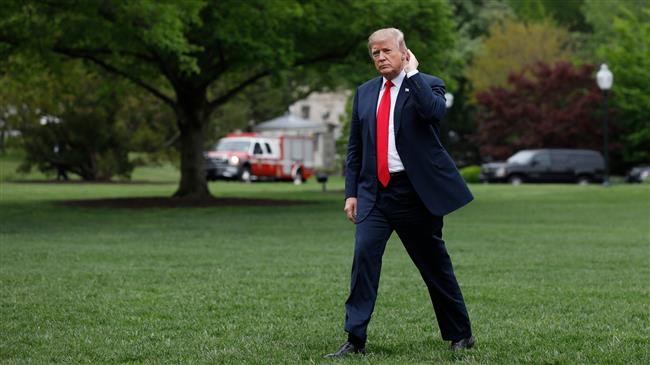
Britain’s ambassador to Washington resigned Wednesday after Donald Trump labelled him “stupid” and “wacky” following a leak of confidential diplomatic memos in which the envoy said the US president’s administration was inept.
The shock resignation of British Ambassador to the US, Kim Darroch, a day after a Conservative Party leadership debate sparked accusations that frontrunner Boris Johnson had thrown the envoy “under the bus”.
At a Tuesday night debate, Johnson and Jeremy Hunt — the two contenders for the prime minister’s post – were asked if they would support Darroch if they were prime minister.
While Hunt replied in the affirmative, Johnson evaded the question and gave a banal response on the importance of US-UK bilateral relations.
Donald J. Trump✔@realDonaldTrump
The wacky Ambassador that the U.K. foisted upon the United States is not someone we are thrilled with, a very stupid guy. He should speak to his country, and Prime Minister May, about their failed Brexit negotiation, and not be upset with my criticism of how badly it was…
“It was the make-or-break moment,” explained Philip Turle, FRANCE 24’s international news commentator. “Reports are coming in that Sir Kim Darroch watched that debate and because Boris Johnson is the favourite to take over as prime minister after Theresa May, he [Darroch] knew that if that was the case he would not receive the support from Boris Johnson to remain in the job. That’s what pushed him to hand in his resignation.”
‘Johnson’s comments may have prompted resignation’
‘Impossible’ to carry out ambassador’s role
The resignation followed days of embarrassing headlines and tweets which were sparked by a leak of British diplomatic cables that included Darroch’s assessment that the Trump presidency was inept.
The US president responded with a series of withering tweets, branding Darroch “very stupid” and May “foolish”. As the spat intensified, Trump said he would no longer deal with Darroch.
Citing reasons for his resignation, Darroch said his position had become untenable. “Since the leak of official documents from this Embassy there has been a great deal of speculation surrounding my position and the duration of my remaining term as ambassador,” said Darroch, who was due to step down at the end of the year.
“I want to put an end to that speculation. The current situation is making it impossible for me to carry out my role as I would like.”
May backs Darroch
In his confidential memos dating from 2017 to the present, Darroch, 65, had said reports of in-fighting in the White House were “mostly true” and last month described confusion within the administration over Trump’s decision to call off a military strike on Iran.
“We don’t really believe this Administration is going to become substantially more normal; less dysfunctional; less unpredictable; less faction-riven; less diplomatically clumsy and inept,” Darroch wrote in one cable.
May told parliament that ministers had expressed their backing for Darroch, a career diplomat who was due to leave his post anyway at the end of the year.
“I have told him it is a matter of great regret that he has felt it necessary to leave his position as ambassador to Washington,” she said. “The whole cabinet rightly gave its full support to Sir Kim on Tuesday.”
May supports Darroch’s ‘full and frank advice’
The souring of relations between Britain and the United States comes at a particularly unwelcome time for London, which is mired in the details of how and when to leave the European Union, a departure currently scheduled for October 31.
Britain is hoping to strike a major post-Brexit trade deal with Washington as one of the upsides of leaving the bloc.
May herself is due to step down as prime minister by the end of July and while one of the two contenders to replace her, foreign minister Jeremy Hunt, had said Darroch should keep his job, the other, frontrunner Boris Johnson, had pointedly declined to do so.
(FRANCE 24 with AFP and REUTERS)