20, March 2024
Leo Varadkar: I am no longer best man to be Irish PM 0
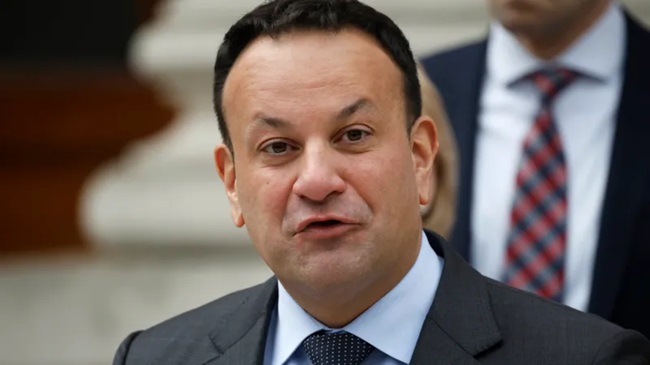
Irish prime minister Leo Varadkar will step down as party leader immediately and will resign as taoiseach as soon as his Fine Gael successor is selected.
Announcing his resignation, Mr Varadkar described leading his country as “the most fulfilling time of my life”.
He said he was stepping down for “personal and political” reasons and was “not the best person for the job anymore”.
He was Ireland’s youngest PM when he became Fine Gael leader at 38 in 2017.
He currently leads the coalition government in Dublin, along with Fianna Fáil and the Green Party.
Speaking from the steps of government buildings in Dublin on Wednesday, Mr Varadkar said he had “led Ireland from unemployment to full employment, from budget deficit to budget surplus, from austerity to prosperity”.
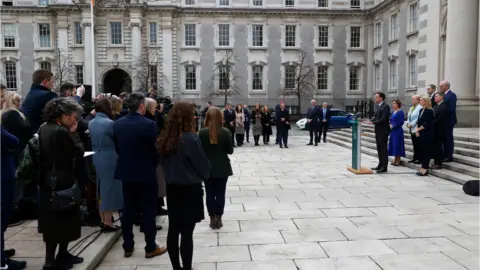 PA MediaMr Varadkar said he felt he was not the “best person for the job anymore”
Mr Varadkar added that he was “proud that we have made the country a more equal and more modern place when it comes to the rights of children, the LGBT community, equality for women and their bodily autonomy”.
During his time as taoiseach, Mr Varadkar championed referendums to change the Irish constitution legalising same-sex marriage and abortion.
Mr Varadkar also listed work to improve the affordability of childcare among his achievements as well as increasing government spending on arts and culture, international development, and public infrastructure.
He also conceded that “there are areas where we have been much less successful” but added: “I hope you’ll forgive me if I leave it to others to point them out on a day like this.”
Why did Leo Varadkar resign?
Mr Varadkar said his reasons for stepping down were “both personal and political”.
He said that he felt the current government “could be re-elected” but he felt he was “not the best person for the job anymore”.
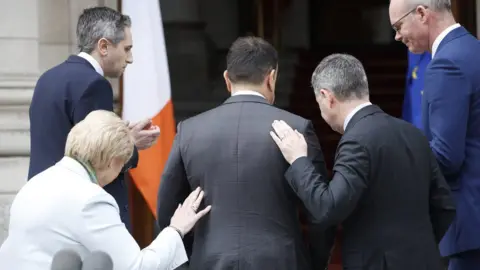 Nick Bradshaw
When is the next general election in Ireland?
The Irish government parties have said they do not expect Wednesday’s announcement to trigger a general election.
In the election of 2020, Mr Varadkar led his party to a third-place finish in terms of number of seats in Dáil Éireann, the lower house in the country’s parliament.
As part of the coalition deal struck between the parties it was agreed that Mr Varadkar and Micheál Martin would each hold the position of taoiseach for two years.
In 2020, Mr Martin was appointed taoiseach with Mr Varadkar serving as his tánaiste (deputy PM), before the two swapped roles in 2022.
Speaking after Mr Varadkar’s resignation announcement, Mr Martin said he had been “surprised” by the decision.
“I want to take the opportunity to thank him sincerely, we got on very well,” Mr Martin added.
Mr Martin said he remained committed to fulfilling the full term of the coalition government.
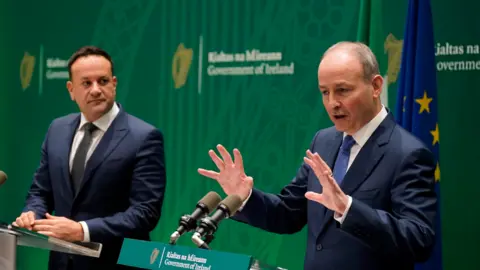 PA MediaMicheál Martin said he was “surprised” when he heard that Mr Varadkar was stepping down
Eamon Ryan, leader of the Green Party, the smallest of the three coalition partners, said Mr Varadkar had been “an energetic and committed leader of the country who was always supportive of his government colleagues”.
Mr Ryan said his party looked forward to the Fine Gael leadership contest and the election of a new taoiseach.
In the interim, he said, the government would continue to fulfil its mandate.
“I would like to offer my good wishes to Leo as he prepares to depart the taoiseach’s office,” he added.
‘Run out of road’
Speaking in the Dáil, (lower house of Irish parliament) Sinn Féin President Mary Lou McDonald, who is leader of the Opposition, called for a general election.
She said it was “unthinkable” for the next taoiseach to be chosen by a “conclave” of Fine Gael politicians.
“This is a time for fresh leadership. Not just a change of taoiseach, but a change of government, and a change of direction,” she said.
Ms McDonald claimed that when Fine Gael took power in 2011 Ireland had one of the highest levels of home ownership in Europe, but it had since declined to one of the worst.
“This government has now run out of steam and run out of road, so rather than limping on in a caretaking capacity let’s go to the people,” she said.
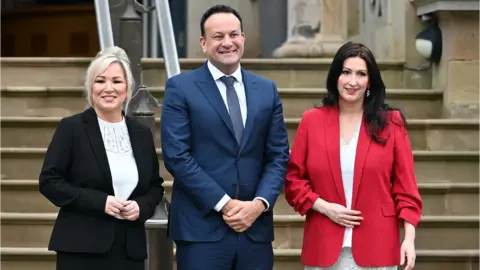 PA MediaFirst Minister Michelle O’Neill (left) called for a general election in the Republic of Ireland
The UK Prime Minister, Rishi Sunak, wished Leo Varadkar well following his resignation.
A spokesperson said the PM would “work closely with him and his successor”.
“Ireland is a vital partner of the UK,” the spokesperson added.
Northern Ireland’s First Minister Michelle ‘O’Neill also said it was “time for an election” in the Republic of Ireland.
“Now is not a “time for the rearranging of the deck chairs,” the Sinn Féin vice president said.
She described Fine Gael’s time in power as “13 years of failure”.
Deputy First Minister Emma Little-Pengelly said: “Leo Varadkar and unionism didn’t often see eye to eye, if at all”.
However, the Democratic Unionist Party MLA wished him “all the best”.
DUP Leader Sir Jeffrey Donaldson said he and Mr Varadkar “were very often on different ends of the political spectrum”.
“We differed on the Republic of Ireland’s approach to legacy, and sharply differed on his approach and attitude on the [Northern Ireland] Protocol and the constitutional future of Northern Ireland,” he said.
“Where we differed, we did so respectfully.”
Sir Jeffrey added that there were other areas where they worked together on matters of mutual benefit “for both our countries”.
Ireland’s President Michael D Higgins was told of the taoiseach’s intention to resign shortly before Wednesday’s press conference and the pair spoke immediately afterwards.
A spokesman for the president said: “Over the course of this, the president thanked the taoiseach for his service.”

Who could be the next taoiseach?
Enterprise, Trade and Employment Minister Simon Coveney, 51, who is deputy leader of Fine Gael, has ruled himself out.
Speaking on RTÉ, he said he made a decision “quite some time ago” that he would not stand in another leadership contest after losing to Mr Varadkar in 2017.
There will be a Fine Gael National Executive emergency meeting on Wednesday evening to start the process of selecting a new leader.
This process should take 18 or 19 days, Mr Coveney said.
He added that “there may well be” more than one candidate.
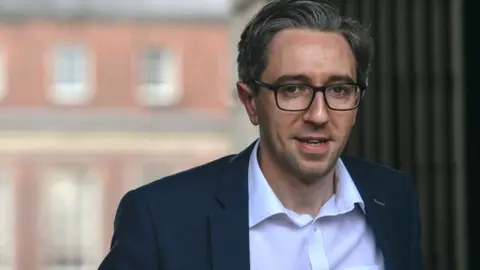 Getty ImagesHigher Education Minister Simon Harris is the early favourite with many bookmakers
At the moment four names are being mentioned.
Further and Higher Education Minister Simon Harris, 37, is the early favourite with many bookmakers.
He gained a high profile as health minister when the Republic of Ireland voted to amend its constitution to legalise abortion in 2018 and subsequently served as justice minister.
Helen McEntee became a TD at the age of 26, succeeding her father after he took his own life.
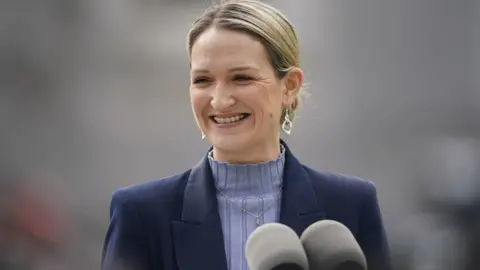 Niall CarsonAfter widespread disorder in Dublin last year, Helen McEntee faced down calls to resign from opposition parties
In 2017 she took on the high-profile role as minister of state for European affairs and in June 2020 she was promoted to become minister of justice.
After widespread disorder in Dublin in November 2023 she faced down calls to resign from opposition parties.
Paschal Donohoe is the public expenditure minister and was previously finance minister from 2017 to 2022, arguable the second-most important cabinet post.
The Dublin Central representative is also president of the Eurogroup – which brings together the finance ministers of the eurozone for informal meetings.
Minister for Social Protection Heather Humphreys represents the Cavan-Monaghan constituency which borders Northern Ireland.
As well as her main cabinet post, she covered the justice ministry for two periods while McEntee took maternity leave.
If she became taoiseach she would be the first Protestant to hold the post.
Source: BBC








22, March 2024
Nintcheu and Sisiku Ayuk Tabe Meeting: Biya regime bans opposition coalitions 0
A declaration by Cameroon’s territorial administration minister to make two opposition coalitions illegal is part of a government crackdown on opposition and dissent.
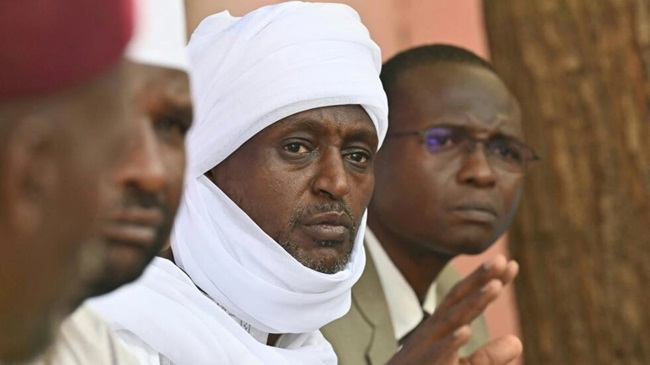
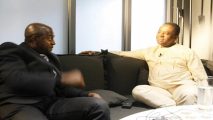
On March 12, 2024, the minister, Paul Atanga Nji, said in a statement that the Political Alliance for Change (Alliance politique pour le changement, APC), led by Jean-Michel Nintcheu, and the Political Alliance for Transition in Cameroon (Alliance politique pour la transition, APT), led by Olivier Bile, are “illegal,” calling them “clandestine movements.” The minister also referenced a recent meeting at a prison in Yaoundé between Nintcheu and Sisiku Julius Ayuk Tabe, a leader of the Anglophone separatist group Ambazonia Interim Government, as a factor in the decision to ban the coalition.
“The government’s move against these coalitions shows how the Cameroonian authorities are moving to close down space for the opposition and for public debate ahead of the 2025 presidential elections,” said Carine Kaneza Nantulya, deputy Africa director at Human Rights Watch. “The authorities should immediately lift the ban and allow opposition parties to continue working without harassment.”
In December 2023, a prominent opposition leader, Maurice Kamto, was reelected as the leader of the Movement for the Renaissance of Cameroon (Mouvement pour la renaissance du Cameroun, MRC), one of the most prominent opposition groups in the country. Kamto used his reelection to announce the creation of the APC.
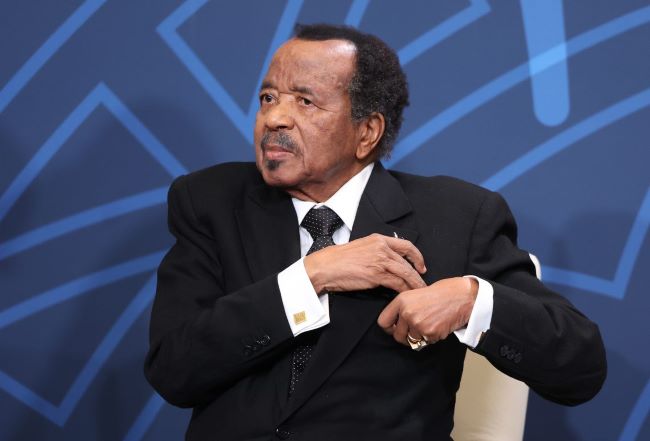
The current president, Paul Biya, has been in power since 1982 and is serving out his seventh term. Biya, 91, was last reelected in 2018 after a contested vote-counting process. Kamto challenged the official results and declared himself winner of the election.
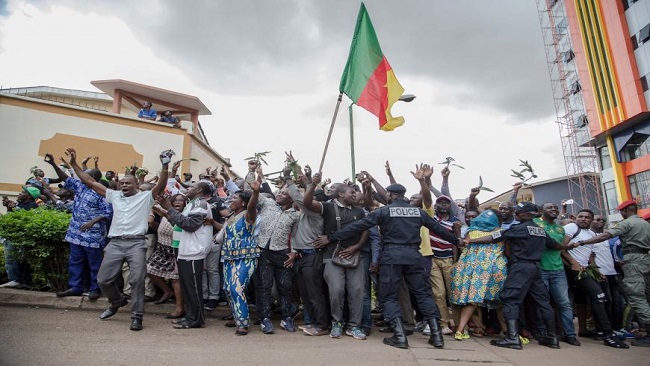
Biya’s 2018 election sparked a wave of political repression. After the 2018 vote, opposition-led protests occurred across the country, and the government responded with a heavy crackdown and the use of excessive force by the police, army, and gendarmes. In January 2019, Kamto and over 200 of his supporters were arrested and detained. Kamto was charged with insurrection, hostility against the homeland, criminal association, threats to public order, rebellion, and inciting insurrection, crimes that can carry the death penalty. He was freed on October 5, 2019, and the charges were dropped, though the crackdown on the opposition continued.
In early September 2020, Cameroon authorities banned demonstrations across the country after Kamto’s MRC encouraged people to take to the streets over the government’s decision to call regional elections in December 2020. Opposition parties had expressed concerns that the elections could not be conducted freely and fairly without reforming the electoral code and addressing the lack of security in the country’s minority Anglophone regions, where separatist groups and security forces have repeatedly clashed.
On September 22, 2020, Cameroonian security forces fired tear gas and water cannons and arrested over 550 people, mainly opposition party members and supporters, to disperse peaceful protests across the country. Many peaceful protesters were beaten and mistreated while being arrested and in detention.
While the majority of Kamto’s supporters who were arrested in 2019 were eventually released, 41, including Olivier Bibou Nissack and Alain Fogue Tedom, two of the group’s leaders, remain behind bars after being sentenced to seven years.
When initiating the APC in December 2023, Kamto said that the opposition should rally behind one candidate for the next presidential elections, slated for late 2025. Biya has not announced if he will run again for reelection.
Opposition groups simply coordinating activities and forming alliances cannot be considered “clandestine movements;” instead, this coordination should be considered a normal and important feature of the democratic process, Human Rights Watch said.
Activists have expressed doubts over the legality of the government’s ban. “This decision is not based on any legal texts,” Emmanuel Simh, a prominent rights activist and lawyer for the MRC, told Human Rights Watch. “No law in Cameroon prevents legally established parties getting together to establish a coalition. It’s just repression and another attempt to muzzle the opposition, to prevent it from organizing ahead of the next presidential elections.”
The government’s decision to ban the two political coalitions violates the rights to freedom of expression, association, peaceful assembly, and the right to participate in political life . These rights are guaranteed under international human rights law including expressly in the International Covenant on Civil and Political Rights and the African Charter on Human and Peoples’ Rights, both of which Cameroon has ratified.
“Cameroonians have watched Biya weaken any meaningful political opposition over the course of the last four decades and this ban is yet another example of the government’s repression,” Nantulya said. “He should consider his legacy and encourage authorities to facilitate and deliver a credible election process with full respect for fundamental rights and freedoms.”
Culled from Human Rights Watch