7, April 2021
Iran’s Rouhani says Vienna talks open ‘new chapter’ 0
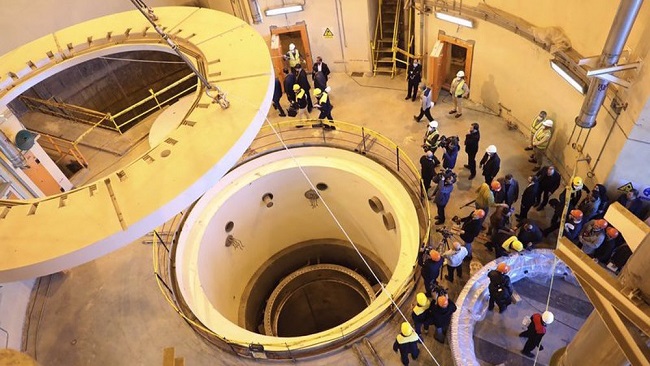
Iranian President Hassan Rouhani said Wednesday that talks in Vienna on rescuing a troubled 2015 nuclear deal had opened a “new chapter”.
An Iranian delegation met Tuesday with representatives of the remaining parties to the agreement to discuss how to bring Washington back into it and end crippling US sanctions and Iranian countermeasures.
US President Joe Biden has said he is ready to reverse the decision of his predecessor Donald Trump to withdraw from the agreement and reimpose unilateral sanctions.
But differences remain over the mechanics of the move as Tehran has since responded by suspending compliance with some of its own obligations under the deal.
The United States was not present at Tuesday’s discussions because Iran has refused to meet the US delegation so long as its sanctions remain in place.
Instead, the European Union acted as an intermediary, but all sides gave a positive assessment of the opening talks.
“A new chapter has just been opened yesterday,” Rouhani told a cabinet meeting Wednesday.
“If (Washington) shows it is honest and sincere, that’s all we ask… I think we’ll be able to negotiate in a short time, if necessary, with the (other parties to the deal).”
The talks are to resume in Vienna on Friday, a diplomat familiar with the discussions said.
The US delegation is to gather in a different hotel, with EU negotiators acting as go-betweens.
At the same time, two groups of experts — on lifting sanctions and nuclear issues — are working “to identify concrete measures to be taken by Washington and Tehran” to restore the deal, Russian envoy Mikhail Ulyanov said.
Washington gave an upbeat assessment of the opening session.
“We do see this as a constructive and certainly welcome step,” State Department spokesman Ned Price said.
Source: AFP















8, April 2021
CEMAC region is hosting the world’s longest-standing authoritarian rulers! But protests are growing 0
In a familiar pattern than continues to be repeated, President Idriss Déby looks set to be elected for yet another term in Chad following this Sunday’s presidential elections. In power since 1990, this will be the 68-year-old incumbent’s sixth term.
President Déby’s victory at the ballot box may be all but assured, but that’s not to say he doesn’t face significant opposition. When he was nominated to be the ruling Patriotic Salvation Movement’s flagbearer this February, the announcement sparked widespread demonstrations. In the capital N’Djamena and other major cities, protesters took to the streets chanting “no to a sixth term!” and “Leave, Déby!”.
The government has responded with force. Authorities arrested hundreds of protesters. They charged several with assault and disturbing the public order. In anticipation of more street action, authorities also imposed a blanket ban on protests. Internet restrictions are expected to follow.
This is all characteristic of Déby’s repressive rule and management of the upcoming elections. For years, his government has overseen sustained attacks against human rights defenders, opposition politicians and journalists. One of Chad’s most prominent human rights defender, Baradine Berdeï Targuio, has been detained since January 2020 charged with “subversive activities on social media”. In November 2020, security forces surrounded the premises of several opposition parties and civil society groups, and raided private radio stations including Radio FM Liberté.
Amid this increasingly unequal playing filed, Chad’s main opposition leader, Saleh Kebzabo, quit the presidential race in early-March. His decision came shortly after two people were killed as security forces tried to arrest his fellow opposition leader Yaya Dillo.
A regional problem
Since he came to power via a coup in 1990, President Déby has won every election and amended the constitution twice to facilitate his stay in power. His 2005 constitutional revision removed the two-term limit. The 2018 amendments re-imposed it, but ensured it would not apply retroactively while also extending presidential mandates from five years to six. This means Déby could now stay in power until 2033.
This determination to cling onto power, along with the brutal treatment of opponents, is consistent with the broader picture in Central Africa. Throughout this region, politics has been militarised and electoral periods are characterised by violence and instability. Authorities target anyone who speaks out – from human rights organisations and the political opposition to trade unions – and presidents maintain a tight grip on power.
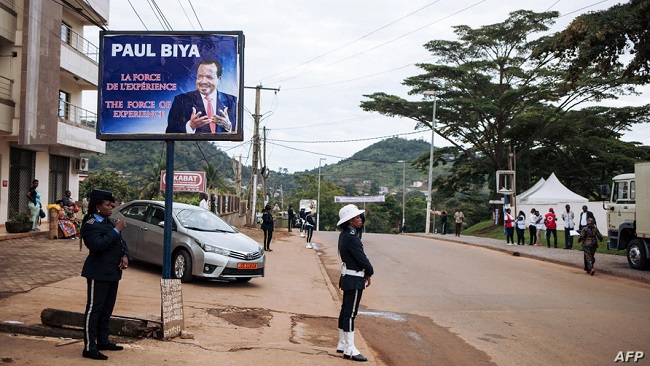
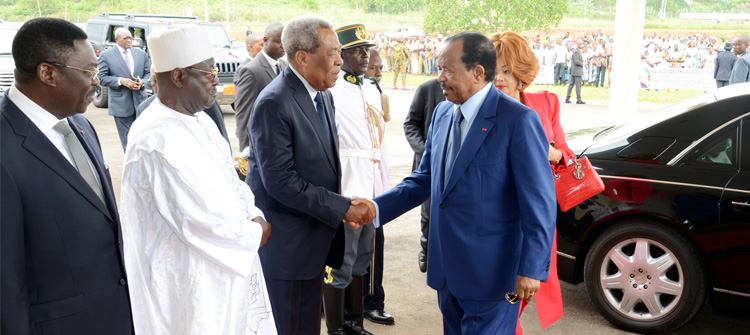
Equatorial Guinea’s Teodoro Obiang and Cameroon’s Paul Biya are two of the world’s longest serving presidents, having been in office for 42 and 39 years respectively. The Republic of Congo’s Denis Sassou Nguesso of the Republic of Congo is referred to by some as an “Emperor”, having ruled for 36 years over two periods. Gabon’s Ali Bongo has been president for a comparatively brief 12 years but was preceded by his father who ruled for the 42 years before that.
Along with undemocratic and repressive domestic policies, several Central African leaders’ stays in power have been made possible by international complicity. Chad is a strategic US ally in the campaign against Islamist insurgencies in the Chad Basin. Cameroon, Congo and Gabon are among the last bastions of French influence in Francophone Africa. The Central African Republic has presented a useful opportunity for Russia to expand its international standing.
These alliances of convenience have often provided authoritarian governments with crucial support and funding – some of which has financed security forces that then commit the same kinds of abuses as the groups they are meant to be targeting – while also shielding undemocratic leaders from international censure.
Pushing back
As seen in Chad, people across Central Africa are not staying silent. Civil society groups in the Congo and Cameroon, for example, are increasingly speaking out against state excesses and calling for political reforms, starting with free and fair elections and adherence to term limits. Despite the risks, protests against rising costs of living, increasing inequality and the monopolisation of power by ruling elites are growing. Repeats of Sudan’s 2019 uprising, which ended Omar al-Bashir’s three-decade reign, cannot be ruled out.
To support these movements and help reverse Central Africa’s authoritarian trend, regional and international civil society organisations should start building networks across the region. They should bolster groups that work on the ground to encourage people and governments to move towards democracy. At the same time, they should demand that foreign governments look beyond their own narrow strategic interests and recognise the impact of the militarisation of politics and the use of violence against civil society, the media and opposition.
Without this support, local civil society will struggle to push back against authoritarian leaders. They need broader support as they attempt to prevent leaders like President Déby extending his undemocratic rule and, in the longer-term, resist the plans of ageing presidents to follow in Gabon’s footsteps by converting their individual reign into dynastic rule, further extending the cycle of human rights violations and repression.
Culled from African Arguments