12, April 2021
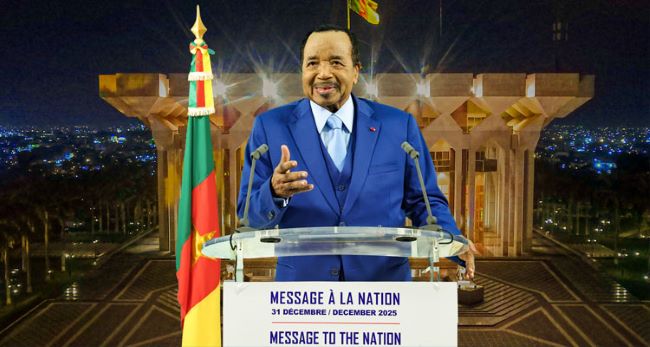
88-year-old Biya’s attempts to get his son to replace him is sparking a rebellion (Video) 0
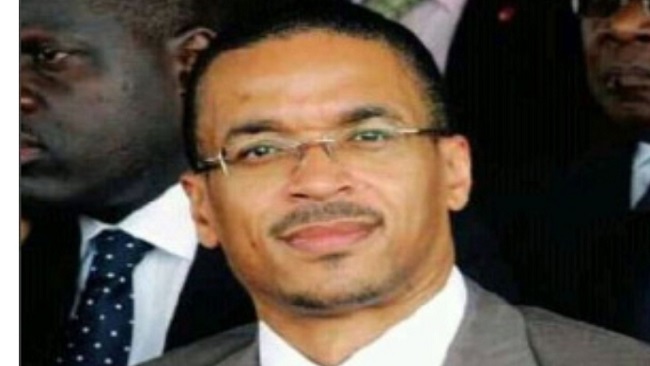
Members of the ruling CPDM crime syndicate from the South Region have now been told that the choice of Franck Biya to succeed his father President Biya is mission impossible in the Beti constituency as a planned rally by a prominent administrative officer was boycotted by the elites including traditional rulers.
No one was there to even welcome the governor and the senior divisional officer during the meeting that was supposed to make public the Franck Biya political discourse, according to senior security officials in the South Region.
What followed was a series of drama and uncertainty that included a massive boycott staged by the people of the South Region, a protest statement by the visiting administrative officers and threats of expulsion from the CPDM party.
A video posted online recorded by a senior political elite from the South Region sent cheering crowds into the streets in Ebolowa the chief town in the South Region where thousands are reportedly anticipating the end of the Biya era.
Biya feared, not loved
Cameroon has been touted as an oasis of peace in a desert of chaos for many decades, but for some time now, the country has gradually been ranking itself among the most dangerous, corrupt and chaotic countries to live in as descent and frustration spread across the country like wildfire.
Four years ago, the country’s president, Paul Biya, erroneously declared war on the country’s English-speaking minority which was simply demonstrating to bring its sorry plight to the attention of the government and the international community and what Mr. Biya and his collaborators thought would be wrapped up in a week has now lasted four years with more than 7,000 young Cameroonians already sent to an early grave in a war that has no raison d’etre.
As the government and militia have transformed the country into an open air killing field, the country’s economy has taken a nosedive, with millions of Cameroonians seeking employment and thousands losing their jobs in the country’s two English-speaking regions where the killings are going on unabated.
The number of internally displaced person has continued to swell, while millions have fled to neighboring Nigeria where they are living rough and waiting for the fighting to end for them to return to their country, though their homes have been razed by government soldiers who are wont to inflicting collective punishment on the population each time an army soldier is killed.
But it is not only Southern Cameroons that is going through such an apocalypse. The northern part of the country has been the theater of violent confrontations between government troops and Boko Haram fighters who have bombed many civilians into an early grave.
While the government has been active in the North hoping that it could roll back Boko Haram fighters who are believed to come from Nigeria, government forces have succeeded to alienate Northerner due to massive and bloody killings and abuse of the civilian population which now sympathizes with Boko Haram fighters who are sometimes viewed as liberators.
Noted for its corruption, the government has never really sought to address those issues that are really threatening national unity and integration. The North, like many parts of the country, has been neglected, with very little development projects being implemented in that part of the country.
Tribalism and nepotism are really tearing the country apart as most senior government positions are only occupied by the president’s tribesmen and those loyal to him and his ruling crime syndicate known as the CPDM.
However, it is not the government’s nepotism that is the issue but the results it has posted over the last four decades. Cameroonians would not be bothered if those occupying those strategic positions were really delivering desired results.
While across the country the unemployment rate is high, it is a lot higher in the northern region of the country where there are no companies, no roads, no hospitals and no social services and financial assistance that can even cushion the impact of the economic hardship.
By Soter Tarh Agbaw-Ebai


















13, April 2021
US officials head to Europe to shore up allied support on Russia, Iran, China 0
Top US officials are in Europe this week seeking to shore up allied support on countering Iran and China as well as recent Russian moves at the Ukraine border. U.S. Defense Secretary Lloyd Austin arrived in Berlin on his inaugural tour of Europe while Secretary of State Antony Blinken headed to Brussels on Tuesday for talks on Ukraine and NATO troops in Afghanistan.
Nearly a year after President Donald Trump ordered thousands of troops to leave Germany, capping a series of setbacks for U.S. relations with major allies, U.S. Defense Secretary Lloyd Austin began an inaugural tour of Europe to shore up partnerships that are a cornerstone of the post-World War II order.
Austin arrived in Berlin on Monday against the backdrop of a newly emerging crisis with Iran, which on Monday blamed Israel for a recent attack on its underground Natanz nuclear facility. Israel has not confirmed or denied involvement, but the attack nonetheless imperils ongoing talks in Europe over Tehran’s tattered nuclear deal.
Also at stake in Austin’s visit is the future direction of U.S. defense commitments in Europe at a time of growing concern about Russian military intervention on NATO’s periphery, including a buildup of Russian forces near Ukraine’s border. U.S. Secretary of State Antony Blinken was headed to Europe to discuss with U.S. allies the Ukraine situation as well as the administration’s thinking on further withdrawals of troops from Afghanistan.
The United States also seeks European support for its approach to countering China around the world and for efforts to restore an international agreement with limits on Iran’s nuclear program.
Austin arrived in the German capital on Monday night and will hold talks Tuesday with senior government officials. He will also visit NATO headquarters later this week in Belgium and meet with British defense officials in London. He began his trip Sunday in Israel, where he underscored U.S. defense support in meetings with Prime Minister Benjamin Netanyahu and Defense Minister Benny Gantz.
Austin, a former four-star Army general whose overseas military experience was primarily in Iraq, is likely to assure German officials of intentions by the Biden administration to keep troops in Germany, though the number is subject to discussion as part of a monthslong global review of the basing of U.S. troops. Last year, Trump ordered the number in Germany reduced by about 12,000, to about 24,000.
In his first visit to NATO headquarters in Brussels since taking office, Austin will meet with Secretary-General Jens Stoltenberg, who declared on President Joe Biden’s inauguration day that the arrival of a new administration marked “the start of a new chapter for the trans-Atlantic alliance.”
Trump’s departure from the world stage gave the Biden administration an opening to restore a more supportive U.S. approach to Europe and the NATO alliance, but complications will persist. For example, the NATO allies are anxious for Biden to decide whether to pull out of Afghanistan. NATO has more troo ps there than does the United States, and Biden’s indecision troubles them, not least because they count on U.S. military support for removing troops and equipment.
The attack on Iran’s Natanz nuclear facility further complicates U.S. efforts to draw Iran back into a nuclear deal. Austin was asked about this earlier Monday while in Israel, and he said only that he expects the administration’s diplomatic efforts with Iran will continue.
‘Pivot’ to Asia
On the broader horizon, the European allies remain uncertain how their defense and security relationship with the United States will be affected by Biden’s push to focus more on China as the chief threat to U.S. security. That shift in U.S. thinking began during the Obama administration, which announced a “pivot” to Asia that left Europeans thinking their U.S. ally was turning its back. Washington adjusted diplomatically and rhetorically, assuring the Europeans that it was just a “rebalancing.”
Then came Trump. His administration further emphasized China as the prime security threat, but of greater concern to the Europeans was his frequent, sometimes shocking, denigration of the trans-Atlantic partnership that had been the foundation of U.S. security policy for decades. He dismissed the NATO allies as freeloaders, and last summer he ordered the removal of about one-third of the U.S. force in Germany, as well as the move of U.S. European Command headquarters from Germany to Belgium.
“We don’t want to be the suckers anymore,” Trump told reporters last July, calling the Germans ingrates who don’t spend enough on defense but expect the United States to protect them from Russia.
Germany has been an anchor for the U.S. military presence in Europe since the early post-World War II years. In addition to hosting the headquarters for U.S. European and U.S. Africa commands, Germany’s Ramstein Air Base is headquarters for NATO air and missile defenses. The U.S. Army’s largest overseas hospital, the Landstuhl Regional Medical Center, is a few miles from Ramstein Air Base. The U.S. Air Force also has a substantial presence in Germany, including the 52nd Fighter Wing at Spangdahlem.
In his first speech to an international audience, Biden in February declared to the Munich Security Conference: “America is back, the trans-Atlantic alliance is back, and we are not looking backward. We are looking forward together.”
Biden suspended the Trump decision on a partial withdrawal of troops from Germany, which had not yet been implemented. It seems likely the administration will decide not to carry out the Trump order.
Jim Townsend, who served throughout the Obama administration as the Pentagon’s lead policy official on Europe and NATO, said in an interview that he sees lasting value in Austin’s touring of European capitals early in his tenure.
“It’s a better way to repair the torn fabric of that trans-Atlantic relationship,” Townsend said.
Even if the Europeans can put the Trump-era tensions behind them, they will still have questions about the Biden emphasis on China, which is not a front-burner issue for the Europeans. They largely view NATO as a bulwark against Russia, particularly since Moscow’s annexation of Crimea in 2014 and its intervention in eastern Ukraine, which is not a NATO member but aspires to join.
(AP)