
27, February 2020
A plea from Southern Cameroons: “Take up our case to God” 0
A pastor has shared firsthand information regarding a dire situation in Cameroon. The pastor’s name and other details are being withheld in an effort to increase security yet still communicate candidly.
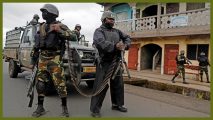
No civilian in Bamenda, Cameroon is safe any longer, he reported: “No protection from the military, no protection from the so-called freedom fighters. The situation is such that both military and militia are fighting against the innocent population.”
He further reported that, early each morning in one corner of the town, the militia attacks and kills people, claiming they are supporters of the government. “Then they will shoot, burn and run away,” he said, but a few minutes later, the military will appear at the scene. “They will accuse the same harassed population on the claim that they are hiding and aiding the militia,” he described. “Then a new process of killing and burning will be done now by the military.”
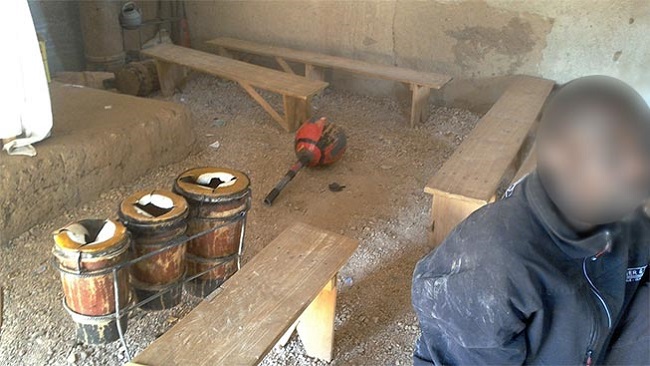
People are still managing – sometimes – to go to church, he reported, but during a recent worship service, the militia came in and stopped the service by beating up Christians and shooting some. “Then we all ran away back home,” he said. “We are only saved from above.”
The church is under serious attack, he continued. “Pastors are beaten daily to near death by both parties,” he said, asking for daily prayers. “But I and others are trying daily to push through and be a help to the broken.”
Their ecumenical bond is strong, the pastor said. “We are bound to work together,” he said. “How united can the church become in the bad times?”
Differences in doctrine seems to melt away in the smell of gun powder and in the face of the pellet, he added. “So please…take up our case to God. Sing for our God to forgive us and bless even the souls of those we will lose today or tomorrow,” he said. “Pray for us trying to brave it and help others who are already broken.”
“Pray for government without a heart or pity in Cameroon. Above all, pray for the return of peace, schools, life and blessings in Cameroon.”
Culled from World Council of Churches











27, February 2020
Archbishop Andrew Nkea says Southern Cameroonians are ‘tired of war’ 0
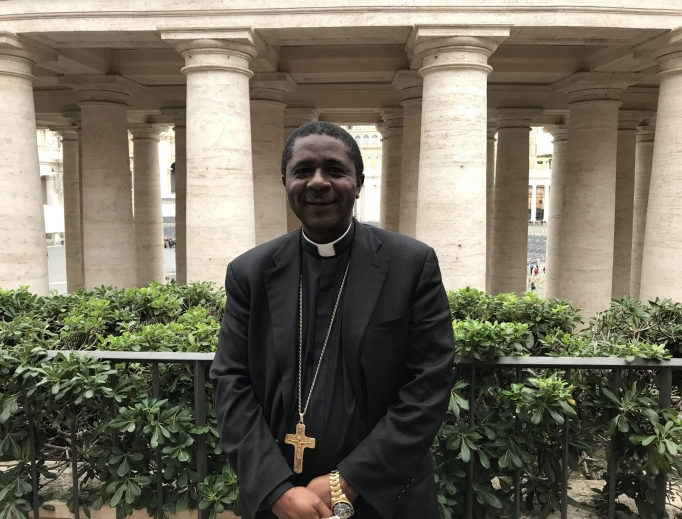
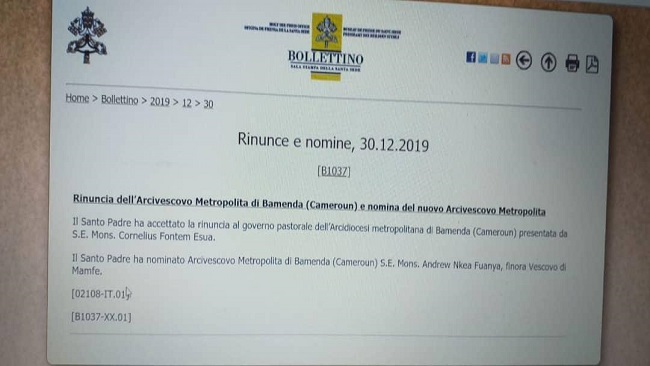
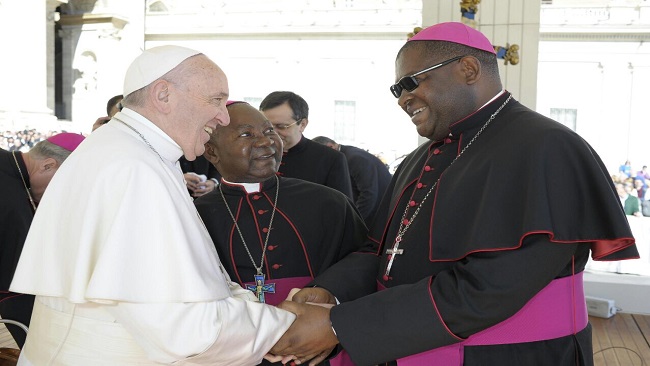
Preaching a message of peace in a conflict-ridden region, Archbishop Andrew Fuanya Nkea took over the Archdiocese of Bamenda in Cameroon on Feb. 22.
Bamenda is the capital of Cameroon’s North West Region, which together with the South West Region, forms the English-speaking regions of the majority French-speaking nation. Bamenda is the metropolitan archdiocese for all of Anglophone Cameroon, making Nkea the de-facto leader of English-speaking Catholics in the country.
Before being appointed to the archdiocese by Pope Francis in December, the 54-year-old had headed the Diocese of Mamfé, in the South West Region.
“I come to you as a shepherd, not as a politician,” Nkea said during his installation Mass.
“I come to you as a priest, not as a businessman. I come to you as a father, not as a policeman. I come to you as a message of peace, not as a warmonger. I come to you as a crusader for justice, not as a supporter of injustice. I come to you in spirit and in truth, not in flesh and with lies. I come to you in the name of Jesus Christ,” Nkea continued.
The archbishop told those gathered in the metropolitan cathedral that he hadn’t earned his position by merit.
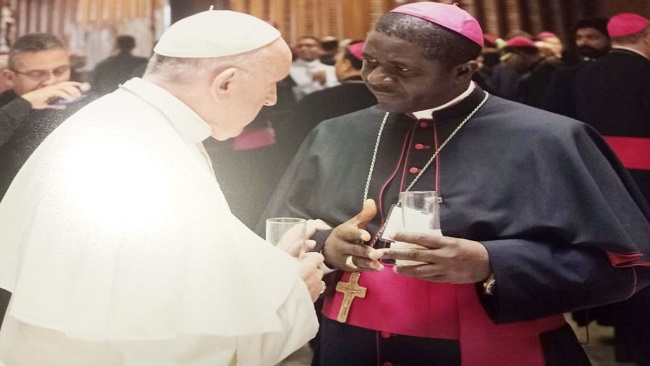
“It’s a choice from God. I was appointed by the Holy Father, Pope Francis. I don’t know exactly why he chose me, but God must have a reason, and I just have to open myself to his will, and through the spirit of discernment, know what God wants me to do in Bamenda,” he said.
Nkea’s appointment comes at a very precarious time for Cameroon, and especially Cameroon’s Anglophone regions.
The population of the two English-speaking regions make up about 20 percent of the country’s total, and traditionally use a school system based on England as well as the common law legal system.
In 2016, a protest by Anglophone lawyers and teachers over attempts to change the education and legal systems by the central government quickly degenerated into an armed rebellion with many English speakers demanding for outright independence, with separatists declaring their new country was called “Ambazonia.”
The conflict has killed at least 3000 people, and left over 700,000 others displaced, according to the United Nations.
In October 2019, the central government hosted a “Major National Dialogue” in which they promised to give “special status” to the Anglophone regions with a limited amount of autonomy.
The separatist leaders refused to attend the meeting and have refused to abide by its conclusions.
In November, Nkea lead a “peace caravan” to the South West Region to explain the terms of the deal, and to urge separatists to lay down their arms. Cardinal Christian Tumi, the emeritus Archbishop of Douala, led the caravan to the North West region.
“We are tired of war. We are tired of running in the bushes. We think that peace should come back,” the archbishop told Crux after his installation Mass.
“I am coming to Bamenda at a very difficult time, a time when the socio-political crisis has hit the whole ecclesiastical Province of Bamenda,” Nkea said. “We have seen a lot of suffering; we have seen a lot of killing and violence.”
Nkea said religion was a key to peace in the region.
“It’s only through the Gospel that we can permeate all the spheres of society, and like the motto of my Episcopal Ordination says, ‘In spirit and in Truth.’ Therefore, whatever we do in this archdiocese, we do it, guided by the Holy Spirit, and for the Truth, and only the Truth,” he told Crux.
During his homily at the Mass, Nkea said anything other than preaching the Gospel is “a distortion” of ministry.
I come to preach the Gospel of Jesus Christ who is the way, the truth and the light. I come to preach the Gospel of Jesus Christ who is the Prince of Peace,” he said.
The Mass was attended by leaders of other Christian denominations, as well as by Islamic leaders.
“We shall continue to work together in a spirit of ecumenism and inter-religious dialogue,” the archbishop told them.
The papal representative to Cameroon and Equatorial Guinea, Archbishop Julio Murat, also called for dialogue during the event.
“Nothing is lost with peace, but all is lost with war,” Murat said.
Source: Crux