
22, December 2019
CPDM Politics: Roman Catholic bishops warn against rise of tribalism 0
As ethnic tensions threaten Cameroon’s social fabric, the country’s Catholic bishops have warned the country’s citizens about the dangers of moving down the road of tribalism.
In a Dec. 10 pastoral letter to the country’s Christians, the bishops’ conference warned that tribalism was a recipe for economic stagnation; a threat to social cohesion, and a major driver of unwarranted suspicion and fear, especially among the most vulnerable in society.
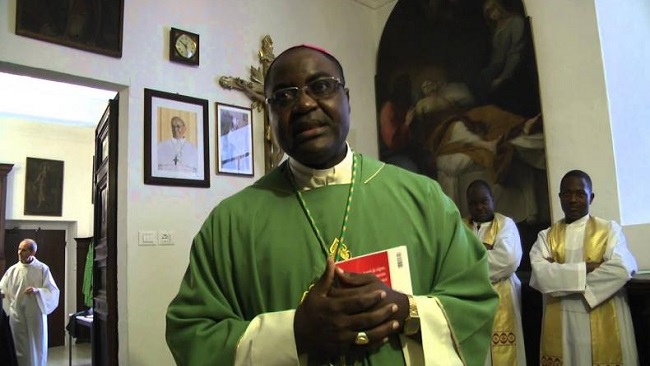
“Given the recent events making news in our country with the escalation of violence in various forms, we felt we had the obligation to once again address ourselves to the Cameroonian people, to Christians and to all people of good will, on the consequences of the steep rise in tribalism in our country,” the bishops said in a letter signed by Bishop Abraham Bouallo Kome, the president of the conference.
Drawing from the scriptures, the bishops condemned the use of social media platforms to spread the opinions of politicians and others who use tribalism to sow confusion among citizens and stigmatize entire peoples.
“Through well prepared media lynching sessions, they try to make of their political and ideological enemies, the enemies of all the people, just like Saul did against David,” the bishops wrote.
“Taking a closer look at it, these confrontations in themselves are the fruit of egoism, greed and the thirst to either conquer or keep state power at all costs as was the case with King Herod,” the letter continued.
Cameroon has around 250 ethnic groups, and there are 24 major tribal language groups used in the country, along with the official languages of French and English.
In the letter, Kome said the bishops had seen “unacceptable things,” as calls to tribal fealty were being used by politicians to divide the people.
“We are saying that it is time for Cameroonians to understand that belonging to a tribe is a good thing, but we must valorize the values of our tribes and always be open to the nation. Tribes are at the service of the nation. The finality of the tribe is to bring its uniqueness so that the nation can be enriched for the good of all,” Kome told Crux.
Following the 2018 presidential election, the tribal origins of Maurice Kamto – the defeated candidate who claimed to have won the election – have been frequently bashed by government apologists.
Kamto comes from the Bamelike ethnic group in the country’s West region.
There was a violent confrontation between the natives of President Paul Biya’s Sangmalima village and settlers from Kamto’s Western region two months ago.
Between October 9-10, the people of Sangmalima attacked the Westerners, ransacking their homes and businesses in what was seen as an ethnically-based attack.
Cameroon’s English speakers, frequently considered as an ethnic group by the country’s Francophone majority, have also been subjected to racist abuse, with some members of the ruling party calling for the “complete elimination” of those they call “Anglophone separatist terrorists.“
Cameroonian political scientist, Immanuel Tatah Mentan said that “the undemocratic tendency of ethnic groups viewing themselves as the best and others as unpatriotic is unhealthy.”
Law against hate, tribalism
The Cameroonian government passed a law last month criminalizing hate speech and tribalism.
Article 241 of the said law punishes promoters of hate speech and tribalism with prison terms ranging between six days and six months or a fine amounting to about $1,000.
If the crime is committed on broadcast, print, or social media, the fine rises to about $34,000.
The penalty for both cases doubles if the accused is found to have the intention of triggering hate or indifference among people.
While many have welcomed the new legislation, there are fears that the government could use law to gag the press and stifle political dissent.
Cameroon’s Cardinal Christian Tumi said he believes the only antidote to hate is love.
“That means you must do unto others what you would like them to do to you. It’s as simple as that,” the cardinal said.
Culled from Crux















28, December 2019
Cameroon bishops visit prisons on Christmas, as Church prays for peace 0
Cameroon’s Catholic clergy made a special effort to visit the country’s prisons on Christmas Day. “Christ came to free us from all our prisons,” said Archbishop Samuel Kleda as he addressed inmates in the overcrowded New Bell prison in Douala.
The prelate said he wasn’t only referring to the physical prisons where people are clamped into enclosures like the New Bell Prison; rather, Christ liberates “us from the prisons of our hearts.”
He said people can only regain their freedom if they open their hearts to Christ. “Once you recognize your sin and admit that you were wrong, you are free, you are converted, and you get to know how to proceed,” he said.
In Garoua, in the country’s north, Archbishop Faustin Ambassa Njodo said, “Christ goes to his children wherever they are.”
Addressing inmates at the Garoua prison, the archbishop said: “Whatever you did, God will come to you. If we go back to the Scriptures, the Son of God is saying that a medical doctor goes to those who are sick. That means Jesus is coming not for those who believe in Him, but for the sinner.”
Ambassa Njodo exhorted the inmates to open their hearts to receive Christ and they will have eternal life.
Cameroon’s bishops have expressed their concern about detention conditions where poor infrastructure and overcrowding mean the rights of prisoners are violated on a daily basis. Figures from the Ministry of Justice indicate that the overall occupancy rate in 2016 was 164.7 percent, even as that figure varies from prison to prison.
The New Bell Prison in Douala houses some 5,000 inmates, although it was initially constructed to hold just 800 people, giving the facility an occupancy rate of 625 percent. The notorious Kondengui prison in Yaoundé had an occupancy rate of 400 percent in 2016, and the central prison at Maroua generally holds more than 200 percent of its capacity. These figures have not changed much.
And while the country’s clergy sought to uplift the spirits of the inmates, the issue of justice for prisoners also came to the fore, with Kleda noting that good judges are also involved in works of charity.
“A judge who does his work rightly… pays attention to every person, and those who remain in jail are rightly condemned. That is charity,” the archbishop said.
The archbishop expressed disgust at the long pre-trial detention periods: Official statistics indicate that about 55.5 percent of inmates in the country are still awaiting trial.
Calls for peace dominate Christmas messages
In a country battered by a separatist war to the west and Boko Haram terrorism to the north, the message of the peace of Christ has a particularly strong appeal this year.
Ambassa Njodo painted a bleak picture of how far Cameroon had degenerated in recent times.
“We have brothers and sisters from the same families who fight each other, they don’t eat together, and this is not normal,” the archbishop said.
In the troubled North West region where a separatist uprising known as the Anglophone Crisis has been going on for the past three years, Father Gilbert Aurore noted that “we need peace, we need love and we need forgiveness.”
“Jesus Christ being the Prince of Peace has come with that peace so that we may experience life in abundance,” the priest said.
Cameroon’s two English-speaking regions – the North West and the South West – make up about 20 percent of Cameroon’s population, which is majority French-speaking. Anglophones have long complained about marginalization by the predominantly francophone government.
In 2016, peaceful protests by teachers and lawyers in the two regions over the use of French in schools and courts spiraled out of control after a government crackdown. An extremist separatist movement calling for the secession of the Anglophone regions was the result. In three years of fighting, over 3,000 people have been killed, and about 700,000 others forced from their homes.
“The bloodshed really has to stop. We are tired of this fighting,” said Bishop Andrew Nkea of Mamfe, in Cameroon’s South West region.
At St. Joseph Parish, in Tkomberé in the country’s far North region, Father Denis Daba said he had brought a “message of peace and living together, because Christ has come for the unity of God’s children, to draw them closer, especially those who do not know him.”
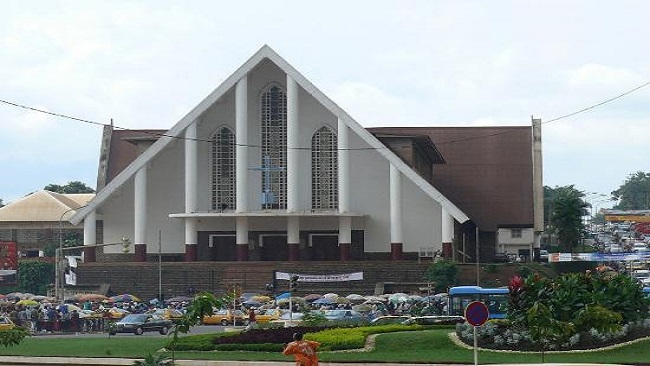
A similar message was echoed by Archbishop Jean Mbarga of Yaoundé. During a homily in the city’s Our Lady of Victories Cathedral, the archbishop noted that Christmas was a time for “renewal” for families who have worked all year round. He said while people were engaged in such renewal, it was also the time to open their hearts to Christ.
“People have to open their hearts to allow God to return to them. There is need for God to return to public spaces. God must be the foundation of everything we do.”
Mbarga said only when “God takes possession of our lives” can there be a return to peace in Cameroon.
Source: Crux