29, July 2026
Bishop Francis Teke Lysinge: The Priest Who Showed Us How to Be a Priest 0
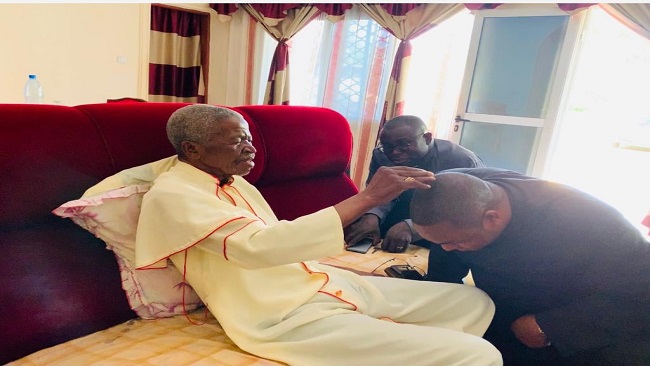
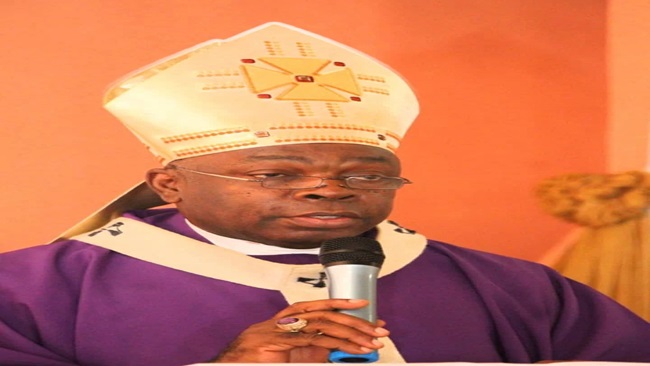
Today, I received with a heavy heart the news of the passing of His Lordship Francis Teke Lysinge, Bishop Emeritus of Mamfe. Even though we had long understood that this day would come, given his age and declining health, nothing truly prepares the heart for the death of someone we know, respect, and love. Across the Ecclesiastical Province of Bamenda, priests and lay faithful will remember Bishop Francis Teke Lysinge for countless reasons. He touched lives in ways that cannot be measured, leaving an imprint that will endure far beyond his years among us. For me personally, he was my spiritual director in the Major Seminary for eight years. While this tribute reflects my own experience of him (and my contemporaries will certainly highlight their own encounters), I believe the overwhelming majority of my generation will agree on one thing: Bishop Lysinge’s greatest legacy was not merely what he taught us, but how he lived among us. That is the deepest motivation behind this tribute to a true man of God whom I loved and admired from the moment I met him.
Perhaps I should begin with that: loving and admiring him. One of the recurring criticisms of seminary formation in Africa, voiced by ex seminarians and priests who desire seminary genuine reform, is the culture of fear that often permeates our seminaries. Too often, rectors and formators are perceived not as elder brothers guiding us through discernment, but as investigators searching for weaknesses to justify dismissal. Instead of drawing close to them and opening ourselves to formation, seminarians hide their struggles, avoid formators, and “lie low” until ordination.
While some formators spent their time playing FBI – planting peers to spy and report – Fr. Lysinge never engaged in any of that. He was the father and friend to whom we could go and vent our frustrations about a rector’s decision we found unfair or a formator’s threat of dismissal. He was the one we trusted. He was the one we loved. And that cannot be said of many formators.
Every genuine seminarian enters formation with some idea of what a priest should be. I certainly had mine. Mola Lysinge did not disappoint. The first time I noticed him was when he rode his bicycle to the rectory for meals. I had only seen priests driving cars, not riding bicycles. Later, I learned it was part of his exercise routine. Today, cycling is more common, but the bicycles are not as humble as Mola’s.
Then I noticed the poor of Bambui sitting at his door, waiting for him to help them with their most basic needs – food, clothing, comfort. Watching him interact with them, one thing was clear: he wasn’t simply giving them things; he was giving them himself. He joked with them, laughed with them, respected them as “the least” brothers and sisters of Jesus Christ (cf. Matthew 25:40). That was the kind of priest I wanted to be – close to people in need, a friend to those who suffer injustice and poverty. Not just someone who gives them things, but someone who understands them, empathizes with them, and loves them for the sake of Christ.
And nothing about him was fake. What you saw was who Mola truly was. A sincere man – a Man With No Wax. Priests of my generation remember many incidents that revealed his character. I will mention two because they show his spontaneity, his authenticity, his being, as we say, “a man with no wax.” On one occasion, a friend’s wife came to visit. Mola was so excited that he ran up and embraced her in typical Bakweri fashion. Then he turned and noticed seminarians watching. Without embarrassment, he simply said, “She’s my friend’s wife,” as if to prevent any misunderstanding.
Another time, he joined us for dinner, as he often did. We had “achu”, served with jollof rice for those who didn’t eat achu. Some students who didn’t eat achu took the achu soup and cow skin, then covered it with jollof rice so that those who wanted achu had no cow skin, including Fr. Lysinge. When he discovered what had happened, he made a statement I have never forgotten. He called the act stealing and said, “We are training thieves here. I am sorry for the future of the Church.”
At a time when some of his peers were doing everything possible to make money, including engaging in agriculture and business, he was caring for the poor and destitute. When other formators were frightening seminarians and threatening dismissal, when they were playing secret service and trying to “catch” seminarians doing wrong, Mola was the one we ran to, the shoulder we cried on. His humility, generosity, spontaneity, and deep prayer life made him my model priest. He was the one I aspired to be like if I ever became a priest. Whether I have succeeded in emulating him is another story. What matters today, as we celebrate his life, is that he showed us how to be priests.
Mola taught me Spiritual Theology and supervised my theology dissertation. But he was never an academic in the strict sense and I didn’t consider him a great teacher. Of course, he knew his material. Like most seminaries of our generation, we used Jordan Aumann’s Spiritual Theology. But Mola never allowed us to get lost in fine details or technical questions. It was enough for him that we understood the major themes: the universal call to holiness and how to live holy lives.
It has taken me 35 years of priesthood to learn that God is not so much interested in what we know as in how we live out the universal call to holiness. My father and mother never went to school and knew nothing close to what I know about God and the Church. But they knew God – and their personal knowledge of God – sometimes made me look like an apprentice.
From where I stand, I am not happy that Mola ever became Bishop of Mamfe. It seems to me that many people, including some priests, took advantage of his humility, his holiness, and his tendency to trust. He trusted many who ultimately betrayed him: priests seeking power who fabricated stories to destroy others, priests who siphoned diocesan finances, priests who mismanaged projects. He was as gentle as the biblical dove, but not as wise as the biblical serpent. He trusted. He believed that if a priest told him something, it was true. He had forgotten the prophecy he proclaimed in the seminary refectory many years earlier: “We are training thieves in this place.”
In my tradition, we do not mourn people who die at Mola’s age (88). We believe they have completed the tasks God assigned them, and mourning blocks their path home. As a Catholic, I believe he has done much of his purgatory here on earth, and his journey to heaven will be short. Above all, I thank God that He gave us Mola in the seminary to show us how to be priests. May his life and example inspire every priest in the Ecclesiastical Province of Bamenda. May God purify us of our weaknesses until we, too, can show others how to be priests. And may Mola hear the voice of the Lord Jesus say: “Well done, good and faithful servant… enter into the joy of your Lord.” (Matthew 25:21)
By Rev Dr Joseph Awoh













30, July 2026
A lasting gesture of solidarity with Bishop Lysinge: Thank You, Governor Peter Obi 0
There are moments in history when a single act of generosity quietly shapes the future in ways that few could have imagined. Such acts often transcend politics, nationality including personal interest and it becomes enduring symbols of human solidarity. One such moment occurred when Governor Peter Obi of Nigeria extended a helping hand to the Diocese of Mamfe in Cameroon through the late Bishop Francis Teke Lysinge.
During the African Synod on the Family in Enugu, Bishop Francis Lysinge had the opportunity to meet Governor Peter Obi. In their brief audience, the Bishop shared the immense challenges facing the Diocese of Mamfe, particularly the struggle to complete the Cathedral and the Bishop’s House projects. The Diocese was young, resources were scarce and the dreams of the faithful depended greatly on the goodwill of friends.
Governor Peter Obi did not merely listen; he acted. He generously contributed ten thousand US dollars to support these important projects. It was a remarkable gesture not because of the amount alone, but because it reflected a profound belief that the Church’s mission deserves support wherever it serves humanity. Governor Peter Obi’s generosity crossed national borders, demonstrating that compassion recognizes no artificial boundaries.
History would later reveal an extraordinary irony. The Bishop’s House in Mamfe, whose construction benefited from Governor Peter Obi’s contribution, became the venue where Nigeria’s Vice President, Atiku Abubakar was received during a discreet visit to Mamfe in connection with discussions surrounding the implementation of the Bakassi Agreement between Nigeria and Cameroon. What began as an act of kindness toward a struggling diocese ultimately contributed to creating a space that would later host an event of diplomatic significance between two neighbouring nations.
More importantly, Governor Peter Obi’s gift strengthened the pastoral mission of the Diocese of Mamfe. The Cathedral and the Bishop’s House were not simply buildings of brick and mortar. They became centers of prayer, administration, pastoral care and service to thousands of Catholics and members of the wider community. They stand today as reminders that generosity invested in faith communities produces dividends that extend far beyond the original intention.
As we remember the late Bishop Francis Lysinge, whose vision and perseverance laid the foundations of the Diocese of Mamfe, it is fitting also to acknowledge those who stood with him during moments of difficulty. Governor Peter Obi was one of those friends. His support came at a time when it was needed most and it remains part of the living history of the Diocese.
In a world often divided by politics, ethnicity and national borders, Governor Peter Obi demonstrated that authentic leadership is measured not only by governance but also by compassion. His willingness to support a Cameroonian diocese reflected the shared values that unite Africans: brotherhood, faith, mutual respect and the conviction that we rise by lifting one another.
The clergy, religious and faithful of the Diocese of Mamfe have every reason to remember this gesture with gratitude. Acts of generosity may fade from newspaper and television headlines, but they remain etched in the memories of those whose lives they transform.
To Governor Peter Obi, we say thank you. Thank you for believing in the mission of the Church beyond your own country. Thank you for standing beside Bishop Francis Lysinge during a crucial chapter in the history of the Diocese of Mamfe. Thank you for demonstrating that true leadership leaves behind not only policies and speeches but also enduring legacies of hope, generosity and service.
May this noble act continue to inspire leaders across Africa to build bridges of friendship, support institutions that serve humanity and recognize that the greatest investments are often those made in people, faith and the common good.
To this I put my name
Soter Tarh Agbaw-Ebai
Chairman/Editor-In-Chief
Cameroon Concord News Group